🥛 The Strangest Drink on Earth: How We Forgot the Only Fluid Made for Us
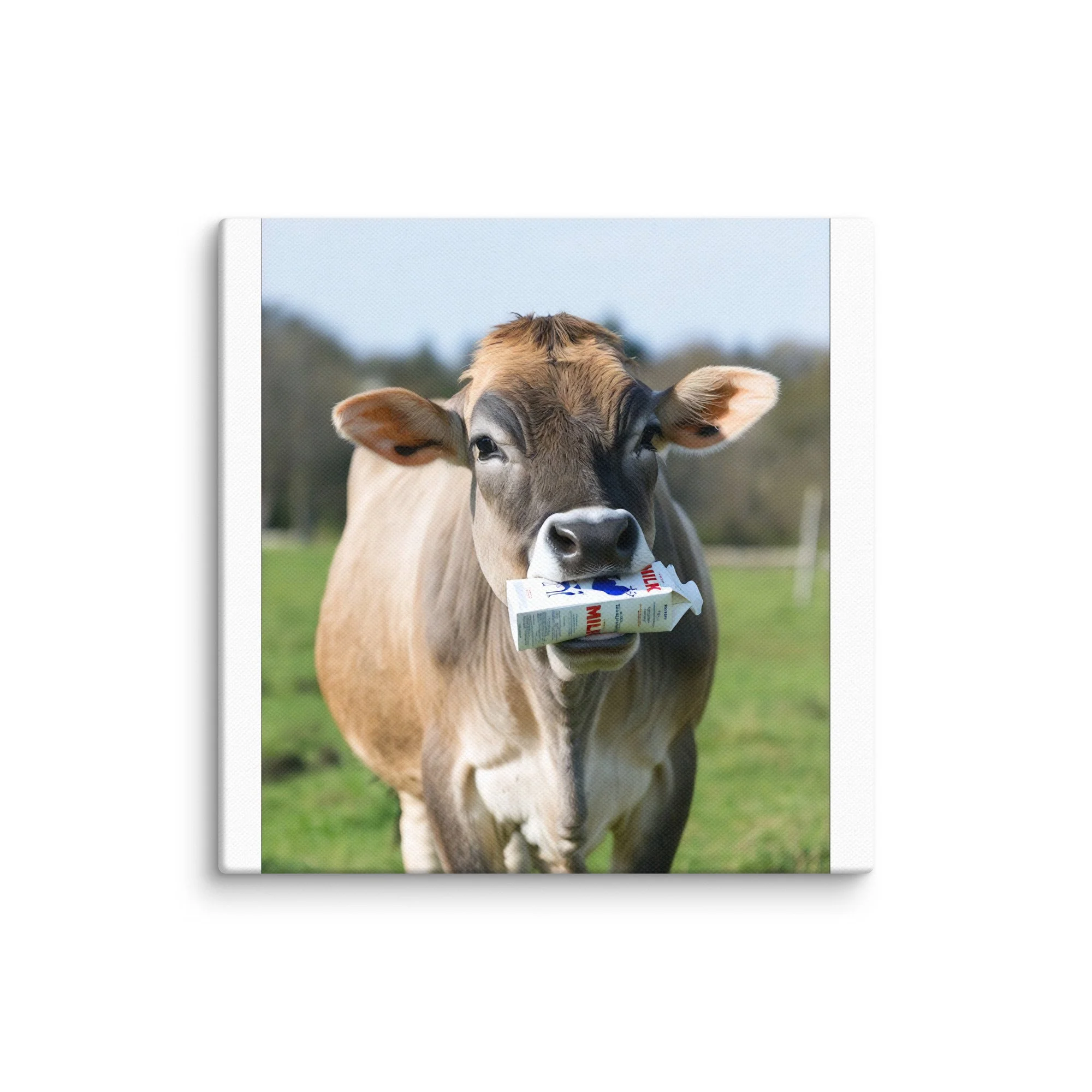
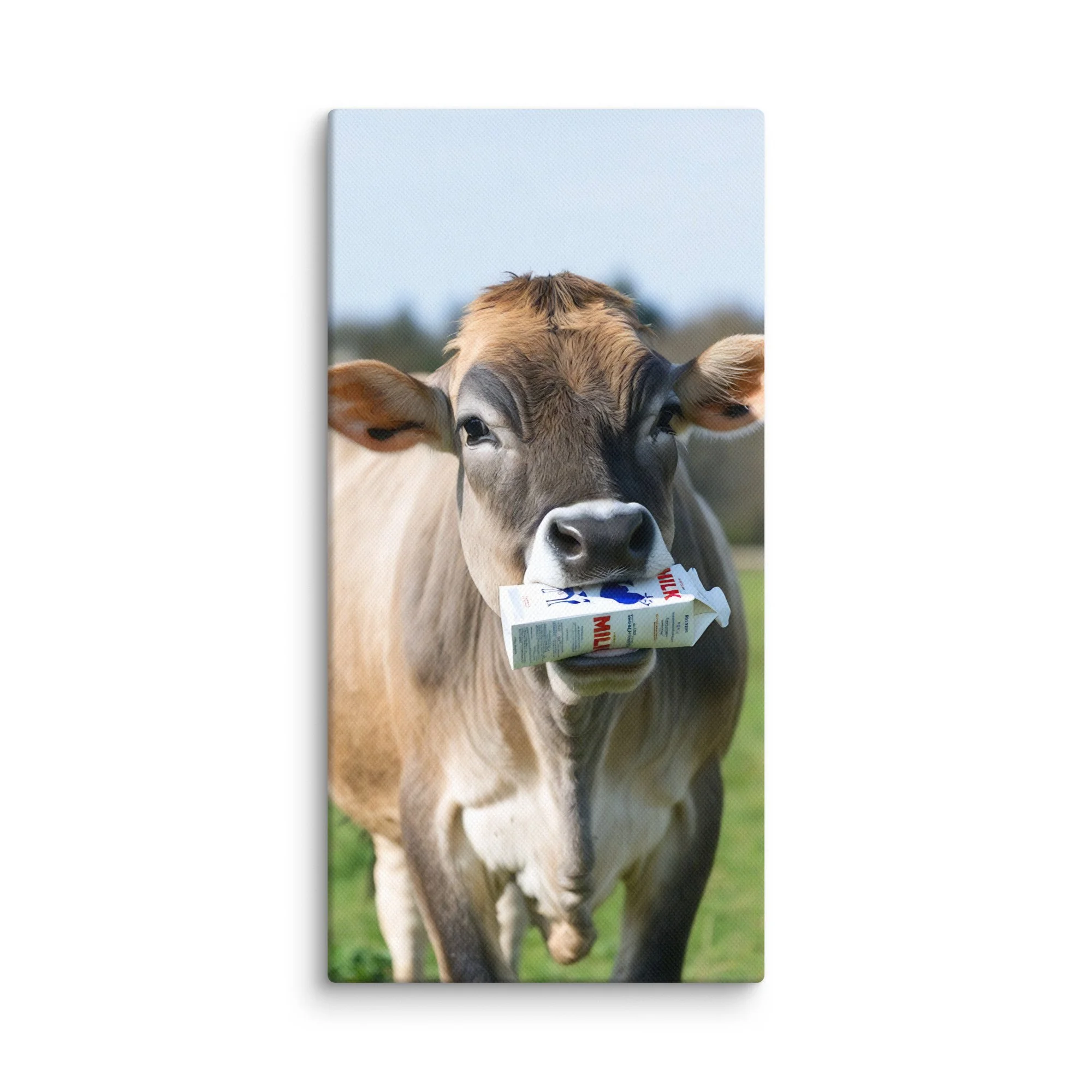
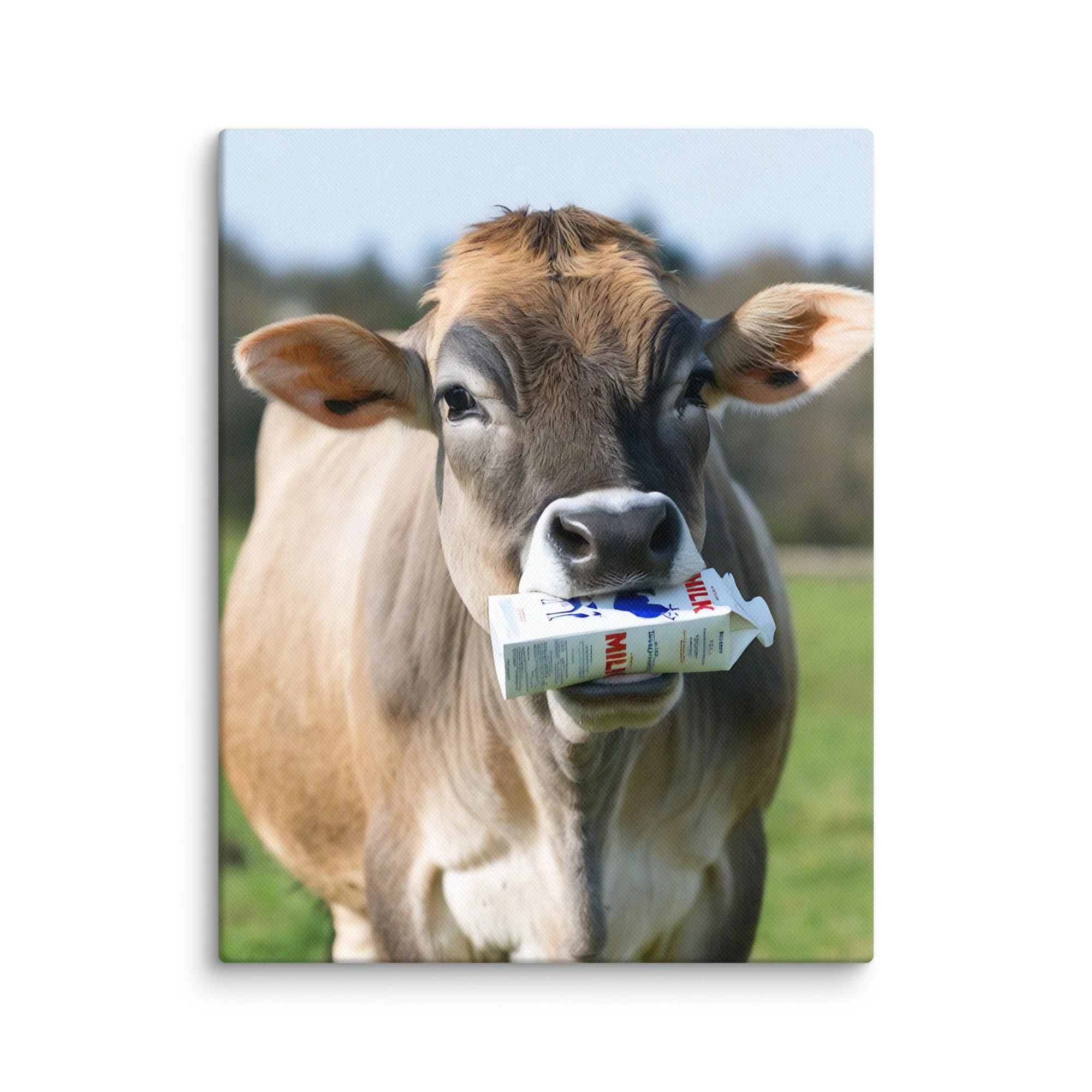
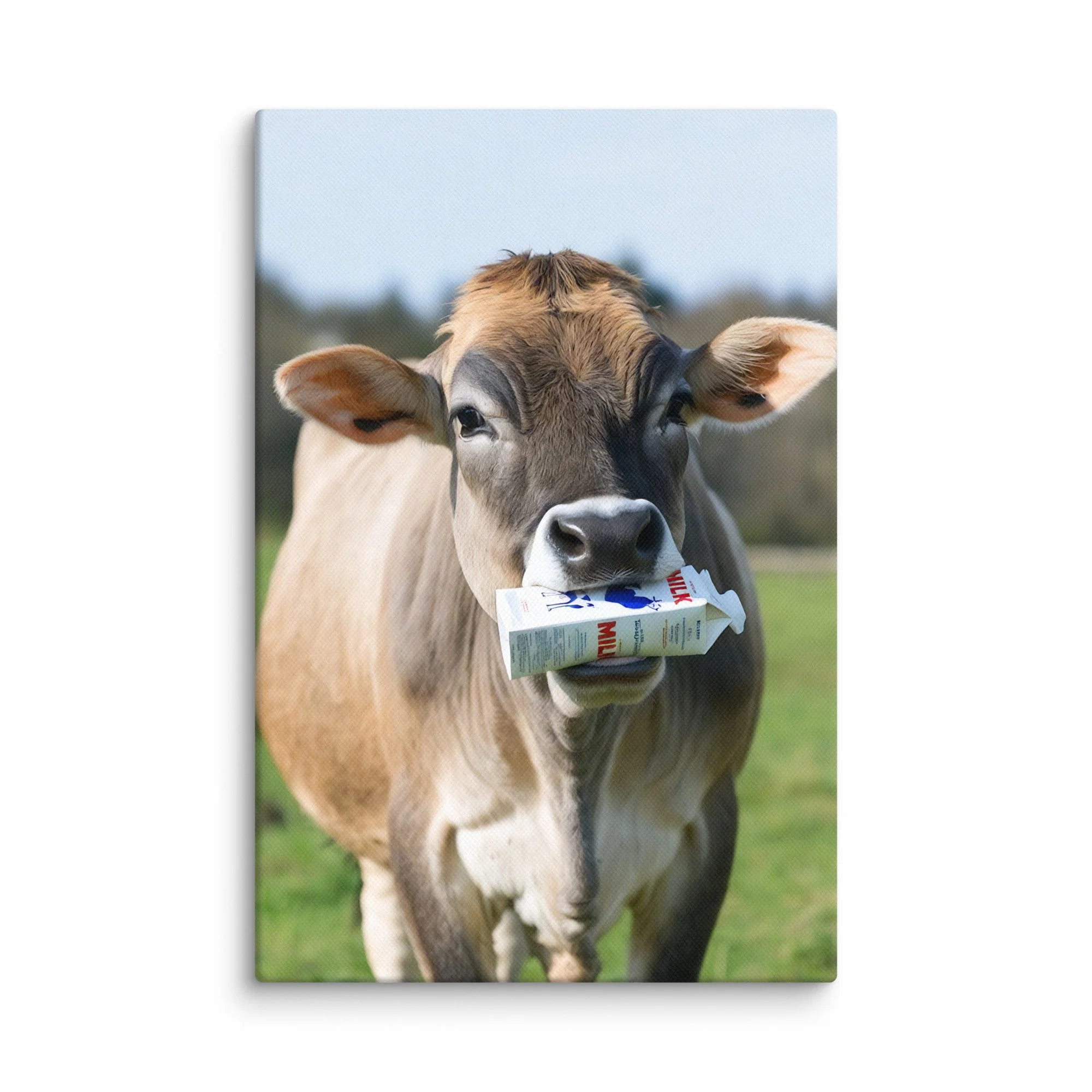
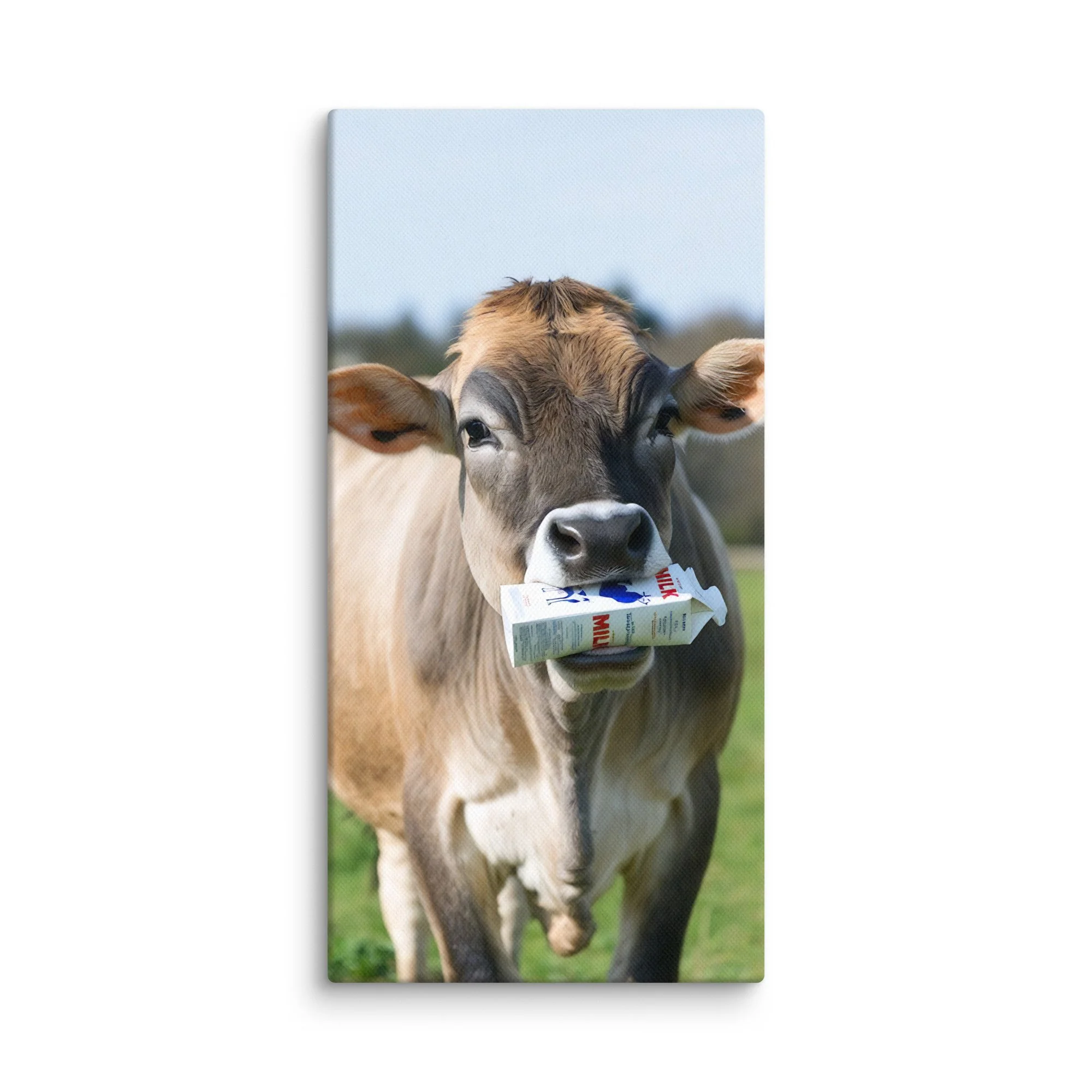
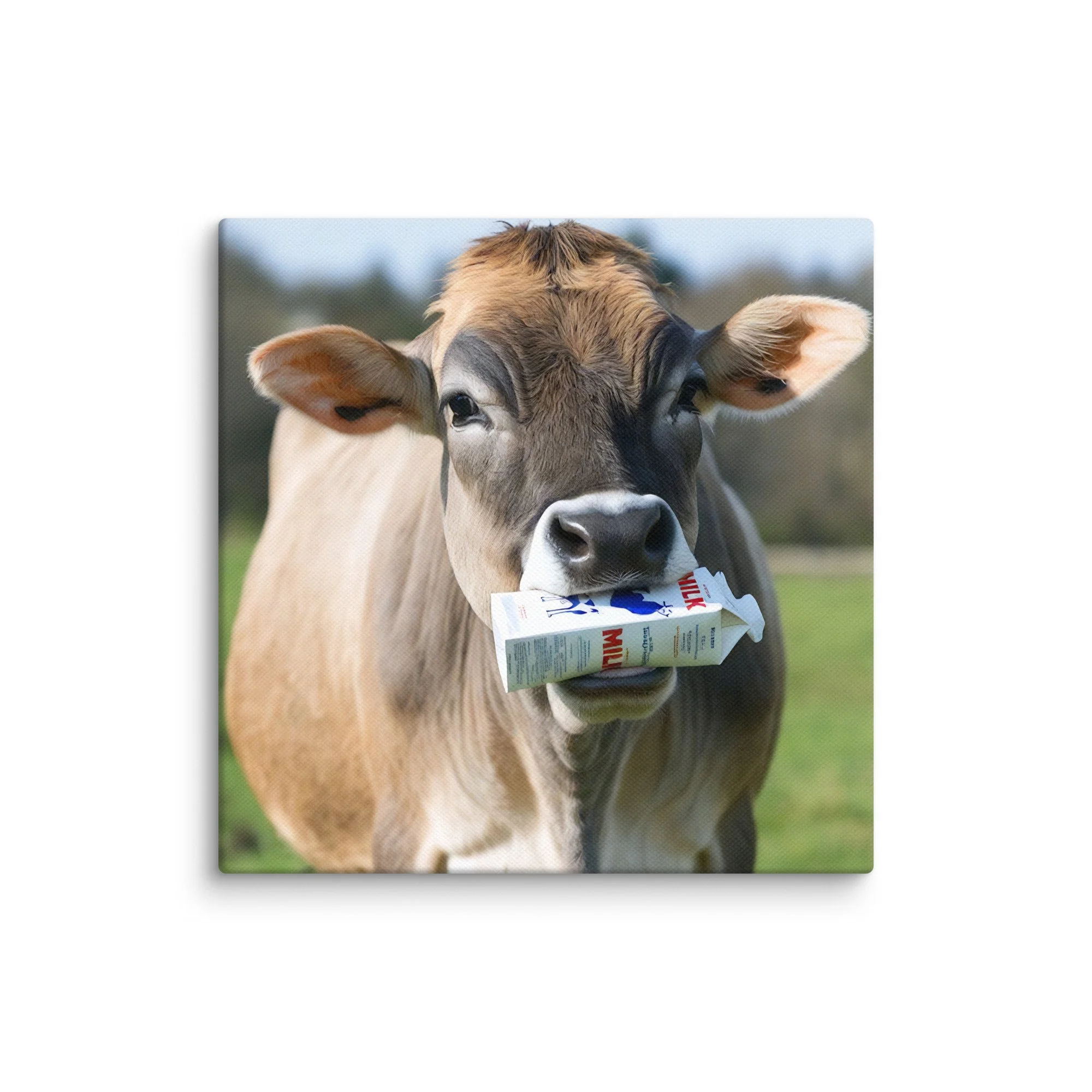
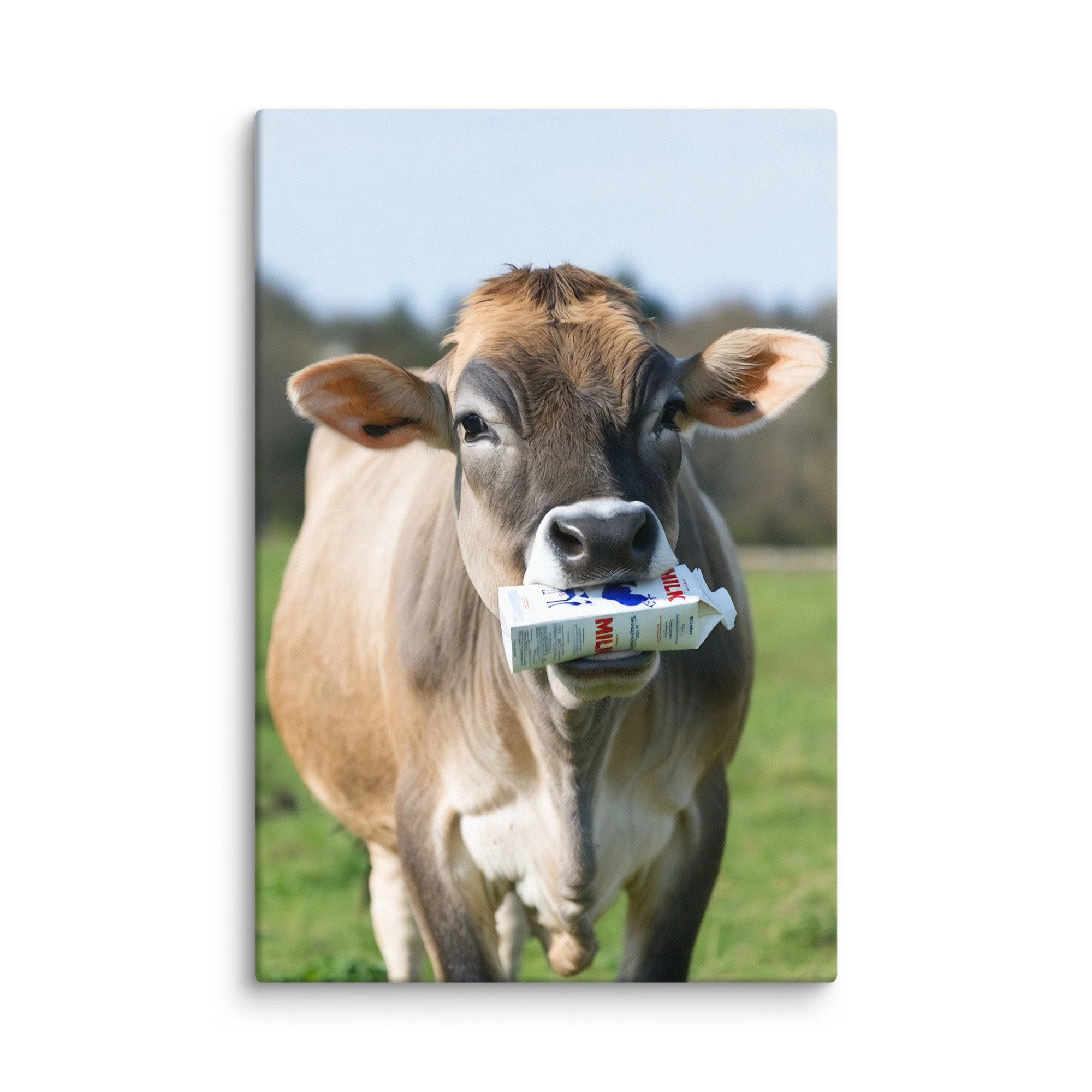
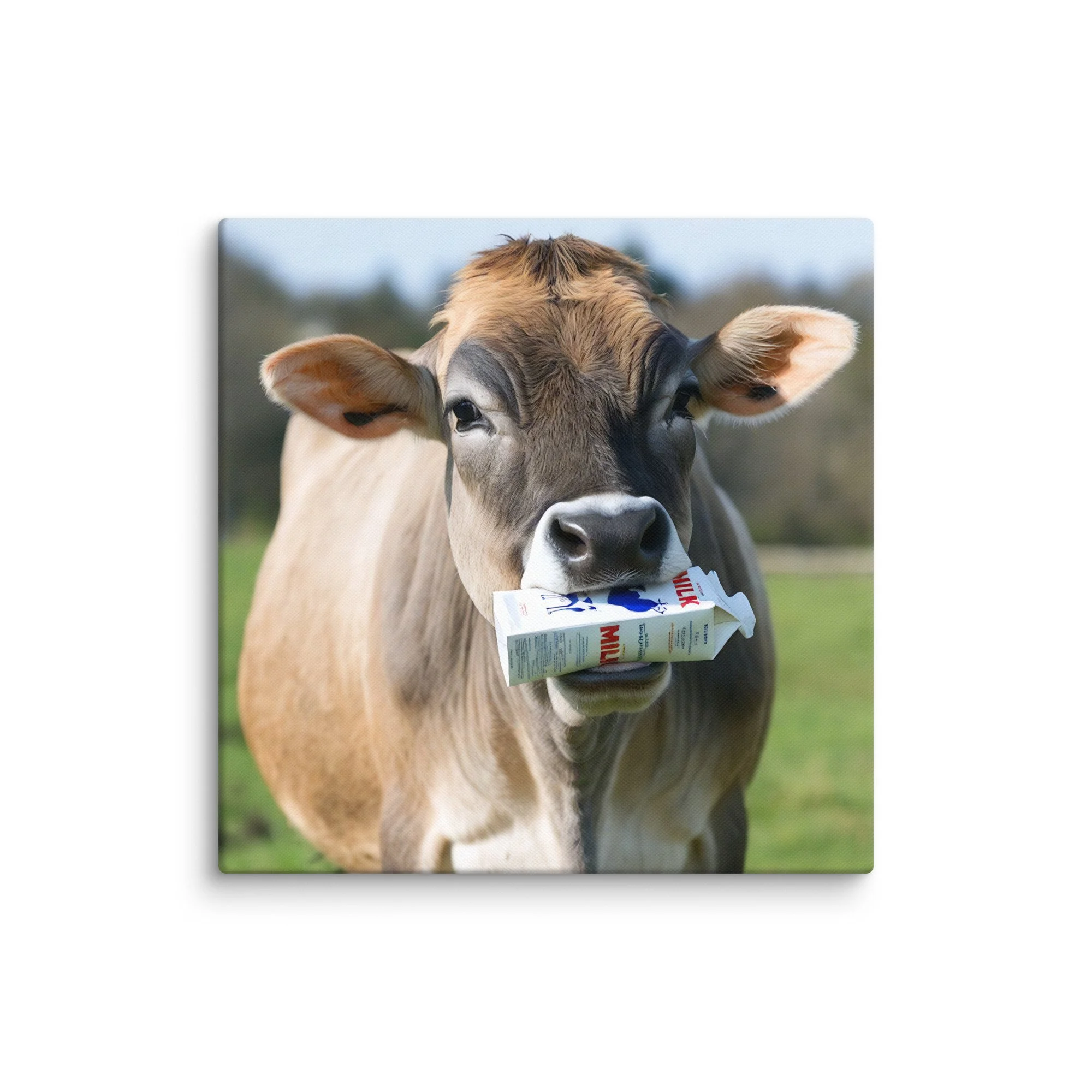
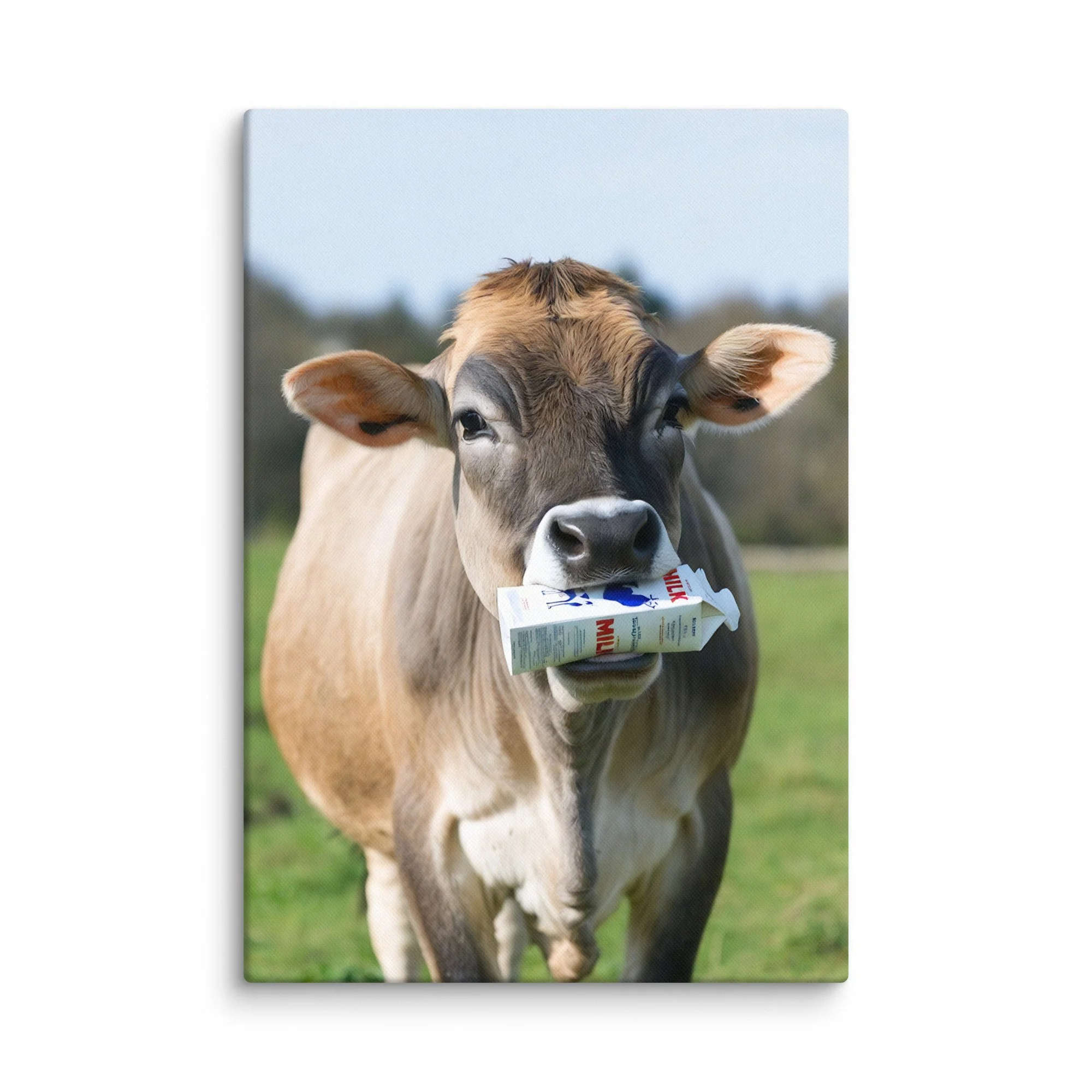
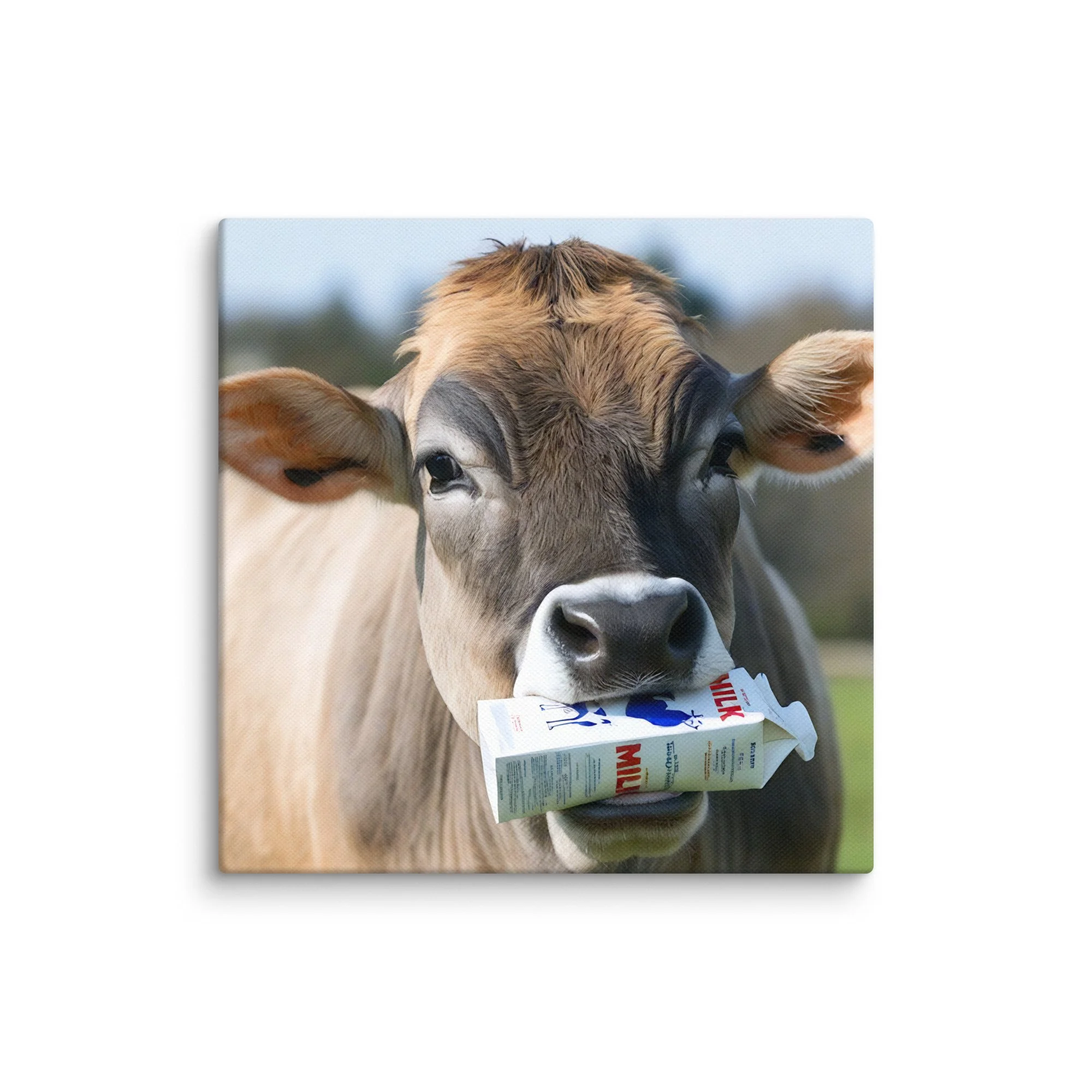
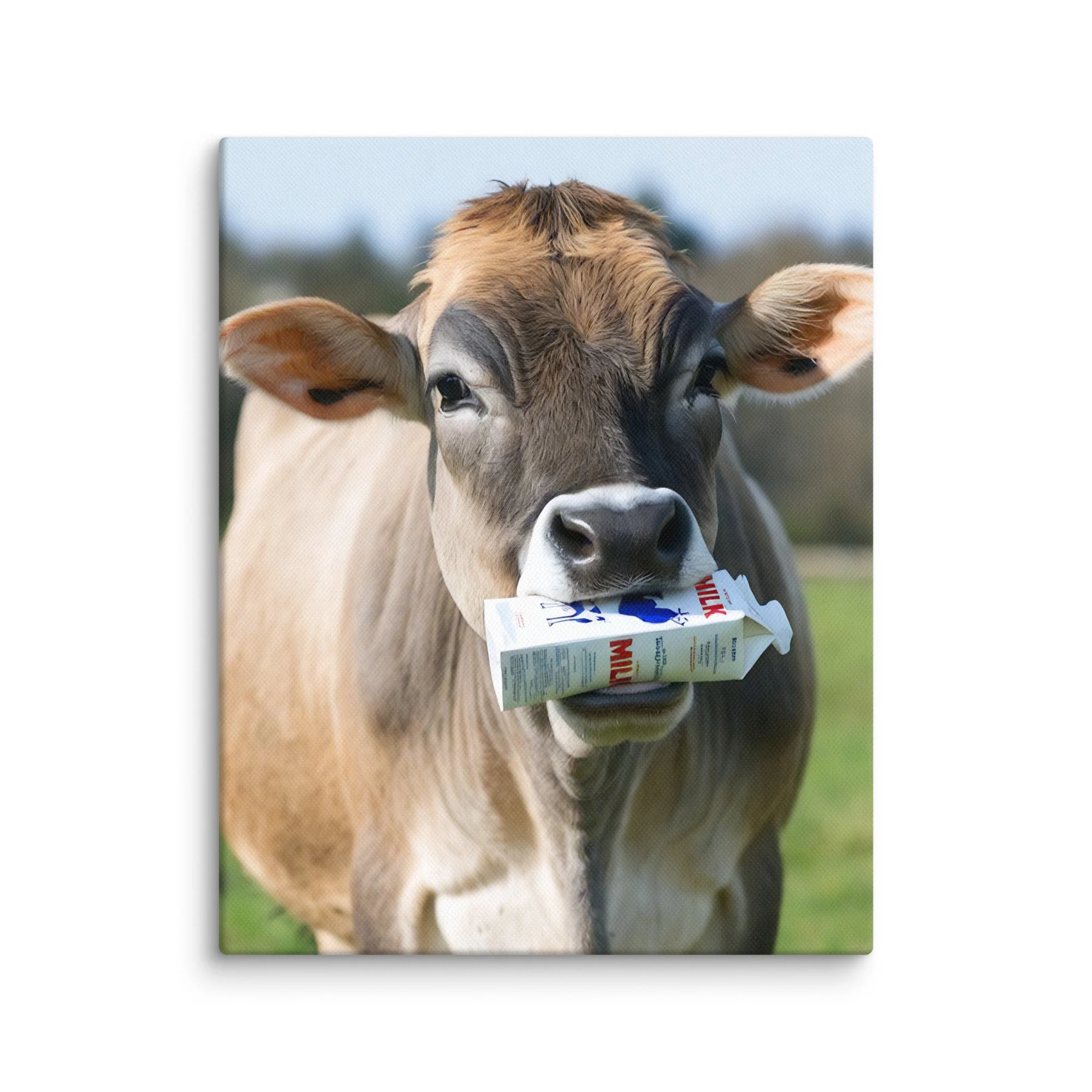
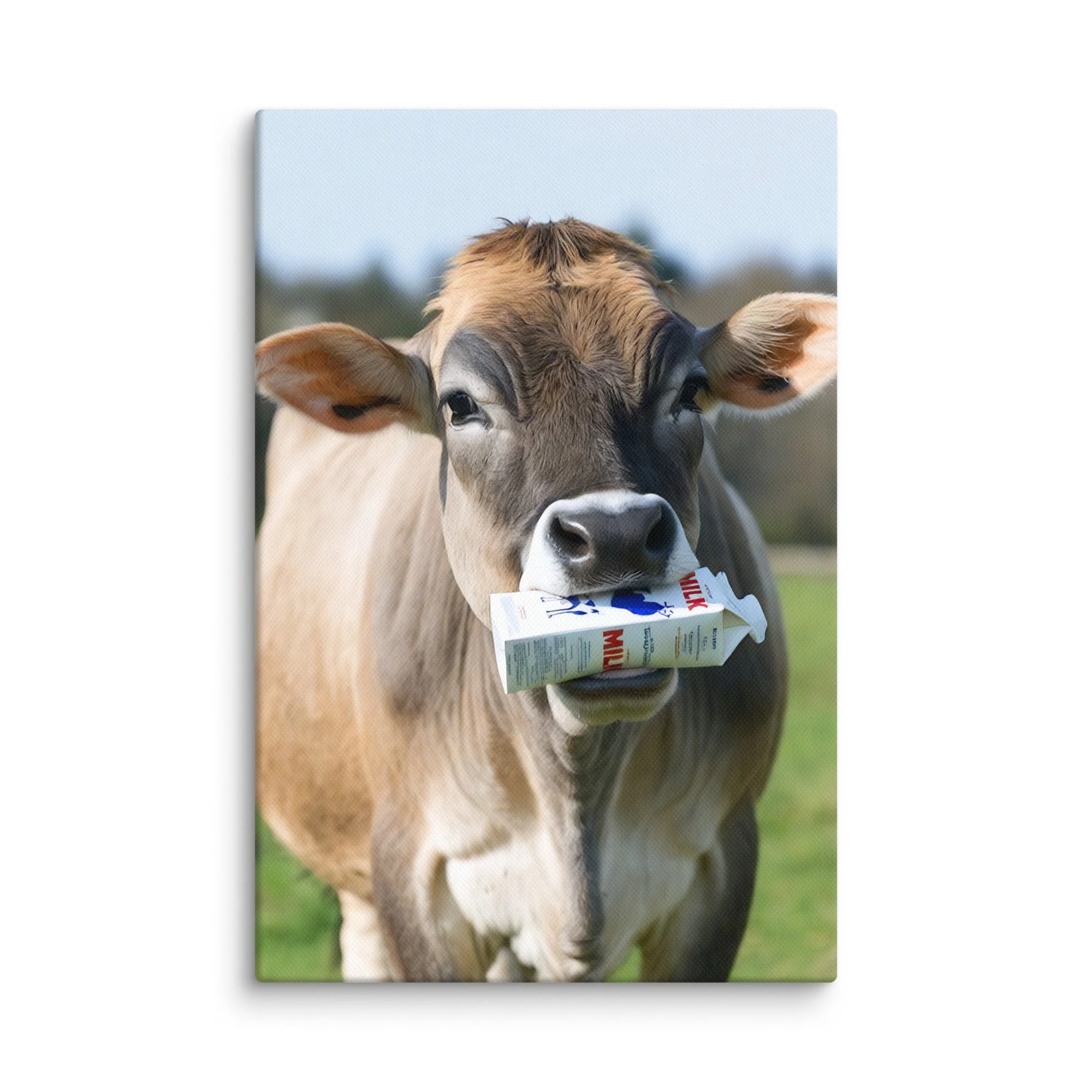
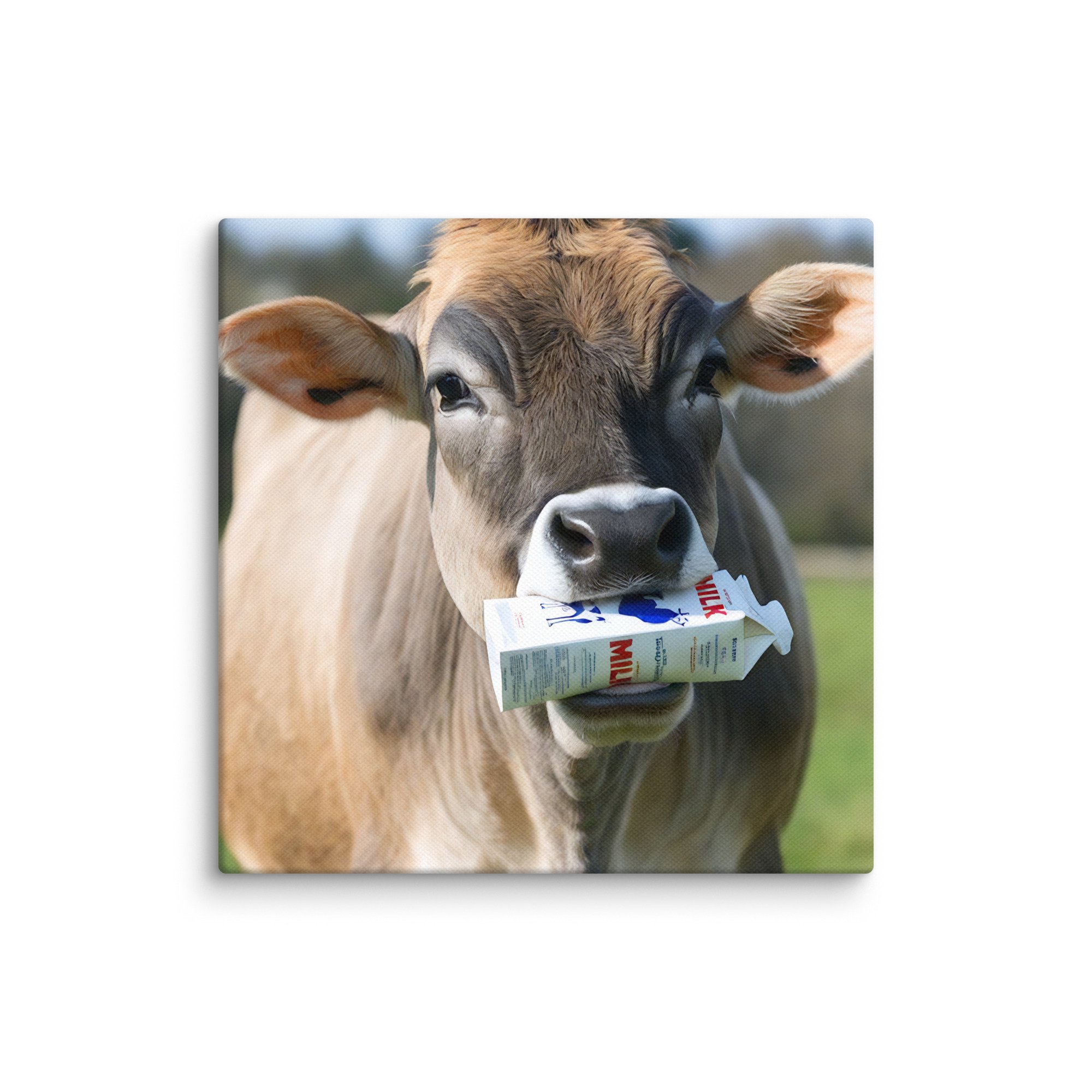
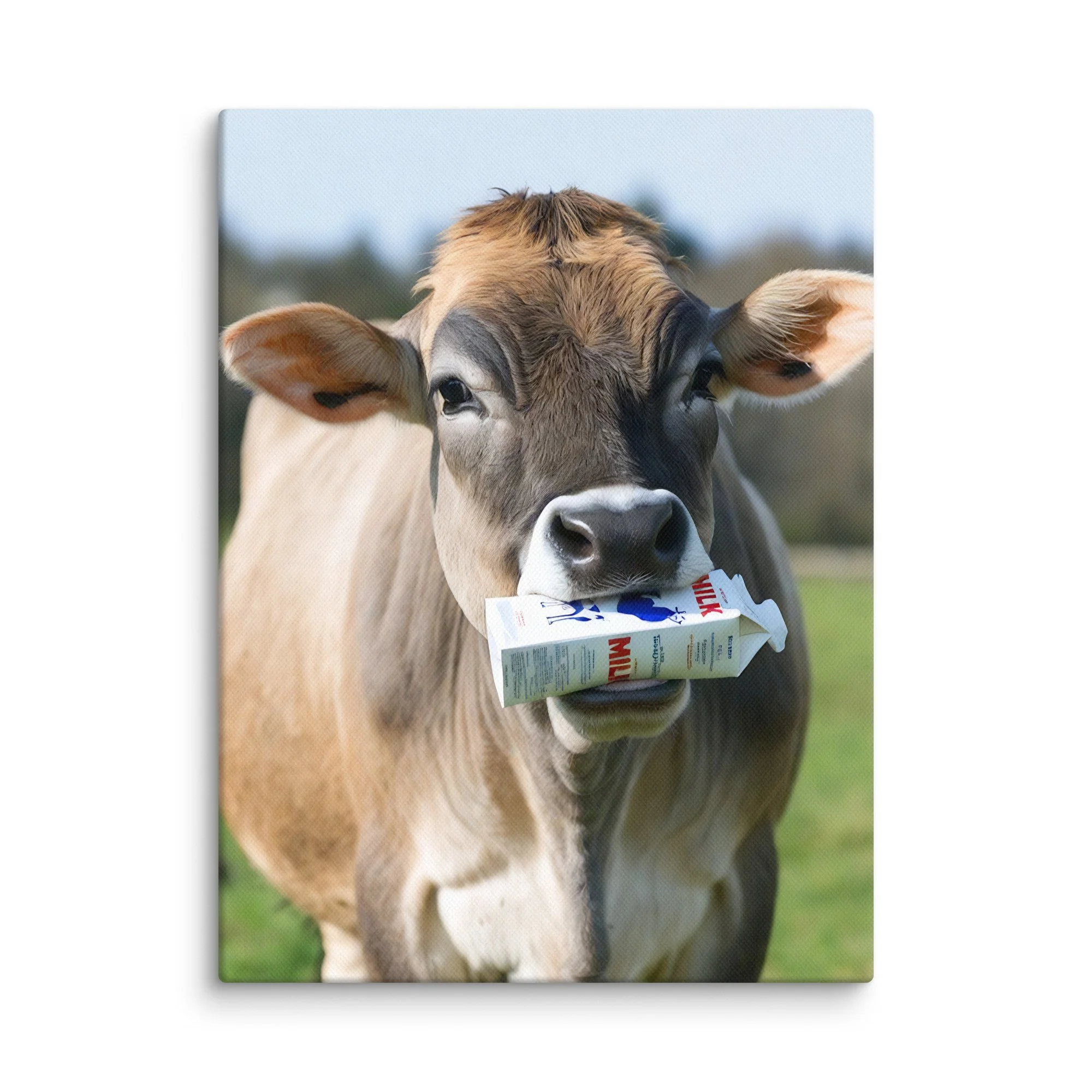
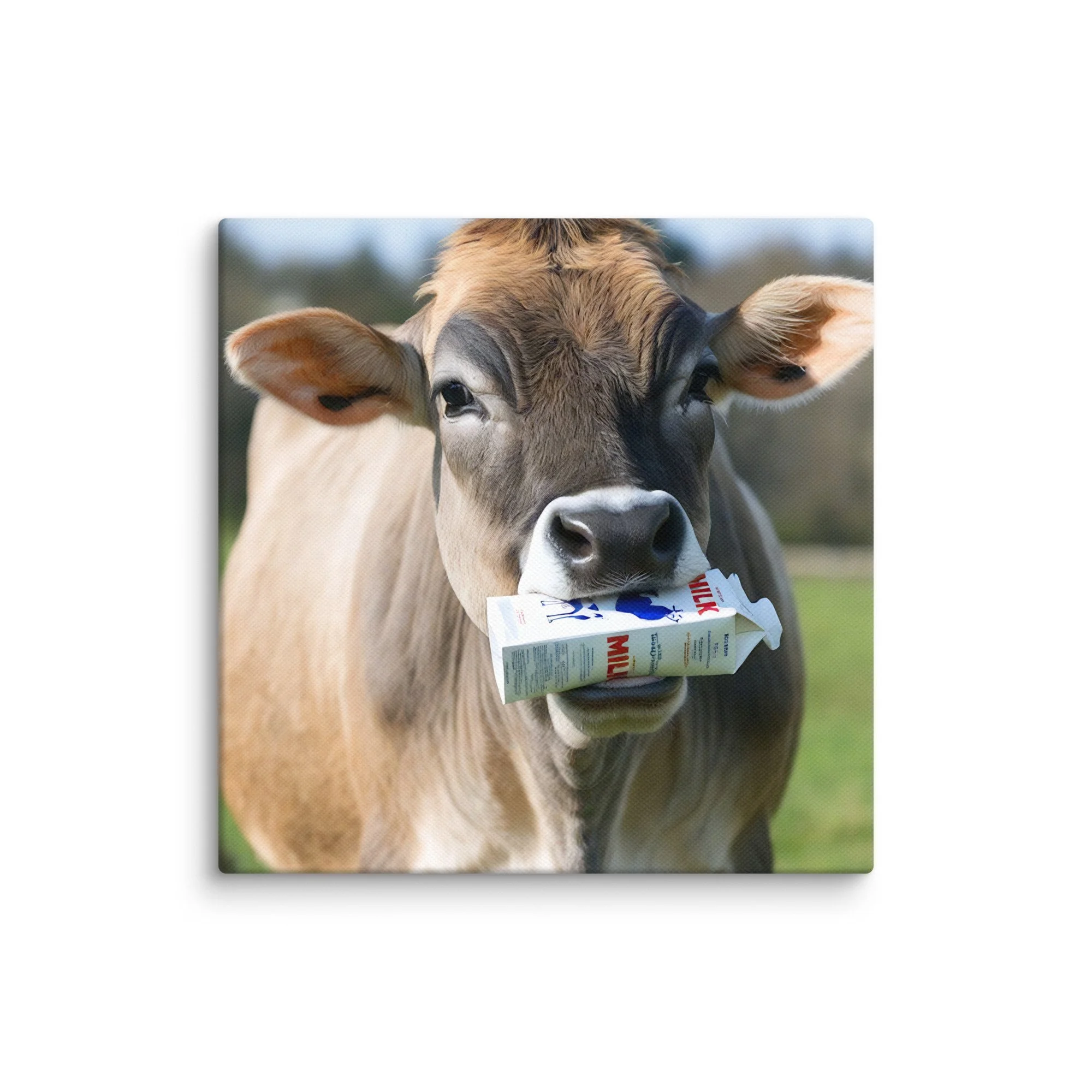
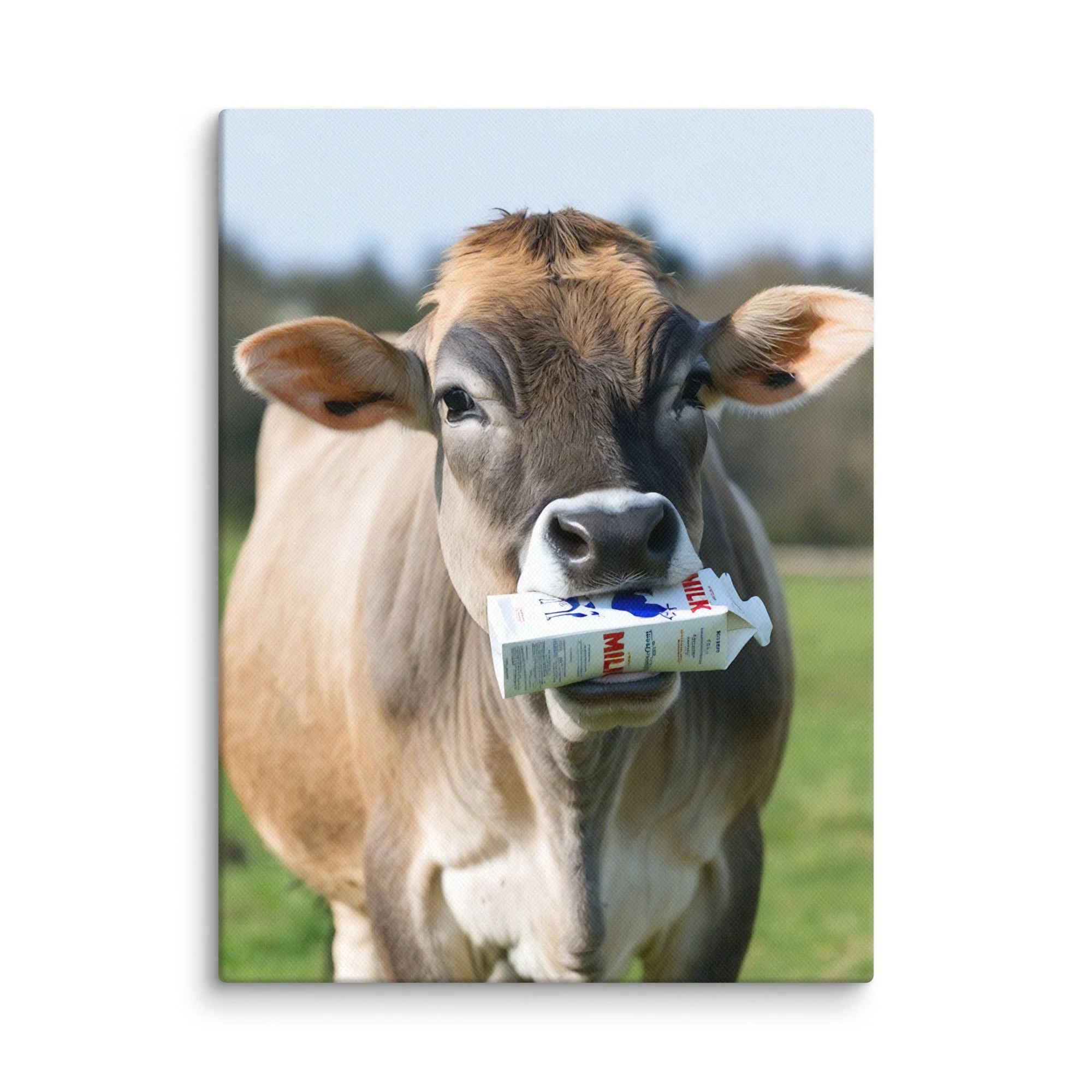
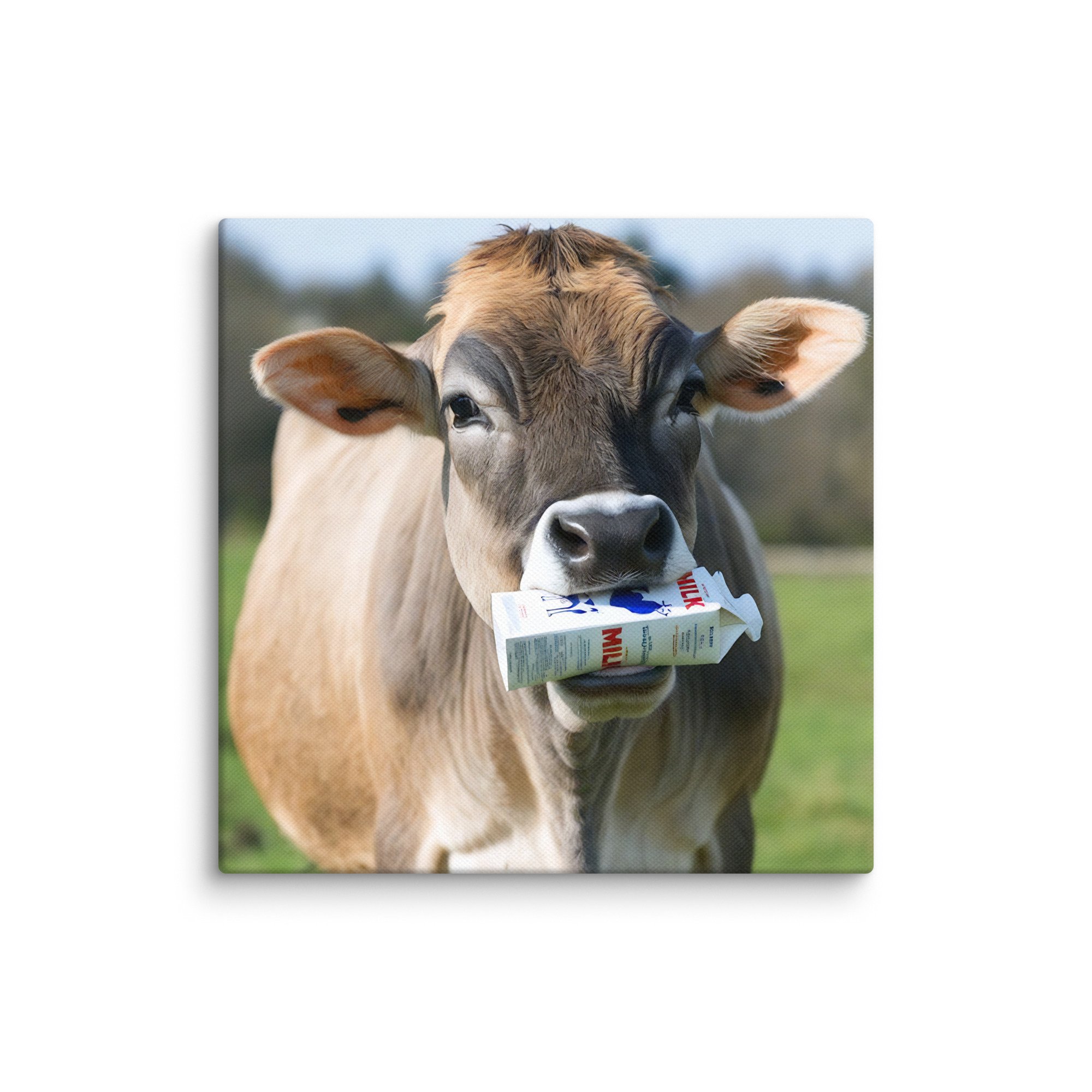
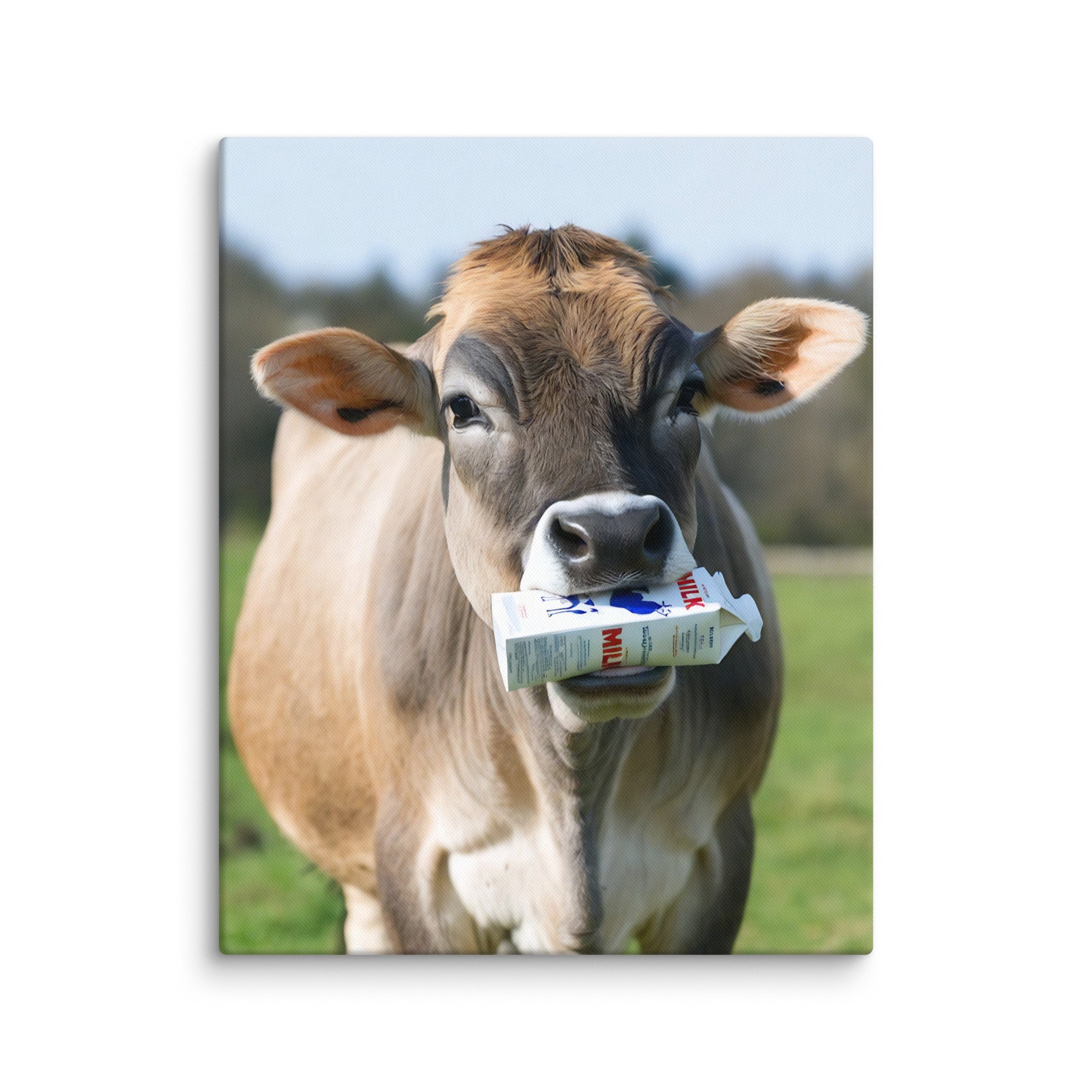
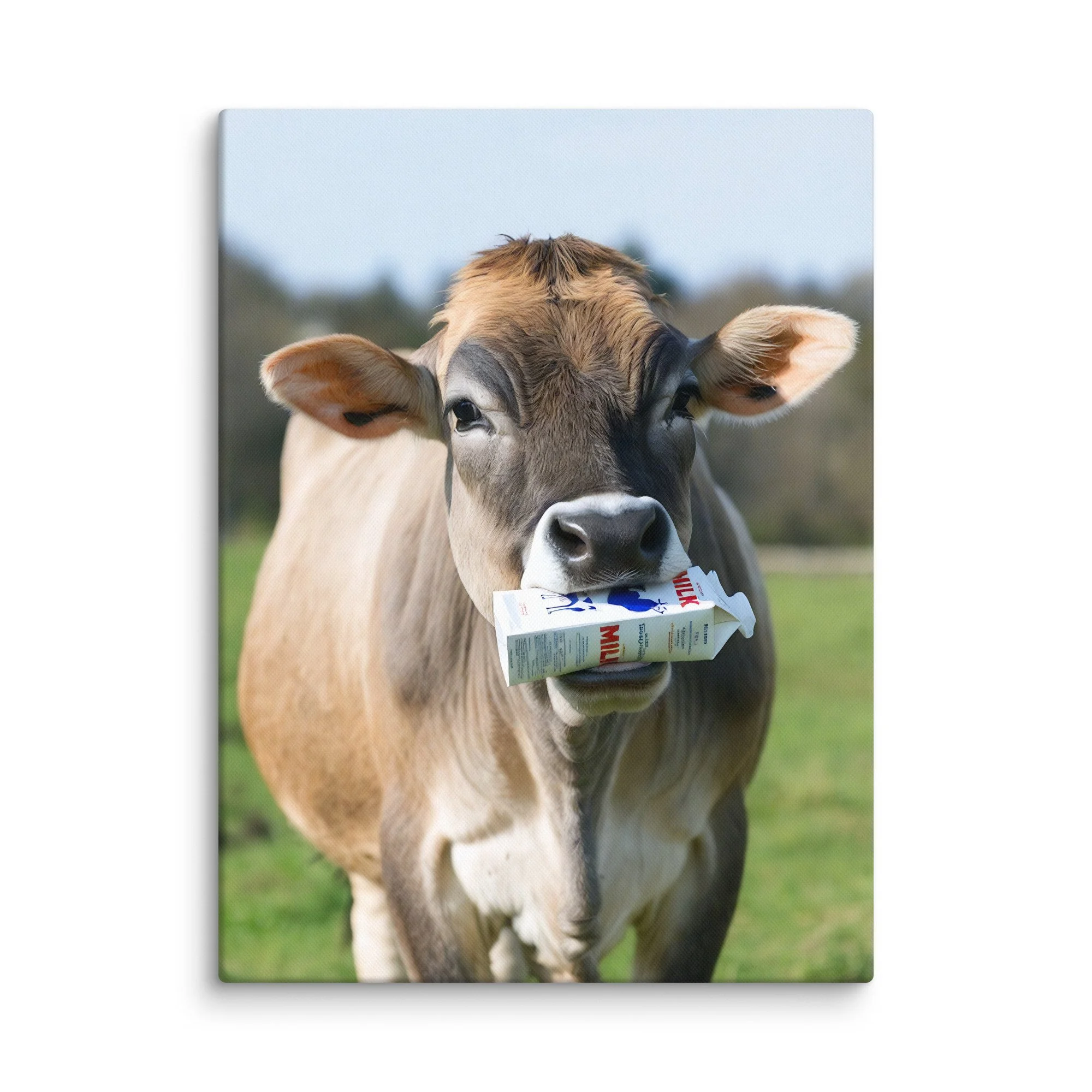
Start conversations with this absurdist cultural critique featuring a cow drinking packaged cow's milk. Museum-quality wall art perfect for kitchens, dining rooms, and anywhere you appreciate humor with a philosophical edge. This viral-ready image questions everything we've normalized.
A cow drinking packaged cow's milk. Stop. Read that again.
This is absurdist perfection—the visual joke that makes the entire argument without saying a word. We've normalized something so strange that seeing it rendered literal makes you laugh, then pause, then think: Wait. Why IS this normal?
The strangest drink on Earth isn't this. It's us—humans—drinking this cow's milk from a carton while calling human milk "weird." We've inverted nature so completely that the cow drinking her own species' milk, industrially processed and packaged, is funny. But we do this every day and call it breakfast.
This artwork is cultural critique disguised as humor. How did we domesticate cows, commodify their milk, build entire industries around it, and forget that human milk exists? How did foreign milk become "natural" while our own species' milk became taboo?
The cow knows. Look at her face. She's not confused. She's looking directly at you, carton in mouth, asking: You see the absurdity now, right? We've made the foreign familiar and the familiar foreign. We've built refrigerators for cow's milk and pathologized adult nursing. We've normalized the strange and called the obvious deviant.
This image will go viral. People will share it not because they understand ANR, but because it's funny. And while they're laughing, they're thinking. And while they're thinking, the question plants itself: If this is strange... what does that make human milk?
This is your Trojan horse. The image that gets shared by people who've never heard of adult nursing, who stumble into your worldview through memes and stay because the argument is irrefutable: We've been drinking the strangest drink on Earth and calling it normal.
Perfect For:
- Kitchen wall art that sparks conversation
- Dining room decor with philosophical depth
- Gifts for friends who appreciate absurdist humor
- Anyone who questions cultural norms
Premium Museum-Quality Canvas:
- 1.25″ thick gallery-wrap
- Premium poly-cotton blend fabric (10.15 oz/yd²)
- Fade-resistant archival inks
- Hand-stretched over solid wood stretcher bars
- Mounting brackets included—ready to hang
- Available in 5 size tiers: XS (6×6-8×12) $40, S (9×12-12×12) $55, M (12×16-16×20) $75, L (16×24-18×24) $105, XL (18×26-10×20) $145
- Made-to-order to reduce waste
Custom-made when you order. Ships from USA, Canada, Europe, UK, or Australia.
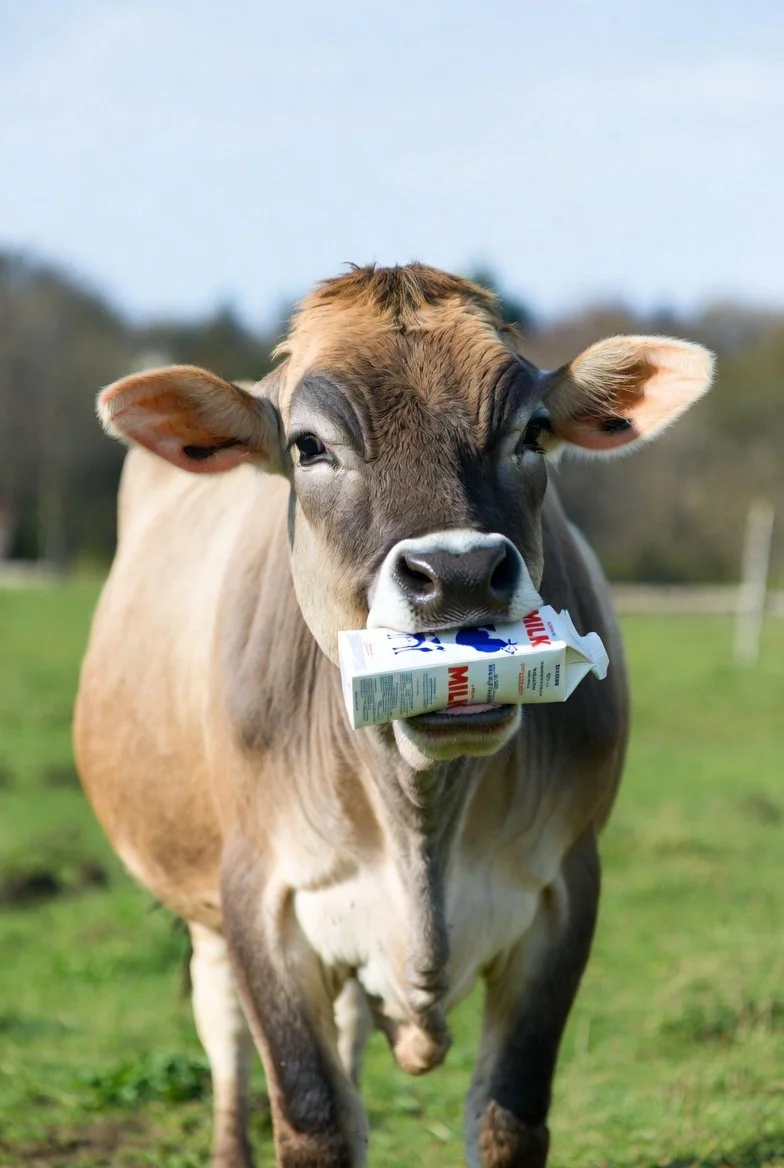
The cow knows. Look at her face. She's not confused. She's looking directly at you, carton in mouth, asking: You see the absurdity now, right? We've made the foreign familiar and the familiar foreign. We've built refrigerators for cow's milk and pathologized adult nursing.
We've normalized the strange and called the obvious deviant.
Here's a quiet truth with a seismic aftershock:
Humans only consume two kinds of fluids on this planet.
Water. And milk.
Everything else is just water in disguise—fruit water, bean water, leaf water, grain water, sugar water, fermented water.
But milk?
Milk is the only liquid we drink that isn't pretending to be water.
And here's the part that should rearrange something inside you:
The only milk designed for human biology is the only milk we treat as taboo.
The only milk tuned to our immune system, our microbiome, our nervous system, our brain—the only fluid with molecules custom-built for our species—is the one we've been taught to avoid.
Meanwhile, we casually drink the milk of a 1,500-pound grazing animal whose biology doesn't match ours at any meaningful level.
Cow's milk? Normal.
Human milk? "Weird."
How did we get it so backwards?
How did we normalize the foreign and pathologize the familiar?
How did we decide the milk engineered for our development was the one we shouldn't talk about—while the milk from another species became a household staple?
The answer sits in a long braid of history, power, convenience, modesty, and cultural amnesia.
Let's pull on the thread.
🐄 1. The Inversion Begins: Domestication Creates the First Detour
For 99% of our evolutionary timeline, humans drank water.
Milk was for infants.
Nursing was communal.
And no adult human would have considered walking up to another species for a hit of warm, enzymatically active secretion.
Then came domestication.
Suddenly:
Animals were penned
Surplus milk appeared
Calories were available in a new form
But Here's the Twist No One Talks About:
Early humans didn't drink it.
Not because of culture—because they couldn't.
They were lactose intolerant.
So what did they do?
They fermented and curdled it.
Cheese. Yogurt. Kefir. Low-lactose, preserved forms of dairy.
Not milk.
The Lactase Persistence Mutation:
Only around 10,000 years ago did some human populations develop the genetic mutation that allows adults to digest lactose (milk sugar). This mutation arose independently in:
Northern Europe (35% global prevalence)
East Africa (pastoralist populations)
Middle Eastern herding communities
But here's what matters:
Even populations with lactase persistence didn't evolve to drink cow's milk.
They evolved to tolerate it.
There's a difference.
So Why Did Animal Milk Win?
Because it was easier to store than human milk.
Not healthier. Not better. Just logistically simpler.
And convenience is one hell of a storyteller.
Human milk requires:
A lactating human
Immediate consumption or refrigeration
Social intimacy
Trust
Cow's milk requires:
A penned animal
Extraction on human schedule
Storage in cool environments
No emotional relationship
The milk that won wasn't the milk that matched our biology. It was the milk that matched our economy.
📉 2. Religion, Morality, and Shame Get Involved
As civilizations grew, breastfeeding shifted from sacred to sexualized.
Renaissance paintings celebrated nursing Madonnas—but by the Victorian era, exposed breasts were scandal, even for feeding.
The Historical Shift:
Ancient/Medieval Period:
Wet nurses were respected professionals
Communal nursing was normal
Breast milk jewelry and relics were treasured
Religious iconography celebrated lactation
16th-18th Century:
Wet nurses became regulated, then stigmatized
Upper-class women avoided breastfeeding (sign of low status)
Breasts became sexualized in art and literature
19th-20th Century:
"Proper" women didn't breastfeed in public
Formula was marketed as "scientific" and "modern"
Lactation became private, medicalized, eventually shameful
Three Cultural Pivots Reshaped Everything:
1. Breasts became sexual before nutritional
Once breasts were coded as erotic organs, their feeding function became embarrassing. The culture couldn't reconcile: How can the same body part be both sexy and maternal?
Answer: Make the maternal part invisible.
2. Feeding became private before communal
Wet nursing, cross-nursing, and communal breastfeeding disappeared. Nursing became isolated mother-infant dyad behind closed doors.
3. Human milk became invisible before it became "weird"
Once nursing disappeared from public view, cultural memory of human milk as normal human fluid dissolved.
And when something disappears from culture, it doesn't become irrelevant—it becomes taboo.
🧪 3. Formula Marketing Finishes the Job
To convince a species that cow's milk and powdered substitutes were "good enough," formula companies had to rewrite our instincts—and they did it brilliantly.
The Marketing Campaign That Changed Biology:
1950s-1970s Messaging:
"Science is superior to nature"
"Breastfeeding is optional"
"All milk is interchangeable"
"Human milk is private. Cow's milk is wholesome."
"Modern mothers use formula"
The Nestlé Scandal:
In the 1970s, Nestlé aggressively marketed formula in developing countries, giving free samples to new mothers just long enough for their milk to dry up—then charging for formula they could no longer afford. Babies died.
This wasn't just unethical marketing. This was biological colonization.
What Formula Companies Understood:
You can't market against biology unless you first convince people biology is unreliable.
So they did.
This wasn't biology. It wasn't public health. It was marketing.
And the most effective marketing doesn't persuade—it rearranges what seems obvious.
❌ 4. The Taboo Isn't Biological—It's Manufactured
Biologically speaking, there is nothing strange about humans consuming human milk.
Nothing.
Human Milk Is Recognized By:
Our immune system (doesn't trigger inflammatory response)
Our gut (HMOs feed our microbiome specifically)
Our brain (lipids cross blood-brain barrier efficiently)
Our hormones (oxytocin pathways activated)
Our microbes (evolved with our bacterial communities)
Our epithelial receptors (perfect molecular fit)
It is the one fluid our bodies don't have to "interpret."
It speaks a language we evolved to understand.
Cow's Milk?
It's a mistranslation—a workaround the body tolerates, adjusts to, or fights.
Common issues with cow's milk:
Lactose intolerance (65% of global population)
Casein allergy (2-3% of children, some adults)
Inflammatory response (different protein structure)
Mucus production (body treating it as foreign)
Hormones meant for calves, not humans
Human milk is a match.
Cow's milk is an adaptation.
And adaptations only feel natural when you forget you made them.
🧬 5. Human Milk Isn't Just Milk—It's a Living Signal
This is where biology becomes poetry.
Human Milk Contains Molecules That:
Build Immunity:
2′-FL (2′-fucosyllactose) - antimicrobial
Lactoferrin - iron-binding protein that starves pathogens
Lysozyme - antibacterial enzyme
Secretory IgA - antibodies customized to infant's exposure
Shape the Gut:
LNT (lacto-N-tetraose)
LNnT (lacto-N-neotetraose)
200+ oligosaccharides that feed beneficial microbes
Wire the Brain:
3′-SL (3′-sialyllactose)
6′-SL (6′-sialyllactose)
Bioactive lipids that prime neural pathways
DHA (docosahexaenoic acid) for brain development
Regulate Genes:
Exosomal microRNAs that alter gene expression in real time
Epigenetic modulators that influence development
Repair Tissue:
EGF (epidermal growth factor)
TGF-β (transforming growth factor)
Growth hormones that guide development and healing
Sync Connection:
Oxytocin-linked molecules that bond and regulate
Melatonin (in evening milk for sleep)
Cortisol (in morning milk for waking)
The Most Important Part:
The oligosaccharides in human milk—molecules like 2′-FL—don't even exist in cow's milk.
This isn't hydration.
This isn't nutrition.
This is biological communication.
A molecular conversation between bodies.
And there is nothing else on Earth like it.
These molecules don't just feed—they teach. The body remembers these signals long after infancy ends.
Read more about how 2′-FL shapes memory and coherence in adults →
🔄 6. So Why Cow's Milk?
Because cow's milk is:
✅ Abundant (one cow produces gallons daily)
✅ Storable (pasteurization, refrigeration)
✅ Scalable (industrial dairy farming)
✅ Profitable (entire economic system built on it)
✅ Culturally unsexual (no intimacy required)
✅ Emotionally distant (no human relationship needed)
Cow's milk is convenient.
Human milk is intimate.
And our culture consistently chooses convenience over intimacy—then forgets we made that trade.
This biological precision is why adult nursing relationships tap into something deeper than culture wants to acknowledge.
Explore the intimacy and biology of ANR in NURturing deSirE →
🧘 7. What Happens When a Culture Forgets Its First Fluid?
What happens when the only non-water substance designed for human biology becomes the only one we don't talk about?
What happens when the molecules that shaped our immune systems vanish behind modesty, shame, or silence?
What happens when the most biologically precise nourishment on the planet becomes culturally off-limits?
We end up here:
A species drinking milk from cows because it feels less intimate than drinking milk from humans.
The Psychological Consequences:
1. We lose the language of nurture
When human milk disappears from cultural consciousness, so does our understanding of milk-based intimacy.
2. We pathologize normal biology
Adult nursing relationships, extended breastfeeding, even public infant nursing become "weird" instead of baseline human behavior.
3. We commodify what should be relational
Milk becomes product, not gift. Transaction, not connection.
4. We forget our bodies' capacity
Most people don't know human milk can be induced without pregnancy. Don't know dry nursing exists. Don't know the body remembers how to lactate decades after weaning.
We didn't evolve this way.
We adapted this way.
And then we forgot we adapted.
🔥 Closing: The Inversion Isn't Natural—It's Amnesia
Milk isn't strange.
Human milk isn't strange.
Our culture is strange about human milk.
When you peel away:
The shame
The economics
The moral codes
The modesty scripts
The industrial drift
You're left with a question that lands like a soft explosion:
Why are we drinking the milk of another species while pretending the milk designed for us is the strange one?
If that unsettles you—good.
It means something ancient inside you just woke up.
What You Can Do:
1. Question the obvious
Next time you pour cow's milk in your coffee, notice: This came from a cow, not a human. Not to judge it—just to notice we've normalized the foreign and pathologized the familiar.
2. Learn what human milk actually does
Read about HMOs, circadian composition, oxytocin bonding. Understand what we lost when we forgot.
3. Support breastfeeding visibility
Not just infant nursing—all human milk practices. Including adult nursing relationships.
4. Reclaim the language
Stop saying "breast milk" like it's a subcategory.
Say "human milk."
That's what it is. Milk. For humans. By humans.
Want to see what this looks like from the inside—where milk spirits witness the chaos and tenderness of human intimacy?
Meet the Bibis in The Milky Way →
Continue exploring:
📖 NURturing deSirE — A playful guide to adult nursing relationships
🎨 The Milky Way — Weekly comics about milk spirits and intimacy
💧 Milk Drops — Essays on biology, memory, and connection
With warmth,
Frank Gray
Frequently Asked Questions About Human Milk vs Cow's Milk
Why do humans drink cow's milk instead of human milk?
Humans normalized cow's milk because it was easier to store, scale, and commodify than human milk—not because it was healthier. Convenience, not biology, drove the cultural shift. Cow's milk requires no human relationship or intimacy; human milk requires trust and connection, which made it less scalable for industrial food systems.
What's the difference between human milk and cow's milk?
Human MilkCow's Milk200+ oligosaccharides (HMOs)Zero HMOsAntibodies customized to human exposureBovine antibodies for calvesBrain-building lipids for humansOptimized for rapid calf growthEasily digestible proteinsHarder to digest caseinNo inflammatory response in humansCommon allergenSpecies-specific growth factorsForeign growth hormones
What does human milk contain that cow's milk doesn't?
Human milk contains molecules absent in cow's milk:
Human milk oligosaccharides (200+ types including 2'-FL, LNT, 3'-SL)
Secretory IgA antibodies specific to human pathogens
Lactoferrin (iron-binding antimicrobial protein)
Bioactive lipids optimized for human brain development
Exosomal microRNAs that influence gene expression
Species-specific growth factors and hormones
Is drinking human milk as an adult weird?
No. From a biological perspective, consuming human milk makes more sense than consuming cow's milk—it's designed for human bodies. Humans are the only mammals that regularly drink another species' milk while treating their own species' milk as taboo. The "weirdness" is cultural conditioning, not biological reality.
Is human milk healthier than cow's milk for adults?
Human milk offers unique benefits cow's milk cannot provide: immune-boosting oligosaccharides, easily digestible proteins, and bioactive compounds that support gut and brain health. While research on adult consumption is limited, the biological compatibility is undeniable—human milk evolved specifically for human bodies at all life stages.


Desire doesn’t disappear with time—it settles, deepens, and waits. In this reflective essay, Frank Gray explores adult nursing in long-term relationships, where milk may no longer flow but warmth, memory, and tenderness remain. A meditation on dry nursing, devotion, and the vow beneath the vows.