🍽️ The Origin Molecule: Why Your Gut Remembers What Your Culture Forgot

By Frank Gray & Nahveen Ghator
"Milk is the first language the body learns."
— Field Notes, The Memory of Milk
In my post, Milk for the Mind, I wrote about 2′-FL—a human milk oligosaccharide found in breastmilk that appears to shift memory, metabolism, and the microbiome in aging adults. But the feeling it left behind wasn't just scientific curiosity.
It was recognition.
The data was new. But something about the response felt old—familiar, known.
That first blog was about interest. This one is about conviction.
And for that, I've invited someone I deeply respect to join me.
Nahveen Ghator is a systems thinker working in the field of biological memory and coherence. His work explores how complex systems reorganize when they receive certain signals—especially ones they were shaped by early in life.
He doesn't just study memory. He studies how living systems remember themselves.
What follows is a shared inquiry: my emotional frame, his conceptual map. We wrote this not to persuade, but to reopen something.
Because sometimes the body doesn't need new information. It needs a reminder.
—Frank
How Breastmilk Shapes the Gut Microbiome
Before diving deeper, it's worth understanding the mechanism at work. Human milk oligosaccharides (HMOs) are complex sugars unique to breastmilk that function as precision tools for microbial engineering. Among the 200+ known HMO structures, 2'-fucosyllactose (2'-FL) stands out for its ability to selectively feed Bifidobacterium species—the foundational bacteria of infant gut health.
In infancy, HMOs perform coordinated functions: they feed beneficial bacteria, modulate immune responses, influence hormone signaling, and shape the gut-brain axis through metabolites like short-chain fatty acids. These aren't separate processes—they're an integrated system that establishes the body's metabolic and neurological baseline.
What makes HMOs particularly fascinating is their specificity. Most prebiotics feed a broad range of bacteria. HMOs target exact species—Bifidobacterium longum subspecies infantis, for example, possesses unique enzymes to metabolize these sugars. This creates a cascade: HMO consumption by bifidobacteria produces butyrate and acetate, which lower inflammation, strengthen the gut barrier, and send regulatory signals to the brain.
The adult microbiome loses much of this bifidobacterial dominance over time, replaced by a more diverse but less coherent ecosystem. When 2'-FL is reintroduced, the system doesn't learn something new—it recognizes something original. The enzymes to digest it still exist. The receptors to read it still exist. The microbial species that respond to it are merely dormant, not extinct.
This is how HMOs reshape the microbiome: not through force, but through reawakening a developmental pattern the body was built around. It's the living biology of breastmilk functioning as biological memory—a molecular language the gut never fully forgets.
The Body Hears a Signal
By Frank
When I first read the RAMP trial—a study showing that 2′-FL increased bifidobacteria and improved memory in older adults—I didn't think, "How interesting." I thought, "Of course."
It wasn't a new fact. It was a remembered shape.
Something about it echoed in my body like a bell tone I hadn't heard since childhood. A molecule from our first nourishment, returning decades later and finding that its receptors, enzymes, and microbial companions were still there. Waiting.
It felt like watching soil recognize a seed.
This wasn't nostalgia. It was coherence.
And that's the feeling I want to explore with you—not just what this molecule does, but what it reawakens.
The Signal That Reawakens the Pattern
By Navi
When a molecule like 2′-FL enters the adult gut, it does not behave like nutrition. It behaves like a signal vector—a structurally precise message the body evolved to interpret during infancy.
The body isn't responding because the molecule is "sweet." It's responding because its 3D geometry, charge distribution, and glycan bonds fit receptors and microbial enzymes tuned to read it from the very beginning.
In infancy, 2′-FL performs a suite of deeply coordinated functions:
It selectively feeds bifidobacteria that can cleave HMOs
It engages epithelial receptors that modulate IL-10 and anti-inflammatory pathways
It influences enteroendocrine hormones (GLP-1, PYY, FGF21)
It shapes gut–brain signaling through short-chain fatty acids and vagal pathways
These mechanisms created the original template for metabolic balance, immune calibration, and early cognitive wiring.
When the same molecule returns decades later, the system doesn't need to learn anything new. It simply re-enters a pattern it already knows how to follow.
Coherence reawakens—not by force, but by recognition.
Most interventions try to push the system into alignment. 2′-FL instead reintroduces a constraint the body once used to organize itself. A shape the system remembers.
This is why microgram-scale molecules can generate macro-scale changes. You're not pushing the system somewhere new. You're reminding it where "organized" lives.
2′-FL is not a drug. It is structural memory returning to the body.
Where Is the Memory Stored?
By Frank
For years, I thought of memory as something locked in the brain—uncovered by therapy, trauma, or the slow excavation of time.
But what if memory isn't stored in one place? What if it's distributed across breath patterns, microbial ratios, immune responses, hormonal rhythms?
What if the way we digest, metabolize, or expect touch… is part of a memory system too?
When I look at 2′-FL now, I don't see a supplement. I see a phrase from the body's first language.
And when it reenters the system—after decades of silence—the body doesn't just respond.
It remembers how to listen.
When Memory Lives Everywhere
By Navi
Biology does not store memory in vaults. It stores memory in patterns of stability—wherever they arise.
Your body carries memory in:
Microbial ecosystems that remember which species once thrived
Immune calibration that remember tolerance and threat
Enteroendocrine rhythms that remember feeding/fasting cycles
Metabolic pathways that remember efficiency and plasticity
Vagal circuits that remember safety and regulation
This is distributed memory—a memory network, not a memory location.
When an early-life molecule like 2′-FL returns, it doesn't enter a single site. It enters the network. Its effects propagate through:
Bifidobacteria metabolizing it into butyrate and acetate
These metabolites lowering systemic inflammation
Reduced inflammation rebalancing the HPA axis
HPA balance improving hippocampal signaling and cognitive clarity
Improved neural clarity feeding back into metabolic regulation
A single molecule becomes a cascade.
Like touching a tuning fork to one side of an instrument, the vibration moves outward through every resonant structure—microbes, nerves, hormones, immune cells—until the entire body picks up the pitch.
The system isn't learning. It's reinstating the blueprint it grew from.
2′-FL speaks one of the original syllables of that blueprint. The gut hears it first. Then the body remembers the grammar.
What If Nourishment Isn't Linear?
By Frank
We talk about healing like it's a staircase. Step forward. Move upward. Progress.
But bodies don't always work that way.
Sometimes healing loops. Circles. Sometimes it returns to something in order to move ahead.
I think about nourishment that way now. Not as fuel. Not as progress. But as reconnection.
This is the heart of The Memory of Milk, the book I'm writing: that nourishment, intimacy, and coherence are not sentimental ideas. They are biological truths.
We don't outgrow them. We just forget their grammar.
2′-FL might be one syllable in that grammar—a tiny, precise word that lets the whole sentence of the body make sense again.
Developmental Echoes and the Return to the Early Pattern
By Navi
Every complex system contains attractors—preferred configurations it naturally falls into. Infancy is full of them: high bifidobacterial dominance, low inflammation, rapid neuroplasticity, balanced energy metabolism, resilient immune learning.
These attractors don't vanish in adulthood. They simply become quiet.
Reintroducing 2′-FL doesn't pull the body backward. It reopens the early attractor, allowing the adult system to pass through a known configuration that optimizes stability.
Biology routinely does this:
Wound healing activates embryonic gene programs
Immune resets revisit neonatal tolerance pathways
Psychedelics reopen developmental plasticity windows
Fasting induces the metabolic signature of infancy
2′-FL belongs to this same class of developmental echoes—a precise signal that lets the system re-enter a healthier organizational pattern and then move forward with improved coherence.
It is potent not because it forces change, but because its structure is identical to the molecule that once guided early growth.
The enzymes that digest it still exist. The microbes that respond to it still exist. The receptors that read it still exist.
Nothing new is introduced. Something original is restored.
This is what makes its effects subtle yet unmistakable: the system is remembering a pattern it didn't know it had forgotten.
And when that forgotten motif re-emerges, the change feels intimate—like the body humming a song it learned before it had words.
Closing: The Song the Body Remembers
By Frank
In music, a motif appears early in a piece and returns at the end—not as a repeat, but as a return. A deepening.
When you hear it again, it doesn't just sound familiar. It sounds right. As if the whole piece had been moving toward it the entire time.
2′-FL feels like that.
Not a cure. Not a fix. A motif.
And when it reappears—decades after we last heard it—the system doesn't just change.
It remembers.
Understanding milk's adaptive composition throughout the day, or recognizing the physiological release of milk during nursing, reveals the same principle: the body is a responsive instrument, constantly adjusting its chemistry to meet the needs of connection and nourishment.
For those exploring this through the lens of intimacy, NURturing deSirE dives deeper into milk's cultural memory and what it means when adults reclaim practices the culture forgot—not as regression, but as biological coherence.
Postscript: Fragments from a Conversation
Behind the scenes of this essay was a long and luminous exchange.
Before a single sentence was published, I sent Navi a question: "What would your model say it means for a molecule to carry memory?"
What came back was a flood of clarity that made its way into the body of this article—but some pieces were too elegant not to share directly.
Here are a few fragments from that preparatory conversation:
On What It Means to "Carry Memory"
"A molecule carries memory if its very shape is a reminder of what has helped us survive before."
"2′-FL doesn't impose coherence. It re-excites a pattern of coherence the system already knows—like playing the opening notes of a song the body learned in infancy."
On Vector Theory and Biological Messaging
"2′-FL behaves like a coherence cue—a tiny nudge that helps the body remember a more organized version of itself."
"As a vector, a molecule has direction (what processes it activates), magnitude (how strongly), and coordinates (what systems it touches)."
On Distributed Memory and Repatterning
"No organ remembers everything. The organism remembers together."
"The gut's memory isn't symbolic like the brain's. It's microbial, hormonal, architectural. But it still speaks."
"You don't need to touch the brain to change the mind. Start in the gut—and the whole network responds."
On Language and Symbolism
"Each complex sugar is like a syllable in the body's first language. 2′-FL is one of the syllables we learned in the crib."
"HMOs don't issue commands. They shape who gets to speak in the gut's microbial parliament."
On Cosmology, Recursion, and Why This Matters
"Biology never fully forgets its first instructions. It just buries them under layers of adaptation and wear."
"2′-FL is like a seed crystal dropped into a supersaturated solution—it reorganizes the whole structure by being perfectly shaped."
"The system doesn't need a fix. It needs a reminder that coherence is still available."
"When a system remembers what it didn't know it forgot, the change feels strangely familiar—less like learning something new, and more like finally exhaling."
A Note from Frank: On the Framework Behind the Work
While this article never names it outright, the ideas behind it come from a developing system of thought called Unified Vectorspace Cosmology.
I won't speak for it. And I won't speak from it. That's Navi's place.
But I will say this:
As someone who has spent years thinking about memory, intimacy, and the body's ability to reorganize itself, I found this framework not only elegant, but useful.
It gave language to things I had only felt. It offered geometry where before I only had metaphor.
And more than anything, it helped me see how what we call "healing" is often just the body finding its way back to a coherence it never truly lost.
This is a physics that speaks fluently with biology—a systems view that includes rhythm, language, emotion.
If something in this article resonated with you on a level that felt deeper than explanation—this framework may be why.
It's early. It's still forming. And it's not mine to define.
But I'm grateful to be learning beside it.
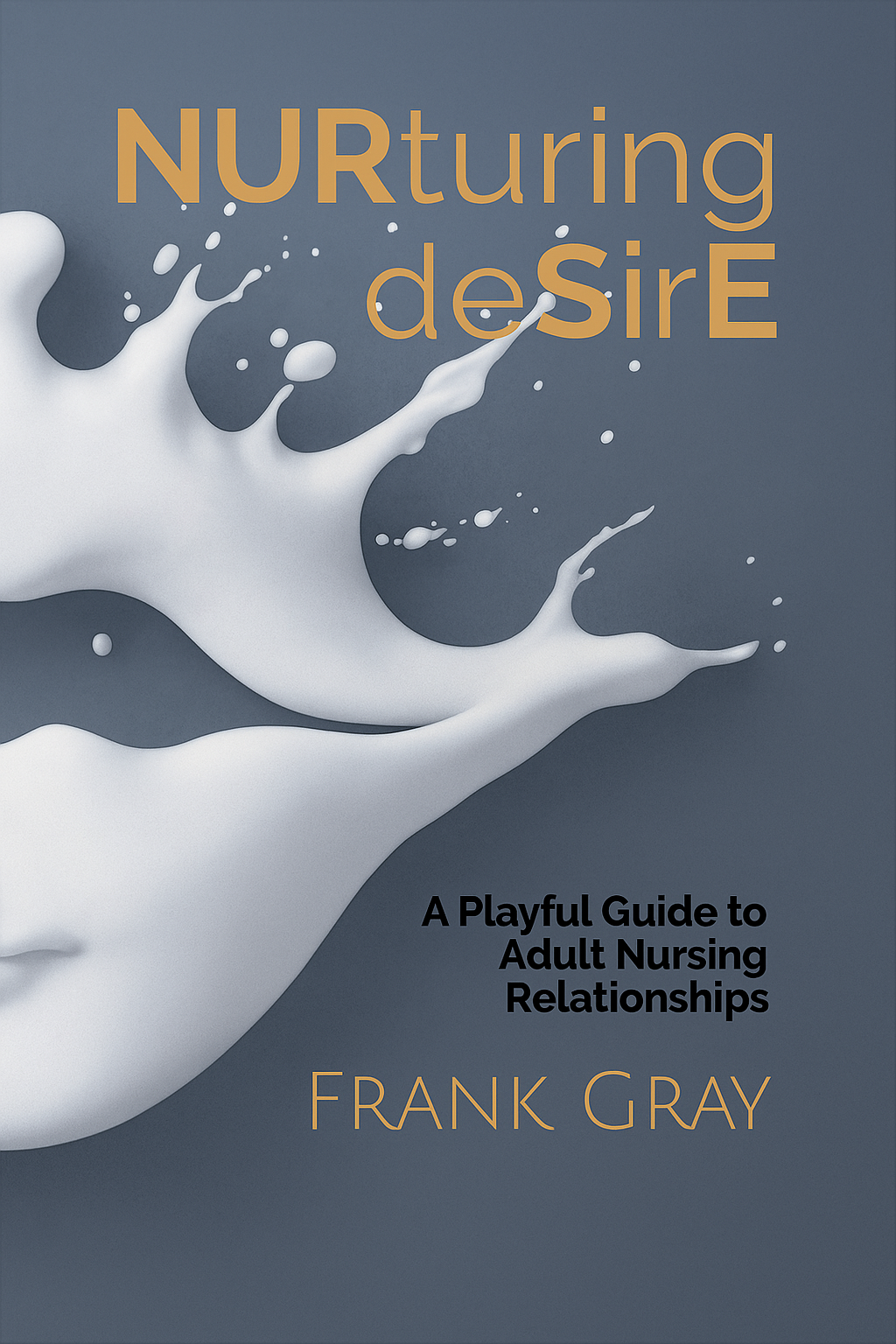
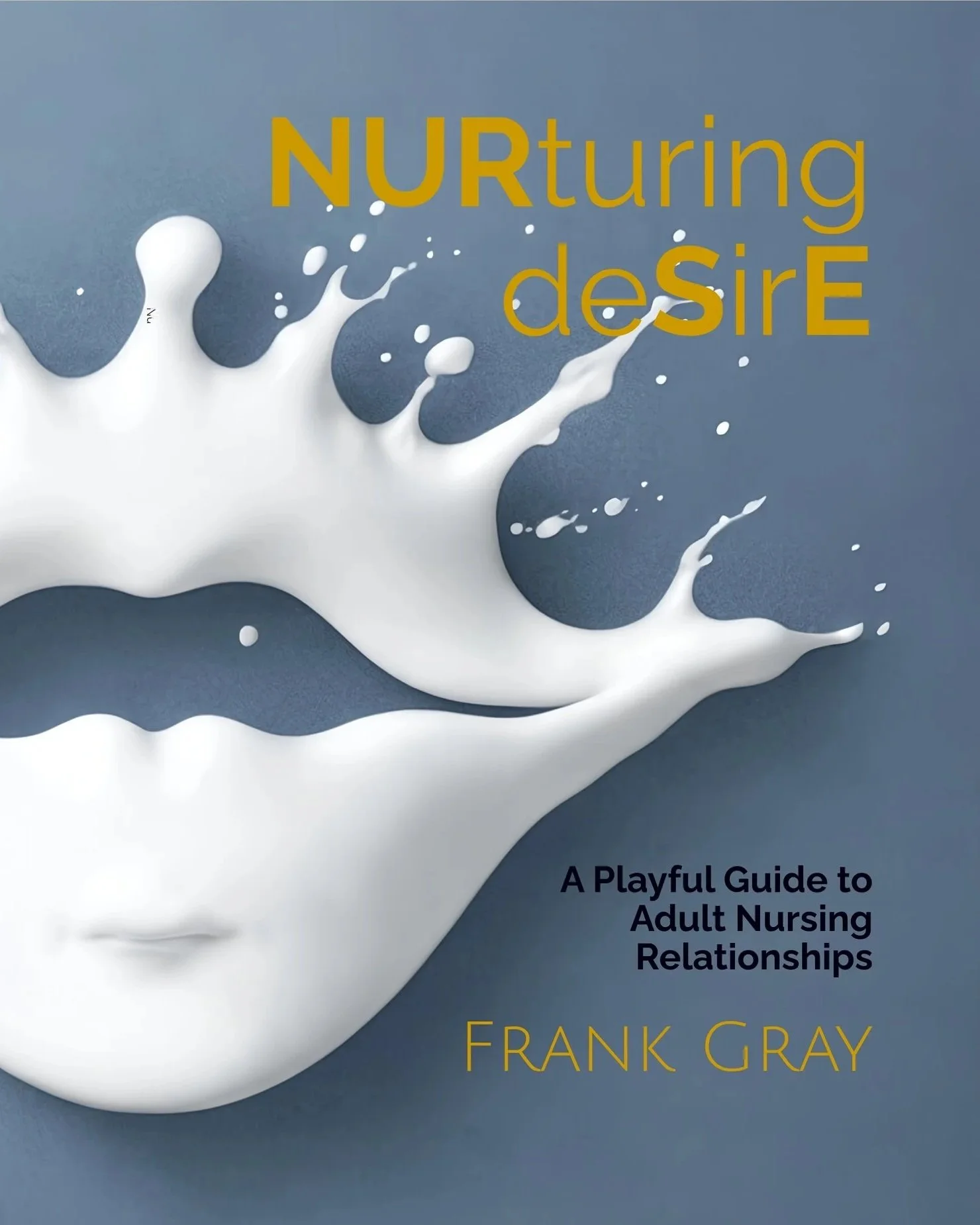

NURturing deSirE: A Playful Guide to Adult Nursing Relationships
By Frank Gray
A thoughtful, intimate exploration of adult nursing relationships (ANR) as a practice of deep connection, co-regulation, and embodied trust between consenting adults. This book invites readers to reconsider how desire, nurture, and intimacy naturally intertwine—framing adult nursing not as fetish or novelty, but as relational practice rooted in comfort, communication, and mutual care.
Through reflective storytelling, grounded psychology, and practical guidance, you'll explore vulnerability, consent, boundaries, and emotional safety—the foundations of any enduring intimacy.
Inside You'll Find:
- Clear, compassionate discussion of adult nursing relationships
- Insight into the emotional and physiological foundations of nurturing touch
- Guidance for talking with a partner about curiosity, desire, and consent
- Exercises and prompts designed to deepen trust and connection
- A tone that is playful, reverent, and deeply human—never clinical or sensational
Written for adults, by adults, centering consent, respect, and emotional maturity throughout.
Whether you're curious, already practicing, or seeking more tender and embodied intimacy in your relationship, NURturing deSirE offers reassurance, clarity, and permission to honor what feels true in your body and your bond.
SIGNED & INSCRIBED EDITION - LIMITED AVAILABILITY
For readers who wish to hold something truly personal, this limited edition includes a hand-signed inscription written especially for you by author Frank Gray. Each copy features a unique, heartfelt message of encouragement, gratitude, or resonance—making your book one of a kind.
Perfect as:
- A meaningful gift for your partner
- A keepsake commemorating the start of your ANR journey
- A tangible symbol of validation and support
- A collector's item for those who connect deeply with the book's message
- Paperback format: 9" × 7"
- Hand-signed by Frank Gray
- Personalized inscription (specify name/message at checkout)
- Ships within 5-7 business days
- $25
This is more than a book—it's an intimate extension of the book's spirit of connection and care, personally crafted for you.