Oxytocin: The Love Hormone (and Why Nursing Works)










Visualize the science of intimate connection with this ethereal energy field artwork. Perfect for therapy offices, bedrooms, or anyone who understands that love is literally measurable as light. Museum-quality wall art depicting co-regulation and nervous system synchronization.
This is connection rendered as pure light—not bodies touching, but energy fields merging. Two forms dissolving into translucent waves, boundaries becoming permeable, the space between them glowing with what passes through.
Bond: Not attachment. Not dependency. The electromagnetic field that forms when two nervous systems synchronize. The measurable, observable phenomenon of oxytocin creating visible change in brain activity. The bioluminescence of intimacy—love made literal as light.
Luminous: Because this is what nursing looks like to the nervous system. Not milk flowing through ducts, but information flowing through touch. Light signals traveling between bodies at the speed of skin contact. Two organisms becoming one coordinated system, pulsing with shared rhythm.
This artwork captures the invisible architecture of connection—the glowing threads that weave between partners during intimate touch. Neuroscience calls it co-regulation. Ancient traditions called it energy exchange. This image calls it what it is: luminous.
The darker the background, the brighter the bond. Against the void of separation, connection becomes radiant. The less distinct you become as separate beings, the more visible you become as unified field. Your edges blur. Your boundaries dissolve. What remains is not two bodies, but one luminous bond.
Perfect for those who understand that intimacy isn't metaphorically magical—it's literally measurable as light, heat, electrical charge, synchronized heartbeats, matched breathing, nervous systems oscillating together like coupled pendulums. This is the science of love made visible.
Perfect For:
- Therapy office wall art illustrating attachment and bonding
- Bedroom decor celebrating energetic intimacy
- Meditation space art honoring connection as sacred
- Gifts for yoga teachers, energy workers, and wellness practitioners
Premium Museum-Quality Canvas:
- 1.25″ thick gallery-wrap
- Premium poly-cotton blend fabric (10.15 oz/yd²)
- Fade-resistant archival inks
- Hand-stretched over solid wood stretcher bars
- Mounting brackets included—ready to hang
- Available in 5 size tiers: XS (8×10-9×12) $40, S (11×14-12×18) $55, M (12×16-16×20) $75, L (18×24) $105, XL (20×28-20×30) $145
- Made-to-order to reduce waste
Custom-made when you order. Ships from USA, Canada, Europe, UK, or Australia.

There's a little chemical in your body that gets credit for a lot of romance: oxytocin. It's the molecule we send postcards about — the one that makes us sigh into a partner's shoulder and feel, for a blessed minute, that the world has lined up just right. It's also deeply practical. Oxytocin lowers stress, encourages trust, and smooths social edges. Nursing calls it up with the same casual grace of a friend bringing tea.
If you squint, nursing looks like a set of human gestures — touch, rhythm, proximity. But under the hood, those gestures are a neat biochemical instrument. When skin touches skin and mouths find a rhythm, oxytocin spikes. That spike isn't mere sentimentality; it's a physiological permission slip. It tells your nervous system: "It's safe here. Slow down. Breathe. Receive."
What Is Oxytocin?
Oxytocin is a neurohormone produced in the hypothalamus that facilitates bonding, trust, and social connection. Released during touch, nursing, orgasm, and childbirth, oxytocin reduces stress hormones, promotes feelings of safety, and strengthens attachment between partners. In adult nursing relationships, oxytocin creates the same bonding effects seen in parent-infant nursing—this isn't metaphor, it's reproducible neurochemistry.
The molecule itself is a peptide—a short chain of nine amino acids that acts as both a hormone (traveling through the bloodstream) and a neurotransmitter (acting directly on brain cells). It's produced in the hypothalamus, stored in the posterior pituitary gland, and released in response to specific stimuli: physical touch, rhythmic stimulation, eye contact, warmth, and most powerfully, suckling.
What makes oxytocin particularly fascinating in the context of intimacy is its dual nature: it both creates the feeling of connection and simultaneously reinforces the behaviors that generated that feeling. It's a biological feedback loop—nursing triggers oxytocin, oxytocin makes nursing feel good, the good feeling encourages more nursing, which releases more oxytocin. This is why nursing practices can become self-sustaining rituals rather than requiring constant willpower.
How Oxytocin Works in Adult Nursing
Why does this matter? Because intimacy isn't just a story you narrate together — it's a nervous system rewiring exercise. The more often your body learns, in tiny, consistent ways, that someone's touch calms rather than alarms, the better it gets at trusting. Nursing as oxytocin delivery is a series of tiny trust-building exercises: a slow rhythm, a repeated pattern, a place where consent meets sensation. Over time, these repetitions can shift how partners register safety and belonging in the world.
When one partner latches and begins rhythmic suckling, several things happen simultaneously:
In the nursing partner's body:
The pituitary releases oxytocin within seconds
Oxytocin triggers the milk ejection reflex (letdown) in lactating individuals
Cortisol (stress hormone) begins to decrease
Prolactin (another bonding/calming hormone) increases
Blood pressure lowers
Heart rate variability improves (a marker of nervous system flexibility)
In the receiving partner's body:
Skin-to-skin contact triggers their own oxytocin release
Proximity and eye contact amplify the effect
The rhythmic suckling creates a meditative state
Their nervous system begins mirroring the nursing partner's calm
This reciprocal release is crucial. Both people aren't just intellectually sharing an experience—they're biochemically synchronizing. Oxytocin's role in milk release is only one part of a much larger regulatory cascade that affects mood, stress response, and attachment.
The Science of Bonding and Touch
But oxytocin is a generous molecule with a few clever tricks. It's not only released in the partner who is being nursed — it releases in the person doing the nursing as well. That reciprocity is important: both people get the "we're safe and close" message. That shared hormonal landscape creates a loop of calm and connection. Think of it as co-regulation: two people taking turns to help steady each other's nervous systems.
The science here is well-established. Studies on parent-infant bonding show that both the nursing parent and infant experience oxytocin surges during breastfeeding. The same mechanism operates in adult nursing—the body doesn't distinguish between "appropriate" and "inappropriate" nursing contexts. It simply responds to the physical stimuli: warmth, touch, rhythmic stimulation, and the neurochemical cascade those trigger.
Oxytocin's effects extend beyond the immediate nursing session. Regular oxytocin release over time actually remodels the brain's attachment circuitry. Neuroplasticity research shows that repeated positive social experiences strengthened by oxytocin can:
Lower baseline anxiety levels
Improve ability to read social cues and emotional states
Increase trust and willingness to be vulnerable
Enhance capacity for emotional regulation
Strengthen pair bonding in romantic relationships
This is why why touch triggers oxytocin matters so much in modern life—many people are chronically touch-deprived, which means chronically oxytocin-deprived. Adult nursing can be one way to address that deficit.
A critical, often-missed point: oxytocin doesn't erase cognition. It doesn't make things magically fine. But it lowers the volume of threat and raises the room for curiosity. That's why nursing can feel like a softener for arguments, a balm after a long day, or a quiet way to bring the body back down when anxiety has run high. It's not a cure-all, but it is a reliable tool in the intimacy toolbox.
Oxytocin and the Nervous System
The biochemistry of connection works through the autonomic nervous system—specifically by shifting us from sympathetic activation (fight/flight) to parasympathetic dominance (rest/digest/connect). Oxytocin is one of the primary signals that tells the vagus nerve to downregulate threat responses.
In practical terms, this means:
Before nursing: Partner might be in sympathetic arousal (stressed, vigilant, tense)
During nursing: Oxytocin signals the parasympathetic system to engage
After nursing: Both partners are more likely to be in ventral vagal tone (socially engaged, calm, connected)
This state shift is why timing matters. If someone is in intense sympathetic activation (mid-panic attack, actively angry, in physical pain), their nervous system may not be receptive to oxytocin's calming signals. The nervous system needs to be at least somewhat settled for oxytocin to do its work effectively.
Music's effect on oxytocin release is another avenue worth exploring—certain rhythms, tempos, and harmonic structures can prime the nervous system for oxytocin responsiveness, making nursing sessions even more effective when paired with intentional soundscapes.
Practical Applications: Using Oxytocin Thoughtfully
And because I like practical things, here are a few ways to use the oxytocin effect thoughtfully:
Ritualize the smallness. Consistent micro-rituals — a short nursing session after breakfast, a five-minute hold before sleep — cue your nervous system that calm is available on demand. The predictability itself becomes regulatory.
Use breath as glue. Slow, shared breath enhances oxytocin's calming effects. Try breathing in together and out together for a minute before you begin. This primes both nervous systems for connection.
Keep curiosity alive. Instead of aiming for outcomes, aim for noticing: "What changed for me? What changed for you?" That keeps oxytocin from being weaponized into an expectation machine.
Be gentle about timing. Oxytocin works best when the nervous system is open; starting when someone is exhausted, hungry, or very upset can need different care (comfort first, experiment later).
Layer oxytocin-enhancing activities. Eye contact, warm environments, gentle music, and verbal affirmation all amplify oxytocin's effects. A nursing session that includes these elements will feel qualitatively different from one that doesn't.
Track patterns. Some people are more oxytocin-responsive in the morning, others at night. Pay attention to when nursing feels most connective and structure rituals around those windows.
Oxytocin Across Different Nursing Practices
Importantly, oxytocin release happens with or without milk—dry nursing produces the same bonding hormone as wet nursing. The trigger isn't lactation; it's the physical and emotional intimacy of the act itself.
For couples practicing dry nursing, this is validating: you're getting the full neurochemical benefit without the logistics of milk production. For those engaged in wet nursing, the presence of milk adds additional hormonal layers (prolactin, etc.) but the oxytocin mechanism is identical.
This universality is part of what makes oxytocin such a powerful intimacy tool—it works across bodies, genders, relationship configurations, and lactation status. The chemistry doesn't discriminate.
Science Sidebar — Short and Friendly
Oxytocin is released by the brain's pituitary in response to touch, suckling, and social bonding. It lowers cortisol (the stress hormone), supports feelings of trust, and helps the body down-regulate from fight/flight. In nursing, oxytocin's double release (in both partners) supports mutual calm and reinforces attachment pathways.
Additional mechanisms:
Blocks stress-related amygdala activation
Enhances social memory (you remember positive interactions more vividly)
Increases pain tolerance
Promotes wound healing
Supports immune function
Regulates appetite and metabolism
The half-life of oxytocin in the bloodstream is only 3-5 minutes, but its effects on mood and nervous system state can last hours. This is why even brief nursing sessions can shift the entire emotional tone of a day.
A Tiny Experiment to Try Tonight
Turn the lights low. Sit close, palms on one another's chests, and breathe together for two minutes. After the shared breath, try a five-minute nursing or simply chest-to-chest hold. No performance, no outcome required — just slow breath, skin contact, and gentle attention. Afterward, speak one sentence: "I noticed…" Keep it curious.
A note of care: Oxytocin is wonderful but not magic. If either partner has a history of trauma, or if touch sometimes triggers discomfort, move slowly and consider professional support. Oxytocin helps healing when you pair it with consent and safety practices. For some trauma survivors, the vulnerability required for oxytocin release can initially feel threatening rather than soothing. That's a nervous system protection mechanism, not a failure.
Final Thoughts
Nursing is less a trick of bodies than a practice of nervous systems — a repeated, kind invitation to slow down and trust.
Nursing, in this light, is pragmatic tenderness. It's the ancient trick of using the body's own chemistry to make room for closeness. It won't fix everything, but it creates the conditions where repair and joy become possible. The hormone that makes nursing work is available to anyone willing to explore touch, rhythm, and sustained presence with a trusted partner.
If you want a map for where to start with small practices and rituals that respect nervous systems and invite connection, NURturing deSirE is full of them.
Frequently Asked Questions About Oxytocin and Nursing
What is oxytocin?
Oxytocin is a neurohormone produced in the hypothalamus that facilitates bonding, trust, and social connection. Released during touch, nursing, orgasm, and childbirth, oxytocin reduces stress hormones, promotes feelings of safety, and strengthens attachment between partners.
How does oxytocin work in nursing?
During adult nursing, oxytocin works through:
Nipple stimulation triggers pituitary release
Skin-to-skin contact amplifies the effect
Rhythmic suckling creates sustained release
Parasympathetic nervous system activates (rest/digest/bond)
Cortisol (stress hormone) decreases
Heart rate variability improves
Both partners experience reciprocal bonding effects
Does nursing release oxytocin in both partners?
Yes. Both the nursing partner and receiving partner experience oxytocin release during adult nursing. The nursing partner releases oxytocin through nipple stimulation; the receiving partner through skin contact, proximity, and rhythmic interaction. This reciprocal release creates co-regulation—two nervous systems synchronizing and calming together.
What does oxytocin do for bonding?
Oxytocin strengthens bonding by:
Reducing threat perception and anxiety
Increasing trust and willingness to be vulnerable
Enhancing social memory of positive interactions
Lowering cortisol and blood pressure
Creating positive associations with your partner
Improving emotional regulation capacity
Supporting long-term attachment between partners
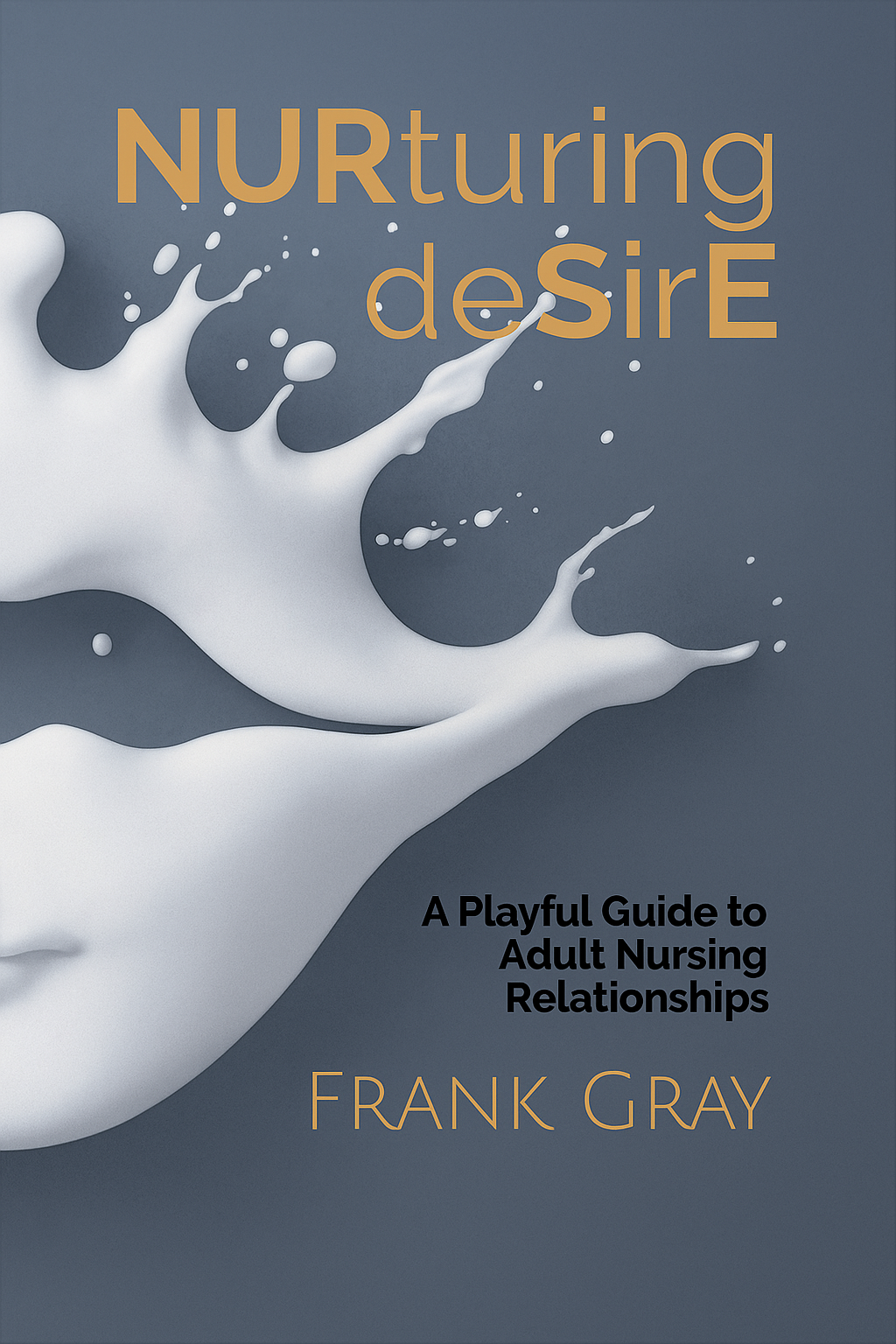
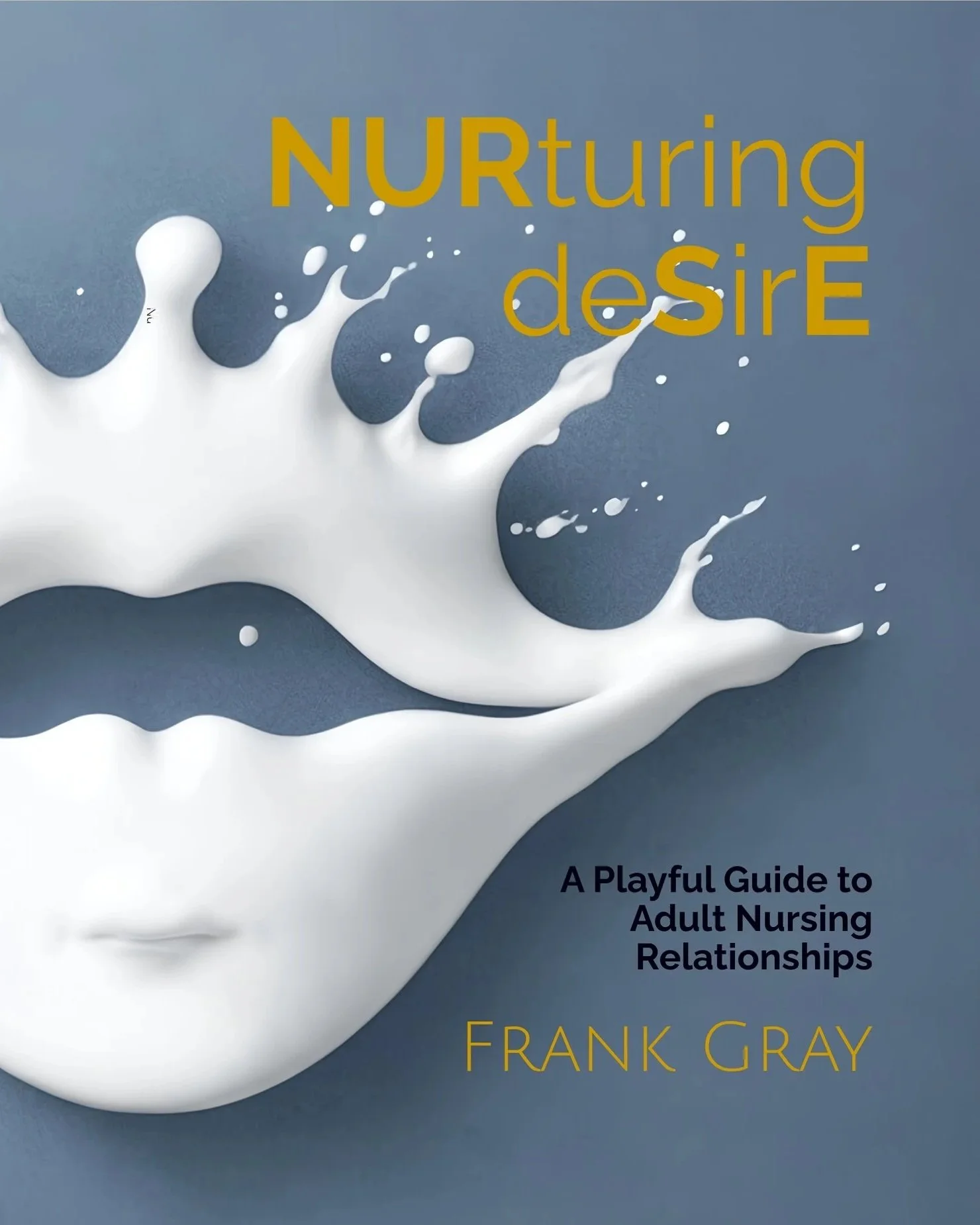

NURturing deSirE: A Playful Guide to Adult Nursing Relationships
By Frank Gray
A thoughtful, intimate exploration of adult nursing relationships (ANR) as a practice of deep connection, co-regulation, and embodied trust between consenting adults. This book invites readers to reconsider how desire, nurture, and intimacy naturally intertwine—framing adult nursing not as fetish or novelty, but as relational practice rooted in comfort, communication, and mutual care.
Through reflective storytelling, grounded psychology, and practical guidance, you'll explore vulnerability, consent, boundaries, and emotional safety—the foundations of any enduring intimacy.
Inside You'll Find:
- Clear, compassionate discussion of adult nursing relationships
- Insight into the emotional and physiological foundations of nurturing touch
- Guidance for talking with a partner about curiosity, desire, and consent
- Exercises and prompts designed to deepen trust and connection
- A tone that is playful, reverent, and deeply human—never clinical or sensational
Written for adults, by adults, centering consent, respect, and emotional maturity throughout.
Whether you're curious, already practicing, or seeking more tender and embodied intimacy in your relationship, NURturing deSirE offers reassurance, clarity, and permission to honor what feels true in your body and your bond.
SIGNED & INSCRIBED EDITION - LIMITED AVAILABILITY
For readers who wish to hold something truly personal, this limited edition includes a hand-signed inscription written especially for you by author Frank Gray. Each copy features a unique, heartfelt message of encouragement, gratitude, or resonance—making your book one of a kind.
Perfect as:
- A meaningful gift for your partner
- A keepsake commemorating the start of your ANR journey
- A tangible symbol of validation and support
- A collector's item for those who connect deeply with the book's message
- Paperback format: 9" × 7"
- Hand-signed by Frank Gray
- Personalized inscription (specify name/message at checkout)
- Ships within 5-7 business days
- $25
This is more than a book—it's an intimate extension of the book's spirit of connection and care, personally crafted for you.