🌍 The Quiet Revolution: Normalizing Adult Nursing Without Apology
There's something wonderfully strange about the way we divide the world: Babies nurse, and everyone claps. Adults nurse, and everyone panic.
It's not biology that changed — it's marketing.
For something as old as humanity itself, adult nursing relationships still carry the kind of taboo energy usually reserved for tax audits and political conversations at Thanksgiving. But beneath the blush and the headlines, there's a quiet revolution happening — people rediscovering that nurture doesn't expire at weaning. What adult nursing relationships actually involve, and why they matter, is finally entering public conversation without the reflexive shame that's silenced practitioners for generations.
How Adult Nursing Relationships Are Gaining Acceptance
The shift is happening in small, deliberate ways. Online communities dedicated to adult nursing have grown from hidden forums to thriving spaces where thousands of people share experiences, ask questions, and normalize what was once unspeakable. Reddit's r/AdultBreastfeeding has over 100,000 members. Facebook groups exist for ANR practitioners, many with strict vetting to maintain safety and authenticity.
But it's not just online. Mainstream media is slowly catching up — outlets like Parents.com, Healthline, and Vice have published articles treating adult nursing as a legitimate relationship practice rather than sensational clickbait. Academic research is beginning to acknowledge ANR within the broader study of attachment, lactation biology, and alternative intimacy practices.
Therapists and sex educators are increasingly encountering clients who practice or are curious about adult nursing. Rather than pathologizing it, many are recognizing it as one of many consensual adult intimacy practices that don't require fixing—just understanding. Lactation consultants, too, are quietly fielding questions from non-postpartum individuals seeking to induce lactation for relational rather than parental reasons.
The revolution isn't happening through manifestos or public protests. It's happening one conversation at a time—each couple that refuses to hide, each therapist who listens without judgment, each article that treats ANR as worthy of serious consideration rather than voyeuristic curiosity.
A Natural Act with a PR Problem
Let's start with the basics: nursing isn't just feeding. It's a full-body conversation between two nervous systems.
The moment lips meet skin, oxytocin and prolactin flood the bloodstream. Heart rate slows, cortisol drops, blood pressure stabilizes. It's not erotic by default — it's parasympathetic. The body switches from fight-or-flight to rest-and-repair.
In other words: nursing is built for bonding. The fact that adults can still experience those effects shouldn't surprise anyone. Understanding the practical realities of ANR helps demystify what's happening in the body—this isn't abstract theory, it's reproducible physiology.
The real question is why we're pretending not to know this.
How It Became "Weird"
The taboo didn't start in the body; it started in the branding.
In the 19th century, Western medicine divided the sensual from the nurturing — mother from lover, milk from desire. Before that, wet nurses were everywhere. The line between feeding, comfort, and affection was fluid.
Then came industrialization, formula, Freud, and a few centuries of "civilized" discomfort. We sanitized the nipple, professionalized care, and privatized comfort. Now, if touch happens, it's got to be either "medical" or "sexual" — no in-between.
Adult nursing lives in that in-between. That's what makes it revolutionary.
The Real Conversation
People who practice ANR aren't staging protests. They're reclaiming something quiet: the right to softness.
For some, it's romantic. For others, it's purely nurturing. For many, it's both — a blend of intimacy, calm, and chemistry that feels ancient because it is. Partners navigating this terrain often describe it as the intimacy practice they didn't know they were missing—something that fills a gap they couldn't name until they experienced it.
To normalize adult nursing, we don't need shock campaigns or soapboxes. We just need to tell the truth: it's connection, not kink.
"If it were any other kind of intimacy, we'd call it self-care."
Science Says Relax
You don't have to take my word for it — endocrinology has receipts.
Oxytocin: The "bonding hormone," released during nursing, hugging, and even eye contact.
Prolactin: Promotes relaxation and emotional grounding.
Endorphins: Natural painkillers that reinforce comfort and safety.
These aren't fringe biochemicals; they're the foundation of human attachment. The same hormones that make a baby stop crying can make an adult feel safe enough to breathe deeply again.
That's not fetish. That's physiology.
No Apologies, No Explanations
Normalizing ANR doesn't mean broadcasting it. It means dropping the shame.
You don't have to justify closeness that keeps you whole. You don't have to "fit" the textbook definition of intimacy. What matters is that it nourishes — physically, emotionally, spiritually.
Let the world catch up later. You've already evolved.
In the End
The revolution isn't loud. It's quiet, rhythmic, human.
Two people, one pulse, no apology. That's not rebellion. That's remembering.
For those ready to explore without apology, NURturing deSirE offers both permission and practical guidance—a map for territory that's always been human, just rarely spoken.
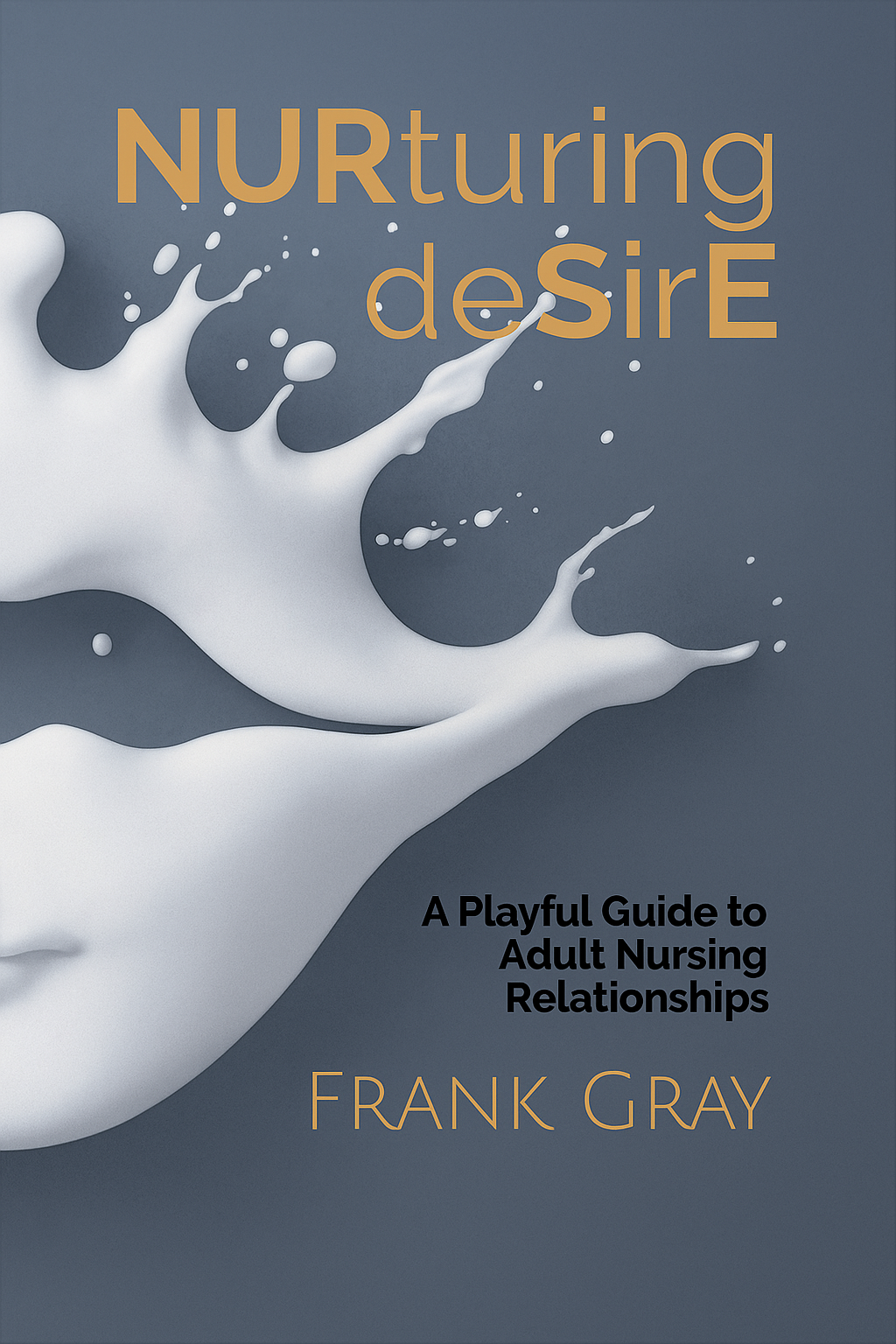
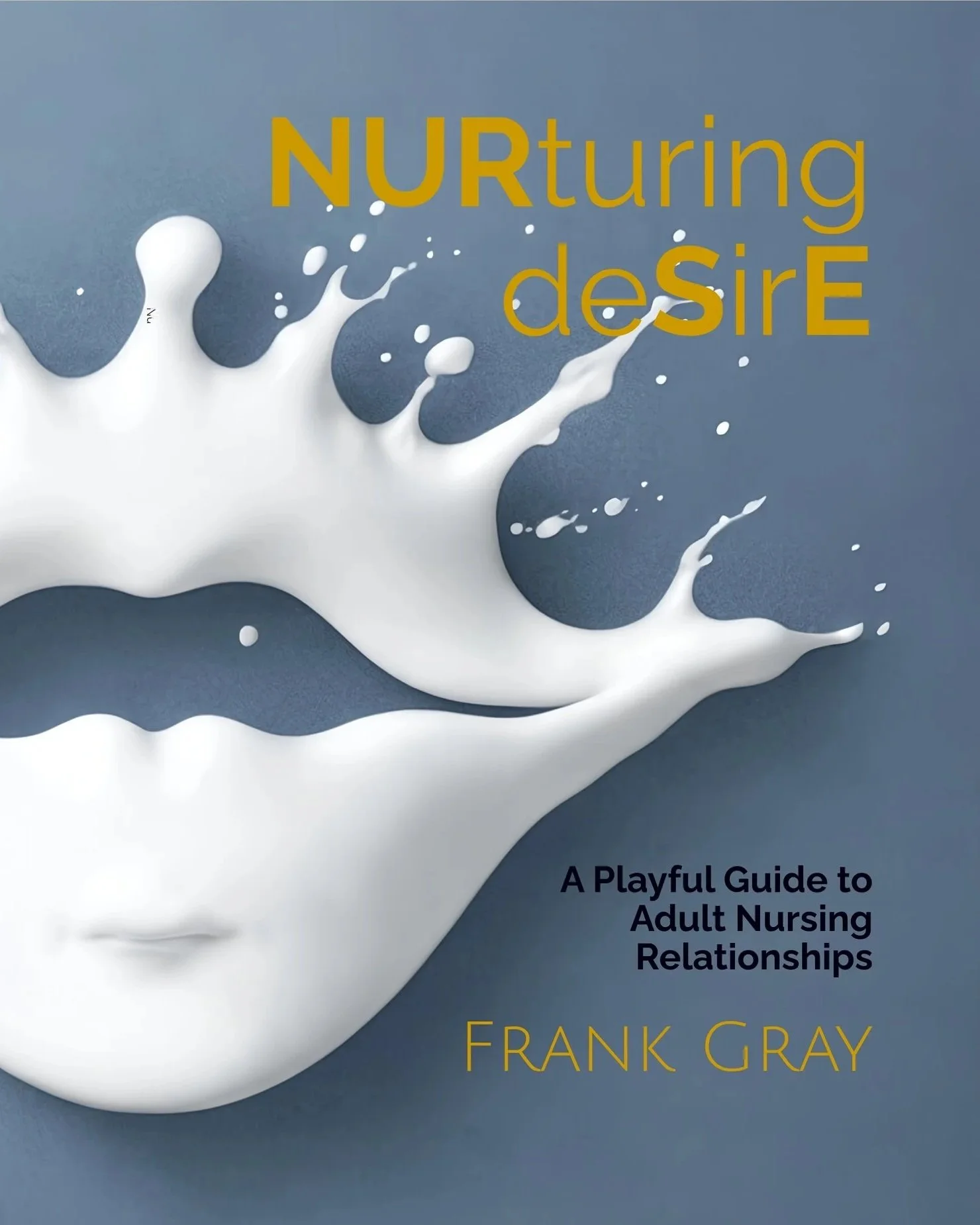

NURturing deSirE: A Playful Guide to Adult Nursing Relationships
By Frank Gray
A thoughtful, intimate exploration of adult nursing relationships (ANR) as a practice of deep connection, co-regulation, and embodied trust between consenting adults. This book invites readers to reconsider how desire, nurture, and intimacy naturally intertwine—framing adult nursing not as fetish or novelty, but as relational practice rooted in comfort, communication, and mutual care.
Through reflective storytelling, grounded psychology, and practical guidance, you'll explore vulnerability, consent, boundaries, and emotional safety—the foundations of any enduring intimacy.
Inside You'll Find:
- Clear, compassionate discussion of adult nursing relationships
- Insight into the emotional and physiological foundations of nurturing touch
- Guidance for talking with a partner about curiosity, desire, and consent
- Exercises and prompts designed to deepen trust and connection
- A tone that is playful, reverent, and deeply human—never clinical or sensational
Written for adults, by adults, centering consent, respect, and emotional maturity throughout.
Whether you're curious, already practicing, or seeking more tender and embodied intimacy in your relationship, NURturing deSirE offers reassurance, clarity, and permission to honor what feels true in your body and your bond.
SIGNED & INSCRIBED EDITION - LIMITED AVAILABILITY
For readers who wish to hold something truly personal, this limited edition includes a hand-signed inscription written especially for you by author Frank Gray. Each copy features a unique, heartfelt message of encouragement, gratitude, or resonance—making your book one of a kind.
Perfect as:
- A meaningful gift for your partner
- A keepsake commemorating the start of your ANR journey
- A tangible symbol of validation and support
- A collector's item for those who connect deeply with the book's message
- Paperback format: 9" × 7"
- Hand-signed by Frank Gray
- Personalized inscription (specify name/message at checkout)
- Ships within 5-7 business days
- $25
This is more than a book—it's an intimate extension of the book's spirit of connection and care, personally crafted for you.