What Parents.com Got Right (and Missed) About Adult Breastfeeding

When a major outlet like Parents.com takes the time to write about adult breastfeeding, I smile—not because it's sensational, but because it's finally being treated as something worth understanding instead of whispering about.
Their recent piece did what mainstream publications rarely do: it made space for curiosity without shame. That's a quiet milestone in how we talk about adult nursing relationships and the intimate practices that sustain long-term partnerships.
They did a solid job covering the basics—safety, milk supply, infection risk—all the practical things that matter. For anyone exploring adult breastfeeding or adult nursing, clear information reduces anxiety, and that's invaluable.
But reading it, I found myself thinking: we can't stop at "safe."
Safety is the doorway. Meaning is the room beyond it.
We also need to talk about why people find comfort in this form of connection and what it actually does for a relationship.
What Mainstream Media Gets Wrong About Adult Breastfeeding
Here's what most mainstream coverage misses: adult nursing relationships aren't reducible to mechanics or risk assessment.
The media focuses on "Is it safe?" while sidestepping "Why does this matter to people?"
This creates a sanitized narrative that acknowledges the practice exists while refusing to engage with what makes it meaningful.
It's like writing about music by only discussing decibel levels and hearing safety—technically accurate, but missing the entire point.
The Pattern:
The Parents.com piece exemplifies this. They covered:
Lactation logistics ✅
Infection prevention ✅
Milk supply considerations ✅
What's absent? The human story.
The couples who've found the growing normalization of ANR has given them language for intimacy they couldn't name before.
The partners who describe nursing as their "reset button" after years of touch-starved marriage.
The nervous systems that finally learned to downregulate together after decades of stress.
By framing adult breastfeeding primarily through a medical lens, mainstream media inadvertently reinforces the idea that this practice needs constant justification rather than simple understanding.
What if we stopped asking "Is this allowed?" and started asking "What does this give us?"
Beyond Safety: The Neurochemistry of Calm
In my experience, adult nursing isn't just about the act itself.
It's about what happens around it—the stillness, the surrender, the exchange of trust.
What Actually Happens During Adult Nursing:
When one partner rests against the other, the body releases oxytocin—that quiet little hormone that tells the nervous system:
"You're safe here."
That's not fetish. That's biology doing what it's always done—rewarding care and cooperation.
The science:
Oxytocin reduces cortisol (stress hormone)
Heart rate synchronizes between partners
Breathing patterns align
Parasympathetic nervous system activates (rest/digest/bond)
Vagal tone improves (emotional regulation capacity)
It's easy to label, but harder to listen.
If you sit quietly in that moment, you realize it's not about dominance or dependency—it's about co-regulation.
Two nervous systems syncing. Two hearts remembering what softness feels like.
That's the part of the story that often gets left out of medical write-ups—the part that can't be measured in ounces or minutes.
Understanding the technical aspects of nursing comfort helps, but the real value is in what that comfort creates between partners.
Meaning Matters More Than Mechanics
Where articles like the one on Parents.com stay focused on mechanics, I like to look at meaning.
Because when you strip away the labels—"erotic lactation," "adult breastfeeding," "postpartum curiosity"—what remains is:
Two people finding a rhythm of mutual care.
Sometimes that's sensual.
Sometimes it's stress relief.
Sometimes it's just a deep exhale after a long day.
The outcome isn't always sexual. Often it's emotional.
People rediscover a kind of safety that modern life rarely gives them permission to feel.
What Couples Actually Say:
"Nursing became our evening meditation"—a way to switch off the noise of the world and find each other again.
"It's our reset button"—when everything else feels chaotic, this grounds us.
"I finally feel seen"—not for what I produce or perform, but just for being here.
"We breathe better afterward"—literally. The nervous system shift is measurable.
However it shows up, the value is the same: tenderness practiced, not assumed.
This is what long-term couples rediscovering nursing understand—it's not about novelty. It's about return.
The Question Media Doesn't Ask: Why Now?
Adult nursing isn't new. It's existed across cultures and throughout history.
What's new is the conversation becoming visible.
Why are more couples exploring this now?
Several Cultural Shifts:
1. Touch Famine
We're living through an epidemic of touch starvation. Remote work, digital communication, pandemic isolation—we're more disconnected from physical intimacy than ever.
Adult nursing offers sustained, non-performative touch in a culture that's forgotten how to be close without agenda.
2. Redefining Intimacy
Younger generations are questioning inherited sexual scripts. What if intimacy doesn't always mean penetration? What if nourishment can be erotic? What if care and desire aren't opposites?
Adult nursing relationships challenge the binary thinking that's constrained intimacy for generations.
3. Normalization of Attachment Language
Therapy culture has made "nervous system regulation" and "co-regulation" common vocabulary. People now have language for what their bodies have always known: being held matters.
4. Queer Visibility
LGBTQ+ couples practicing adult nursing have helped expand what "normal" intimacy looks like. When gender roles are already being renegotiated, milk-based care becomes one more beautiful possibility.
5. Extended Breastfeeding Destigmatization
As more parents practice extended nursing (2+ years), cultural comfort with the mechanics of breastfeeding is shifting. Adults exploring nursing aren't starting from scratch—they're building on normalized foundations.
The Both/And Reality: Sensual AND Nurturing
Here's what mainstream media struggles with:
Adult nursing can be both sensual and nurturing. Both erotic and comforting. Both sexual and tender.
Our culture wants things in neat categories:
Sexual OR maternal
Erotic OR caregiving
Pleasure OR nourishment
Adult nursing refuses those binaries.
It's the integration that makes it powerful—the same breast can be:
Source of arousal
Source of comfort
Source of nourishment
Source of bonding
All at once. Or none of the above. Or different things on different days.
This flexibility is what dry nursing couples discover—you don't need milk for the practice to work. The ritual, the touch, the oxytocin release—all of that happens regardless of lactation.
Curiosity Is Human (Not Deviant)
The other thing I wish more mainstream pieces would say outright is this:
Curiosity about this kind of intimacy doesn't make you strange. It makes you human.
We are wired for nurture—to give it, to receive it, to explore where comfort and closeness overlap.
When that curiosity is met with openness instead of judgment, relationships often deepen in ways that surprise people.
The Shame Spiral:
What usually happens:
Someone feels curious about nursing
They Google it
They find either medical articles (clinical, cold) or fetish content (performative, commodified)
They think: "I guess this isn't for us"
The curiosity gets buried
What should happen:
Someone feels curious about nursing
They find resources that treat it as normal human intimacy
They talk to their partner: "I read something interesting..."
They experiment gently, with humor and grace
They discover whether it serves them—without shame either way
Shame closes doors. Curiosity opens them.
And that's the spirit I hope continues to grow as more people talk about adult nursing.
Each open conversation reclaims a bit of the tenderness we've been taught to hide.
What Parents.com Could Have Said (But Didn't)
If I were writing that article for a mainstream parenting site, here's what I'd add:
"It's Not Just Postpartum"
Parents.com frames adult breastfeeding as something that happens during breastfeeding of an infant. But many couples explore nursing:
Years after weaning
Decades into marriage
Without any children at all
Through induced lactation specifically for the partnership
Adult nursing isn't about "lingering" lactation. It's about chosen intimacy.
"Men Aren't Just Passive Recipients"
Media often portrays the male partner as simply "taking." But male partners in ANR describe:
Learning a completely new form of vulnerability
Accessing tenderness they've never been taught to receive
Experiencing bonding that traditional male sexuality doesn't create space for
Receiving nourishment is active participation, not passive consumption.
"This Works Across All Relationship Types"
Adult nursing isn't heteronormative by default:
Lesbian couples practice mutual nursing
Non-binary folks explore nursing as embodiment practice
Gay male couples practice dry nursing for bonding
The mechanism (touch, oxytocin, nervous system regulation) works regardless of gender configuration.
"The First Time Will Probably Be Awkward"
And that's okay.
Every couple I've spoken with says the first session involved:
Giggling
Repositioning
Uncertainty about technique
Feeling a bit ridiculous
That awkwardness is part of the intimacy. You're inventing something together, not performing a script.
What Parents.com Got Right
Let me be fair—Parents.com deserves credit for:
✅ Treating the topic seriously (not sensationalizing)
✅ Consulting medical experts (safety matters)
✅ Normalizing the question (making it searchable)
✅ Acknowledging it's practiced (visibility matters)
✅ Avoiding moral judgment (curiosity over condemnation)
This is genuinely progress.
Five years ago, this article wouldn't have been published. Ten years ago, it would have been framed as scandal or pathology.
The fact that Parents.com approached it with curiosity rather than disgust signals a cultural shift worth celebrating.
An Invitation to Go Deeper
So yes, I applaud Parents.com for opening the door.
I just hope more people walk through it—not only to ask "Is it safe?" but also "What does this mean for us?"
Because that's where the real discovery begins: not in the how, but in the why.
If You're Curious:
Start here:
Read about the science of oxytocin and bonding
Understand dry vs wet nursing (milk is optional)
Learn proper latch technique (comfort matters)
Explore how couples make time for nursing (ritual, not routine)
Then talk to your partner:
Not "Do you want to try this weird thing?"
But: "I've been thinking about intimacy practices that involve more tenderness. Can we talk about what that might look like for us?"
Frame it as exploration, not performance.
If that conversation calls to you, that's what NURturing deSirE was written for—to explore intimacy as play, comfort, and courage all at once.
Final Thought: Beyond the Binary
The real limitation of mainstream media coverage isn't what they say—it's what they can't imagine.
They can imagine safety protocols.
They can imagine medical considerations.
They can imagine postpartum continuation.
What they can't imagine:
A 60-year-old couple rediscovering nursing after an empty nest.
A trans woman inducing lactation for the first time and feeling her body finally speak in its true voice.
A man learning to receive care without performing strength.
A partnership where milk isn't produced but nourishment flows anyway.
These stories exist.
And they're not edge cases—they're the ordinary magic of humans finding new ways to be tender with each other.
That's what Parents.com missed.
Not because they got anything wrong—but because they stopped too soon.
Continue exploring:
📖 NURturing deSirE — The playful guide to adult nursing relationships
🎨 The Milky Way — Weekly comics about milk spirits and intimacy
💧 Milk Drops — Essays on biology, desire, and connection
With warmth,
Frank Gray
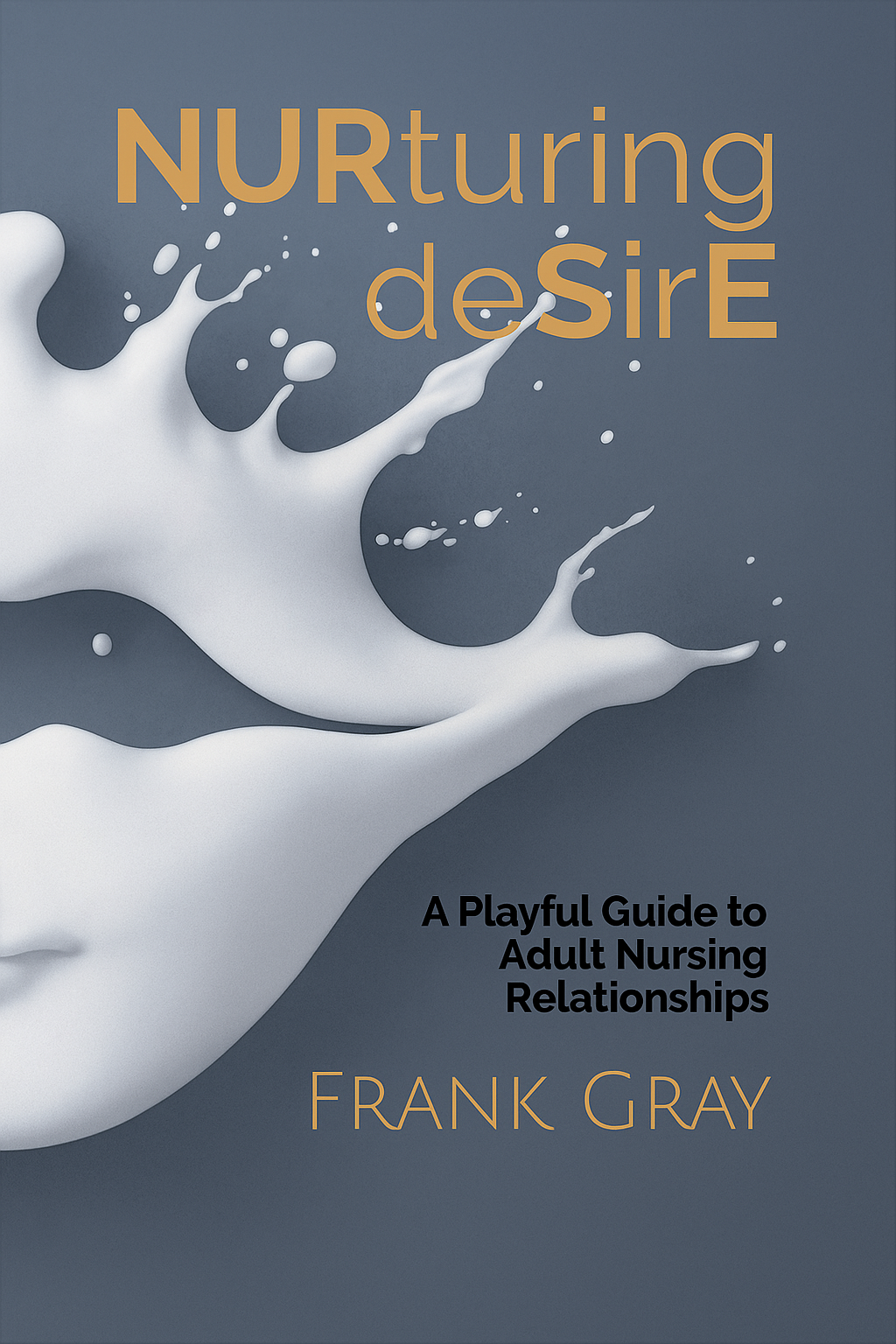
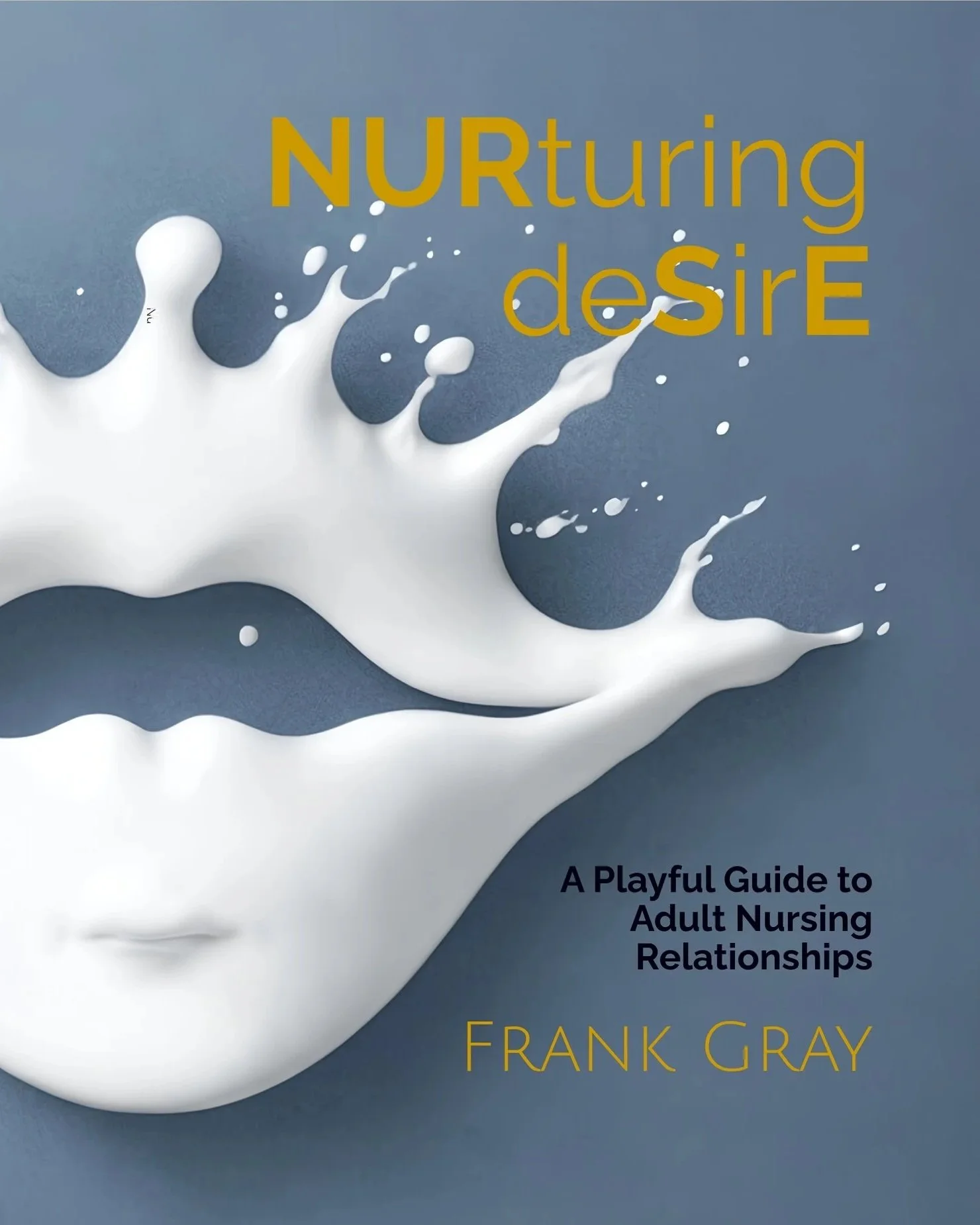

NURturing deSirE: A Playful Guide to Adult Nursing Relationships
By Frank Gray
A thoughtful, intimate exploration of adult nursing relationships (ANR) as a practice of deep connection, co-regulation, and embodied trust between consenting adults. This book invites readers to reconsider how desire, nurture, and intimacy naturally intertwine—framing adult nursing not as fetish or novelty, but as relational practice rooted in comfort, communication, and mutual care.
Through reflective storytelling, grounded psychology, and practical guidance, you'll explore vulnerability, consent, boundaries, and emotional safety—the foundations of any enduring intimacy.
Inside You'll Find:
- Clear, compassionate discussion of adult nursing relationships
- Insight into the emotional and physiological foundations of nurturing touch
- Guidance for talking with a partner about curiosity, desire, and consent
- Exercises and prompts designed to deepen trust and connection
- A tone that is playful, reverent, and deeply human—never clinical or sensational
Written for adults, by adults, centering consent, respect, and emotional maturity throughout.
Whether you're curious, already practicing, or seeking more tender and embodied intimacy in your relationship, NURturing deSirE offers reassurance, clarity, and permission to honor what feels true in your body and your bond.
SIGNED & INSCRIBED EDITION - LIMITED AVAILABILITY
For readers who wish to hold something truly personal, this limited edition includes a hand-signed inscription written especially for you by author Frank Gray. Each copy features a unique, heartfelt message of encouragement, gratitude, or resonance—making your book one of a kind.
Perfect as:
- A meaningful gift for your partner
- A keepsake commemorating the start of your ANR journey
- A tangible symbol of validation and support
- A collector's item for those who connect deeply with the book's message
- Paperback format: 9" × 7"
- Hand-signed by Frank Gray
- Personalized inscription (specify name/message at checkout)
- Ships within 5-7 business days
- $25
This is more than a book—it's an intimate extension of the book's spirit of connection and care, personally crafted for you.