
The world hums with connection—glowing screens, endless scrolls, digital hearts pulsing in pixels—and yet, so many of us are starving.
We sleep beside our phones, not our lovers.
We talk all day and rarely listen with our hands.
We share everything except our warmth.
This is the paradox of the modern nervous system: wired for contact, flooded with content.
We're living through what researchers now call a "touch famine"—a measurable deprivation of physical affection that leaves the body chemically hungry. Loneliness, anxiety, and immune dysfunction follow in its wake.
The more virtual our connections become, the more the body aches for proof that it still belongs.
The Science of Touch Starvation: Why Your Body Is Hungry
Touch is not sentimental. It's structural.
What Happens When Skin Meets Skin:
Oxytocin Release
When you experience sustained, gentle touch—holding hands, hugging, nursing, cuddling—your brain releases oxytocin, the bonding hormone that:
Lowers cortisol (stress hormone)
Strengthens trust and attachment
Reduces blood pressure
Increases pain tolerance
Improves immune function
C-Tactile Nerve Activation
Gentle, slow touch (1-10 cm per second) activates specialized nerve fibers called C-tactile afferents that send signals directly to the emotional centers of your brain, essentially telling your nervous system: You're safe now.
Vagal Tone Regulation
Physical touch stimulates the vagus nerve, shifting you from sympathetic (fight/flight) to parasympathetic (rest/digest) nervous system dominance. This is why you feel calmer after a hug—it's not psychological, it's neurological.
The Cost of Touch Deprivation:
According to research compiled by the Touch Research Institute at the University of Miami:
More than 50% of adults report going days or weeks without meaningful physical contact
Touch-starved individuals show elevated cortisol, reduced immune markers, and higher rates of anxiety/depression
Children deprived of touch show delayed growth (failure to thrive syndrome)
Adults in touch-deprived environments experience increased aggression and social withdrawal
We're overfed on attention and undernourished on affection.
Digital Closeness Isn't the Same: Dopamine vs. Oxytocin
Here's the neurochemical truth:
Technology gives us dopamine—the chemical of novelty, reward, anticipation.
But dopamine is restless. It wants more, faster, louder.
Touch gives us oxytocin—the chemical of bonding, safety, trust.
Oxytocin asks for stillness. It thrives on rhythm, warmth, and proximity.
Why You Can't Text Your Way to Calm:
Dopamine pathways (digital interaction):
Activate reward centers (nucleus accumbens)
Create craving for next notification/like/message
Short-lived satisfaction (minutes)
Require increasing stimulation for same effect
Associated with anxiety when unavailable
Oxytocin pathways (physical touch):
Activate bonding centers (hypothalamus, amygdala)
Create sense of safety and belonging
Long-lasting satisfaction (hours to days)
Cumulative effect—deepens over time
Associated with calm when present
You can say "I love you" a thousand times and still never feel it in your bones.
This isn't anti-tech. It's pro-human.
Our biology simply hasn't evolved at Wi-Fi speed. The part of us that remembers being held, rocked, or nursed still speaks an ancient language—one that no emoji can translate.
Remembering the Body's Language: The First Conversation
The body is the first conversation you ever had.
Before you could speak, you knew:
Tone (the pitch of your caregiver's voice)
Temperature (warmth of skin against yours)
Rhythm (rocking, heartbeat, breathing synchronized)
You learned that care had a cadence—a pulse, a sway, a silence that said I'm here.
That's the Wisdom of Nurture:
It's not verbal, it's vibrational.
Infants who are held skin-to-skin (kangaroo care) show:
Better temperature regulation
More stable heart rate
Improved weight gain
Reduced stress hormones
Enhanced brain development
This doesn't stop at infancy.
Adults experiencing sustained physical intimacy—whether through adult nursing relationships, massage, partner yoga, or simple daily cuddling—show the same markers: regulated nervous systems, improved attachment security, reduced anxiety.
The Forgetting: How We Lost Fluency in Touch
Somewhere along the way, we lost fluency.
We learned to perform connection instead of inhabiting it.
We replaced touch with tapping—our fingers still moving, but not on skin.
Cultural Factors Contributing to Touch Starvation:
1. Individualism Over Interdependence
Western culture emphasizes independence and self-sufficiency. Needing physical touch is framed as "clingy" or "needy" rather than biologically necessary.
2. Fear of Misinterpretation
#MeToo (rightfully) addressed consent violations, but created ambient anxiety around all touch. Many people now hesitate to hug, hold hands, or initiate physical comfort—even with romantic partners.
3. Digital Substitution
We text "thinking of you" instead of placing a hand on a shoulder. We send heart emojis instead of holding someone while they cry.
4. Productivity Culture
Touch requires time to do nothing but be present. In a culture that valorizes constant productivity, this feels wasteful.
5. The Nuclear Family Model
Extended family networks and community physical intimacy (common in many cultures) have been replaced by isolated nuclear families—shrinking the number of people we're "allowed" to touch.
In Nurturing Desire, I call this the forgetting—the way we drift from the intimacy of being felt.
Relearning it isn't regression. It's reclamation.
The Future of Touch: Intentional Contact in a Digital Age
As we hurtle deeper into digital life, touch is becoming both rarer and more deliberate.
Emerging Touch-Based Therapies:
Professional Cuddling
Platonic touch therapy where trained practitioners provide non-sexual physical comfort. Sessions cost $80-$150/hour and are increasingly covered by mental health treatment plans.
Somatic Experiencing
Trauma therapy that uses gentle touch to help clients reconnect with their bodies and release stored stress.
Massage as Medicine
No longer just "spa treatment"—massage therapy is prescribed for PTSD, anxiety disorders, chronic pain, and immune dysfunction.
Havening Techniques
Self-soothing through specific touch patterns (stroking arms, face, hands) that generate delta brain waves associated with deep calm.
These aren't indulgences. They're neurological maintenance.
The AI Intimacy Question:
Meanwhile, AI companions and virtual partners promise connection without friction—intimacy without presence.
But the body knows the difference.
Even the most sophisticated algorithm can't imitate the subsonic hum of safety that happens when:
Two heartbeats synchronize
Breath patterns mirror each other
Skin temperature equalizes
C-tactile nerves fire in response to warmth
The future of touch isn't about replacing the body. It's about remembering how to be in one.
Adult Nursing as Touch Literacy: The Ultimate Return to Contact
This is where adult nursing relationships become unexpectedly radical.
Why ANR Addresses Touch Starvation So Effectively:
1. Sustained Skin-to-Skin Contact
Nursing sessions typically last 15-30 minutes of uninterrupted physical closeness—far exceeding typical couple's daily touch time (average: 2-5 minutes).
2. Oxytocin Surge
Nipple stimulation triggers oxytocin release in both partners—the nursing partner through letdown reflex, the receiving partner through oral stimulation and proximity.
3. Nervous System Co-Regulation
The position—one partner holding, the other held—creates the conditions for ventral vagal activation (the calm/social engagement state of the nervous system).
4. Non-Verbal Intimacy
Unlike conversation or even sex, nursing doesn't require performance. It's pure presence.
5. Ritual Consistency
Unlike spontaneous touch (which anxiety can prevent), scheduled nursing creates predictable touch opportunities that the nervous system learns to anticipate and rely on.
6. Permission to Need
In a culture that shames dependency, nursing explicitly says: "I need to be held. Will you hold me?"
That's revolutionary.
A New Literacy of Nurture: What We Actually Need
To build a better world, we don't need faster data—we need slower contact.
We need spaces, relationships, and rituals that remind us what calm feels like in the body.
Practical Steps to Address Touch Starvation:
For Individuals:
Self-touch practices (hand on heart, havening, self-massage)
Weighted blankets (simulate pressure)
Petting animals (oxytocin still releases)
Professional massage or cuddling services
Dance, contact improv, partner yoga
For Couples:
Daily 20-second hugs (minimum threshold for oxytocin release)
Sleep skin-to-skin
Morning "check-in" hand-holding
No-phone zones during physical contact
For Communities:
Bring back non-romantic physical affection (hugs hello/goodbye)
Normalize asking "Can I hug you?"
Create touch-positive spaces (cuddle parties, ecstatic dance)
Support new parents with postpartum doulas (touch for the touchers)
That's the real work of nurturing desire:
Not chasing intensity, but cultivating safety.
Not more sensation—more meaning.
Not more people—more presence.
The Body Already Knows
The body already knows the language of touch.
It remembers:
Being rocked
Being held
Being fed at the breast
Being carried
Being soothed through skin contact
It's waiting for us to remember.
And when we do—when we choose to nurse our partners, hold our lovers, touch our friends with consent and tenderness—we're not inventing something new.
We're returning to the first technology humans ever had: each other.
The next revolution won't be artificial intelligence.
It will be authentic presence.
Continue exploring:
📖 NURturing deSirE — The guide to touch-based intimacy
🎨 The Milky Way — Comics about connection and milk spirits
💧 Milk Drops — Essays on the science and spirit of nurture
With warmth,
Frank Gray
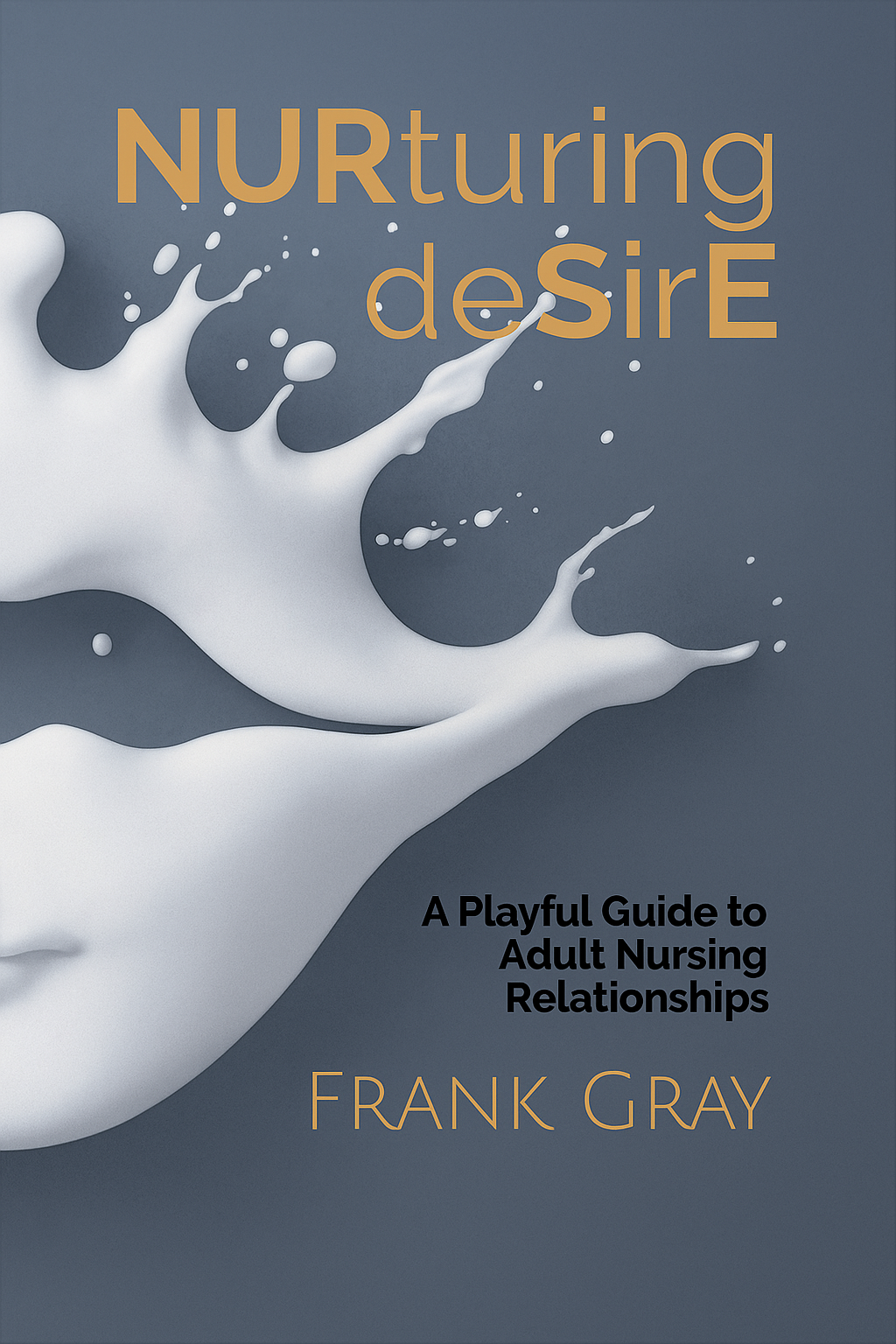
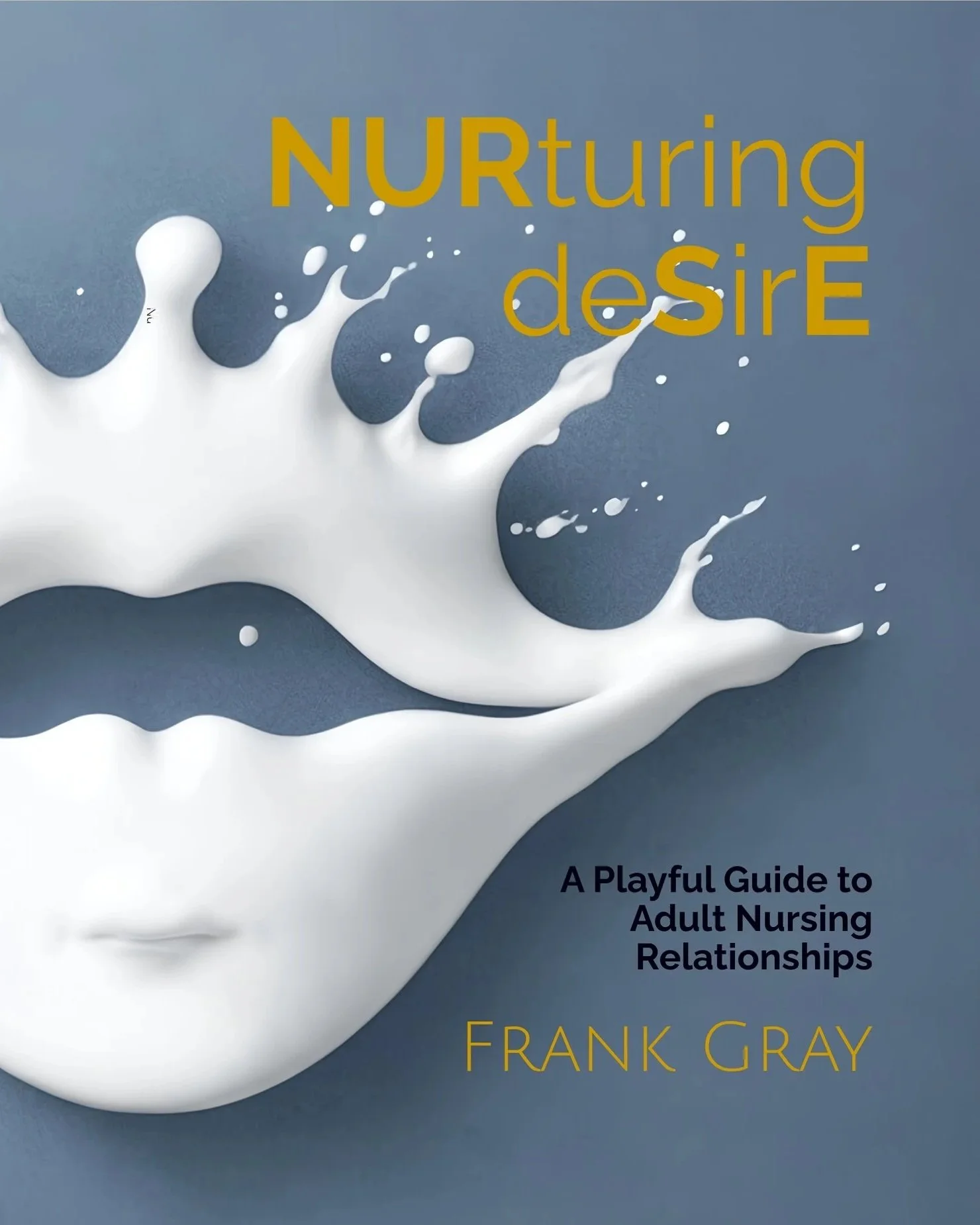

NURturing deSirE: A Playful Guide to Adult Nursing Relationships
By Frank Gray
A thoughtful, intimate exploration of adult nursing relationships (ANR) as a practice of deep connection, co-regulation, and embodied trust between consenting adults. This book invites readers to reconsider how desire, nurture, and intimacy naturally intertwine—framing adult nursing not as fetish or novelty, but as relational practice rooted in comfort, communication, and mutual care.
Through reflective storytelling, grounded psychology, and practical guidance, you'll explore vulnerability, consent, boundaries, and emotional safety—the foundations of any enduring intimacy.
Inside You'll Find:
- Clear, compassionate discussion of adult nursing relationships
- Insight into the emotional and physiological foundations of nurturing touch
- Guidance for talking with a partner about curiosity, desire, and consent
- Exercises and prompts designed to deepen trust and connection
- A tone that is playful, reverent, and deeply human—never clinical or sensational
Written for adults, by adults, centering consent, respect, and emotional maturity throughout.
Whether you're curious, already practicing, or seeking more tender and embodied intimacy in your relationship, NURturing deSirE offers reassurance, clarity, and permission to honor what feels true in your body and your bond.
SIGNED & INSCRIBED EDITION - LIMITED AVAILABILITY
For readers who wish to hold something truly personal, this limited edition includes a hand-signed inscription written especially for you by author Frank Gray. Each copy features a unique, heartfelt message of encouragement, gratitude, or resonance—making your book one of a kind.
Perfect as:
- A meaningful gift for your partner
- A keepsake commemorating the start of your ANR journey
- A tangible symbol of validation and support
- A collector's item for those who connect deeply with the book's message
- Paperback format: 9" × 7"
- Hand-signed by Frank Gray
- Personalized inscription (specify name/message at checkout)
- Ships within 5-7 business days
- $25
This is more than a book—it's an intimate extension of the book's spirit of connection and care, personally crafted for you.