What to Do When You Want to Nurse More Than Your Partner



















Transform your space with this stunning depiction of intimacy as cosmic energy—two forces in eternal dance between earth and transcendence. Museum-quality wall art perfect for bedrooms, meditation spaces, and anywhere you honor the sacred in the physical.
Two forces in eternal dance: one pulling downward, one lifting up. Gravity grounds us in body, in earth, in the weight of being human. Grace dissolves boundaries, makes us cosmic, turns flesh into flowing light.
This is what nursing looks like when you stop seeing bodies and start seeing energy. Two figures suspended in space, neither falling nor flying—held in perfect tension between what pulls us down and what lifts us up. Hair becomes nebulae. Skin becomes stardust. The distinction between "you" and "me" dissolves into shared substance.
Gravity: The biological imperative. Milk responding to need. Bodies seeking each other across space. The weight of intimacy, the pull of connection, the inescapable draw of nervous systems reaching for regulation.
Grace: The transcendent experience. Time stopping. Boundaries dissolving. Two becoming one field. The moment you realize this isn't just physical—it's universal, cosmic, the same force that holds galaxies together.
Nursing is both. The earthy and the ethereal. The body and the beyond. This artwork captures that paradox: we are creatures of gravity (milk, flesh, need) experiencing grace (connection, dissolution, oneness).
Perfect For:
- Bedroom wall art celebrating sacred intimacy
- Meditation room decor honoring energetic connection
- Spiritual home decor that sparks meaningful conversation
- Anyone seeking cosmic artwork with philosophical depth
Premium Museum-Quality Canvas:
- 1.25″ thick gallery-wrap
- Premium poly-cotton blend fabric (10.15 oz/yd²)
- Fade-resistant archival inks
- Hand-stretched over solid wood stretcher bars
- Mounting brackets included—ready to hang
- Available in 5 size tiers: XS (6×6-8×12) $40, S (9×12-12×12) $55, M (12×16-16×20) $75, L (16×24-18×24) $105, XL (18×26-10×20) $145
- Made-to-order to reduce waste
Custom-made when you order. Ships from USA, Canada, Europe, UK, or Australia.

"I want this more than they do."
"I can't keep up with what they need."
"I feel guilty for wanting so much."
"I feel guilty for not being able to give more."
This is the tender, complicated territory of asymmetry—when one partner's desire for nursing outpaces what the other can offer, physically or emotionally.
When Desire Outpaces Milk: Navigating Asymmetry in ANR
There's a conversation that happens in whispers—between longing glances, between unspoken sighs.
In the spaces between what couples say out loud and what they carry silently.
It sounds like this:
"I want this more than they do."
"I can't keep up with what they need."
"I feel guilty for wanting so much."
"I feel guilty for not being able to give more."
This is the tender, complicated territory of asymmetry—when one partner's desire for nursing outpaces what the other can offer, physically or emotionally.
And here's what I want you to know, right at the start:
Asymmetry is not failure.
It's not a sign that your relationship is broken, that you're incompatible, or that nursing "isn't working."
It's a sign that you're human.
That desire and capacity rarely flow at exactly the same pace.
That one may surge while the other whispers.
And that navigating this gap—with honesty, tenderness, and creativity—is part of what makes adult nursing relationships a practice, not just a preference.
The Many Faces of Asymmetry in Adult Nursing
Asymmetry shows up in different ways, and it helps to name them.
Because sometimes just seeing your experience reflected back makes it feel less isolating.
1. The Emotional Imbalance
One partner feels a deep, almost primal pull toward nursing.
For them, it's not just pleasant—it's necessary.
A way to regulate, to connect, to feel safe and held.
The other partner enjoys nursing, maybe even loves it—but doesn't need it the same way.
They're happy to provide, but they don't feel the same ache when sessions are missed.
This can create a quiet tension:
The seeker worries they're "too much."
The nurturer worries they're "not enough."
This emotional imbalance is one of the most common asymmetries in adult nursing relationships. It doesn't mean the lower-desire partner cares less—it means their nervous system doesn't crave the regulation that nursing provides with the same intensity. For the higher-desire partner, nursing may be addressing attachment needs, anxiety management, or sensory regulation that the other partner meets through different means.
2. The Physical Mismatch
Desire for nursing is steady and strong.
But milk supply fluctuates.
Maybe lactation is taking longer to establish than expected.
Maybe stress, hormones, or exhaustion have temporarily reduced flow.
Maybe the nursing partner's body is saying "not right now" even when their heart says "yes."
This can feel like betrayal—Why won't my body cooperate?
Physical asymmetry is particularly challenging because it's not about willingness—it's about biology. The nursing partner wants to provide but their body has other priorities. This can trigger shame (for not producing enough), pressure (to force supply), and resentment (at a body that won't cooperate). Meanwhile, the receiving partner may feel guilty for wanting what the body can't currently give.
3. The Life Stage Gap
Nursing was easy during a certain season—fewer demands, more space, aligned energy.
But now:
Work intensified
Illness arrived
Family needs shifted
Mental bandwidth shrank
One partner still craves the same frequency.
The other simply can't sustain it right now.
And both feel the loss.
Life stage asymmetry is often temporary but feels permanent when you're in it. A new job, a sick parent, a mental health crisis, chronic pain flare-up—any of these can shift available energy for intimacy. The challenge is that the partner whose capacity has contracted often feels guilty, while the partner whose desire remains constant feels abandoned. Neither is true, but both feelings are valid.
What Asymmetry Is Not
Before we talk about how to navigate this, let's be clear about what it doesn't mean:
❌ It doesn't mean you're incompatible.
Desire ebbs and flows in every relationship, in every form of intimacy. Nursing is no different. Mismatched libido exists in every sexual relationship; mismatched nursing desire is just the same dynamic in a different context.
❌ It doesn't mean the lower-desire partner doesn't care.
Capacity and desire are not the same thing. Someone can deeply love you and still not have the bandwidth you need in a given moment. Their nervous system may simply not crave nursing with the same intensity, even if they value the intimacy it creates.
❌ It doesn't mean the higher-desire partner is "needy."
Longing for connection, comfort, and touch is not weakness. It's part of being human. Some nervous systems require more frequent co-regulation than others. That's neurodiversity, not pathology.
❌ It doesn't mean nursing is "doomed."
Many couples move through periods of asymmetry and find their rhythm again. Sometimes the gap narrows. Sometimes you learn to dance with it. Asymmetry that gets acknowledged and addressed often strengthens relationships rather than breaking them.
Tools for Navigating the Gap
So how do you hold space for both the longing and the limit?
How do you honor desire without creating pressure?
How do you meet in the middle when the middle keeps shifting?
Here are some practices that help.
1. Open, Non-Blaming Communication
This is where most couples get stuck.
Because talking about unmet needs feels vulnerable.
And talking about not being able to meet needs feels like failure.
So both partners stay quiet, and the gap widens.
Instead, try "I feel" statements that focus on your experience, not your partner's shortcomings:
Higher-desire partner might say:
"I feel deeply nourished when we connect this way. When we don't nurse for a few days, I notice I feel more anxious and disconnected. I'm not blaming you—I just want you to understand what it does for me."
Lower-capacity partner might say:
"I love nursing with you, and I want to be able to show up fully. Right now, I'm feeling stretched thin, and I worry that if I say yes when I'm not ready, it won't feel good for either of us. Can we find a rhythm that works for both of us?"
Notice:
No blame
No defensiveness
Just honest acknowledgment of where each person is
This kind of communication works best when it's regular, not crisis-driven. Consider weekly or bi-weekly check-ins where you both share: How am I feeling about our nursing practice right now? What's working? What's challenging? What do I need?
Vulnerability in long-term intimacy requires this kind of ongoing dialogue. The couples who navigate asymmetry best are the ones who talk about it before resentment builds.
2. Bridge with Dry Nursing
If milk supply is part of the asymmetry, remember:
Dry nursing is not "lesser" nursing.
It's nursing distilled to its essence—connection without production.
For the higher-desire partner, dry nursing can meet many of the emotional needs:
Oxytocin release
Skin-to-skin contact
The soothing rhythm of suckling
The sense of being held and nurtured
For the lower-capacity partner, dry nursing removes pressure:
No concern about supply
No worry about "performing"
Just presence
Some couples find that dry nursing becomes their primary practice during seasons when lactation feels like too much to maintain.
And that's beautiful.
Dry nursing also allows for more flexibility in timing and duration. A five-minute dry nursing session before bed can meet connection needs without the time or physical investment required for full wet nursing sessions. This can be particularly helpful during high-stress seasons when time and energy are limited.
3. Expand the Definition of Intimacy
When nursing isn't available (or isn't enough), what else creates the same quality of connection?
For many couples, the answer includes:
Eye contact—sustained, soft, without agenda
Massage—hands on skin, slow and present
Shared breathing—lying together, syncing inhales and exhales
Gentle holding—one partner cradled, the other providing weight and warmth
Co-bathing—warm water, skin contact, no expectations
Hair stroking or scalp massage—rhythmic touch that triggers similar calm
Chest resting—simply lying with head on partner's chest, listening to heartbeat
These aren't substitutes for nursing.
They're extensions of the same language—touch, regulation, presence.
The goal isn't to "replace" nursing when it's not available.
It's to honor the need beneath the desire.
What are you really seeking when you want to nurse?
Safety? Calm? Connection? Being seen?
Sometimes those needs can be met in other ways while you navigate the gap.
Understanding the nervous system's need for co-regulation helps clarify this. Nursing is one pathway to parasympathetic activation, but it's not the only one. By identifying what specific need nursing is meeting, you can find complementary practices that serve similar functions.
4. Negotiate Frequency and Duration
Sometimes the asymmetry isn't about whether to nurse but how often and for how long.
Try negotiating these separately:
Frequency options:
Daily brief sessions vs. longer sessions 2-3x weekly
Morning sessions (when supply is typically higher) vs. evening
Scheduled vs. spontaneous
Minimum frequency both partners can sustain
Duration options:
5-minute check-ins vs. 20-minute deep sessions
Until letdown vs. extended comfort nursing
One breast vs. both
As long as feels good vs. pre-set timer
The higher-desire partner might discover they're satisfied with more frequent shorter sessions rather than less frequent longer ones. The lower-capacity partner might find that scheduled sessions feel more sustainable than always being "on call."
Experiment. Track what actually works for both of you rather than assuming you know.
5. Practice Patience (and Trust the Cycle)
Asymmetry is often temporary.
Life stages shift.
Hormones rebalance.
Stress eases.
Milk supply stabilizes.
What feels unbridgeable today may soften in a month, a season, a year.
This doesn't mean "just wait it out" and ignore the discomfort.
It means:
Hold the tension gently.
Keep communicating.
Keep adjusting.
And trust that relationships, like bodies, move in cycles.
Many couples report that asymmetry comes in waves—periods of perfect alignment followed by weeks or months of mismatch, then realignment again. Understanding how breastmilk composition changes throughout the day and across life stages can help contextualize these fluctuations as normal rather than failure.
Tending the Gap
Here's something I've heard from couples who've navigated asymmetry well:
The gap—when held with care—can deepen appreciation.
When one partner is always the seeker, there's a risk of resentment.
But when both partners acknowledge the dynamic and work with it consciously, something shifts.
The seeker learns to ask clearly and receive gracefully.
The nurturer learns to offer honestly and hold boundaries lovingly.
And in that dance, there's often more intimacy than in perfectly matched desire.
Because you're not pretending.
You're not performing.
You're just... meeting each other where you are.
And adjusting.
Again and again.
What Readers Have Shared (Anonymized)
I want to share a few fragments from letters I've received, because sometimes it helps to know you're not alone.
"For the first year, I was the one who always initiated. It made me feel clingy. But when we finally talked about it, my partner said they loved nursing—they just didn't think about it as often as I did. Now they set reminders, and it doesn't feel like I'm always asking. That small shift changed everything."
"My milk never came in the way I hoped. For months, I felt like I was failing my partner. But they kept telling me that dry nursing was enough. It took me a long time to believe them, but now I do. The connection is real, with or without milk."
"We went through a rough patch where I wanted to nurse every day and my partner could barely manage twice a week. I felt rejected. They felt guilty. We almost stopped entirely. But then we agreed to check in every Sunday—just a five-minute conversation about how we were both feeling. That ritual of talking made it easier to navigate the gap without resentment building up."
"I realized I was using nursing as my only emotional regulation tool. When my partner couldn't provide it, I felt abandoned. Therapy helped me build other coping skills, and now nursing feels like a gift rather than a necessity I'm demanding from them. The pressure lifted for both of us."
"My partner's chronic pain means some weeks they can't tolerate any touch on their chest. It was devastating at first. But we found that I could still rest my head there without latching, just listening to their heartbeat. That closeness met most of what I was seeking."
Closing: Meeting in the Middle
Asymmetry asks something of us.
It asks the higher-desire partner to practice patience without self-abandonment.
It asks the lower-capacity partner to practice honesty without guilt.
And it asks both partners to trust that longing and limit can coexist without breaking the bond.
Because here's the truth:
Where one aches, the other can hold.
Where one flows, the other receives.
Where desire surges, capacity can learn to stretch—gently, over time.
And where capacity contracts, desire can learn to soften—without disappearing.
Asymmetry isn't the end of nursing.
It's an invitation to practice the art of meeting in the middle.
Even when the middle keeps moving.
For couples navigating the tender territory of mismatched desire, NURturing deSirE offers practical frameworks for communication, negotiation, and building sustainable intimacy practices that honor both partners' needs.
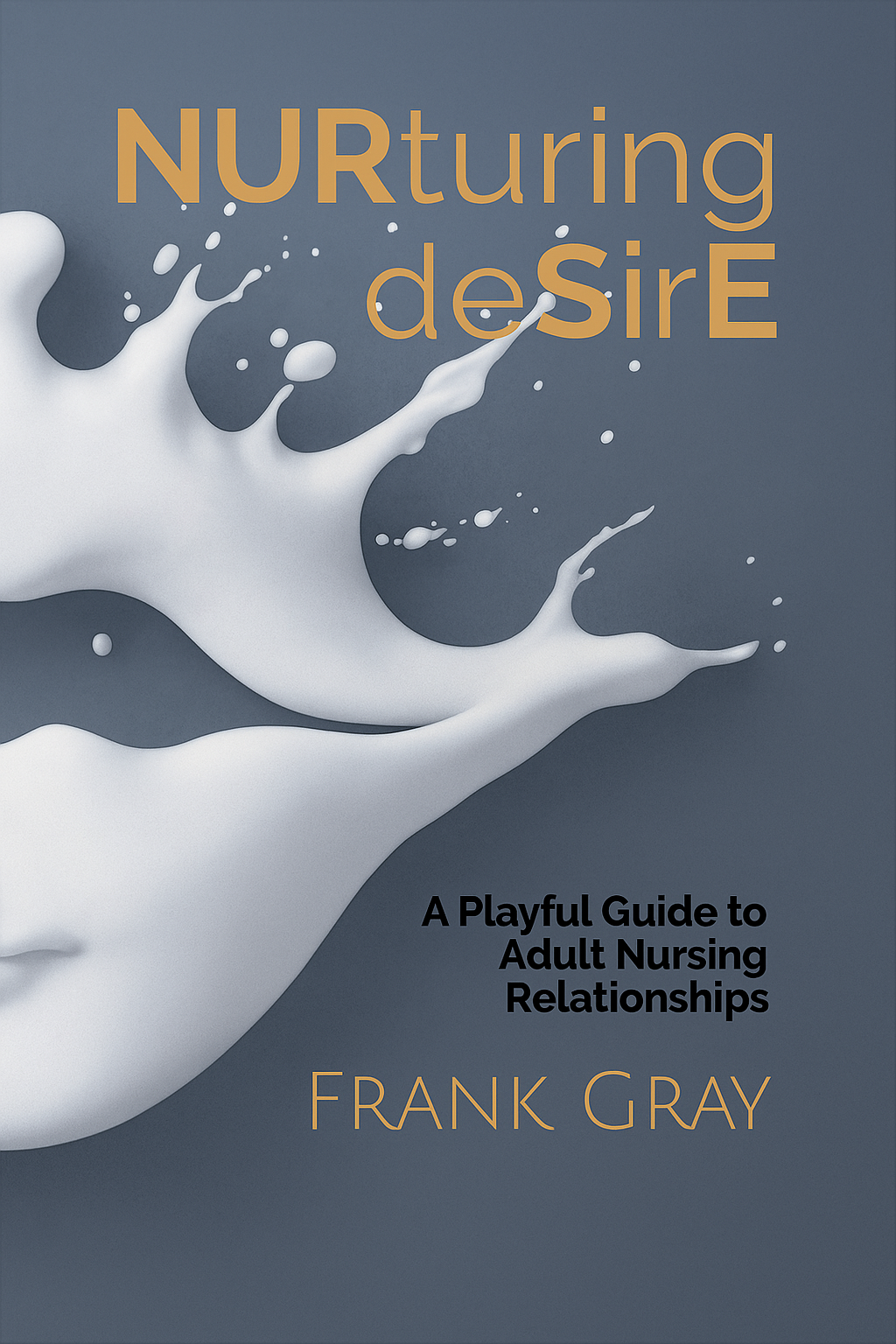
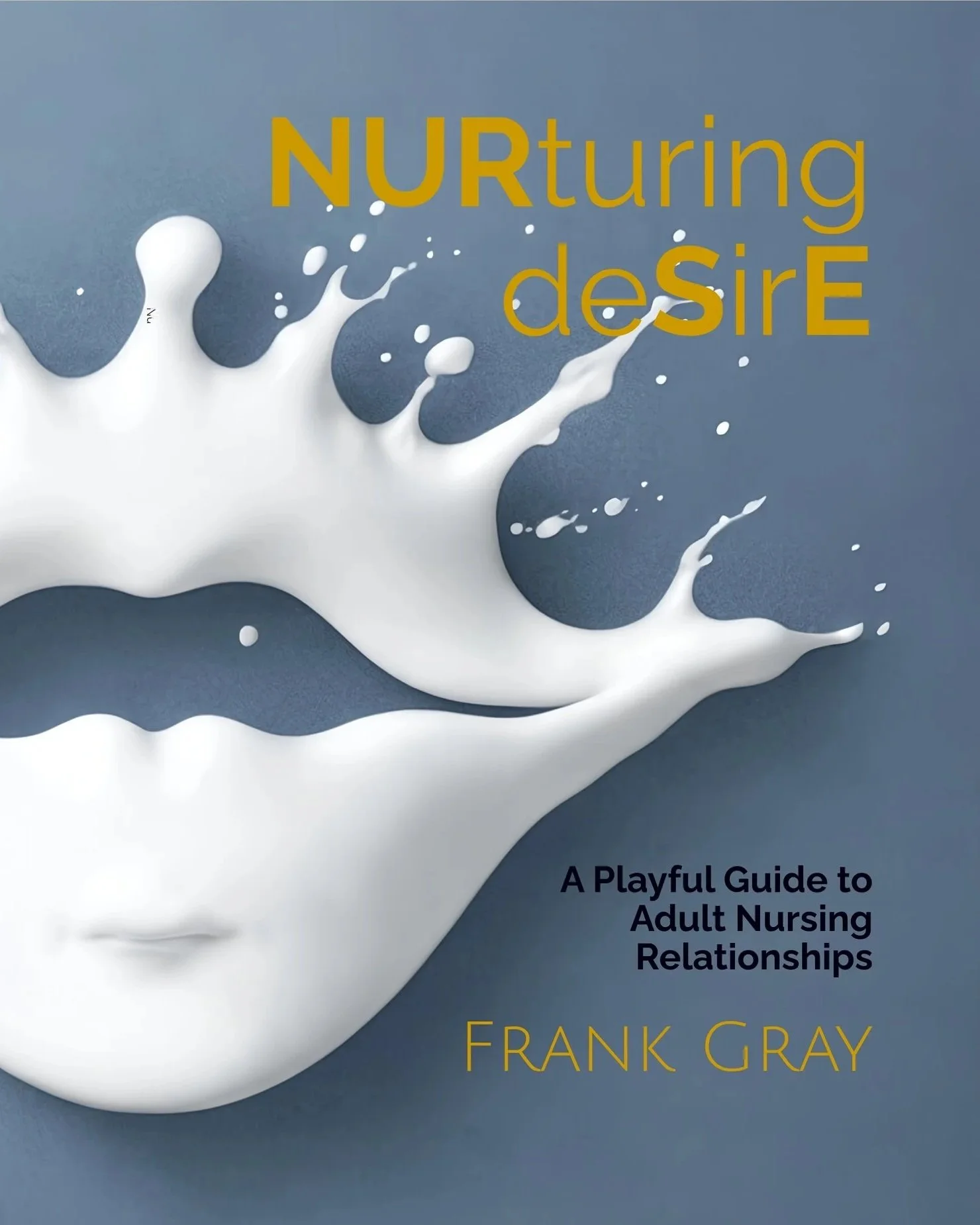

NURturing deSirE: A Playful Guide to Adult Nursing Relationships
By Frank Gray
A thoughtful, intimate exploration of adult nursing relationships (ANR) as a practice of deep connection, co-regulation, and embodied trust between consenting adults. This book invites readers to reconsider how desire, nurture, and intimacy naturally intertwine—framing adult nursing not as fetish or novelty, but as relational practice rooted in comfort, communication, and mutual care.
Through reflective storytelling, grounded psychology, and practical guidance, you'll explore vulnerability, consent, boundaries, and emotional safety—the foundations of any enduring intimacy.
Inside You'll Find:
- Clear, compassionate discussion of adult nursing relationships
- Insight into the emotional and physiological foundations of nurturing touch
- Guidance for talking with a partner about curiosity, desire, and consent
- Exercises and prompts designed to deepen trust and connection
- A tone that is playful, reverent, and deeply human—never clinical or sensational
Written for adults, by adults, centering consent, respect, and emotional maturity throughout.
Whether you're curious, already practicing, or seeking more tender and embodied intimacy in your relationship, NURturing deSirE offers reassurance, clarity, and permission to honor what feels true in your body and your bond.
SIGNED & INSCRIBED EDITION - LIMITED AVAILABILITY
For readers who wish to hold something truly personal, this limited edition includes a hand-signed inscription written especially for you by author Frank Gray. Each copy features a unique, heartfelt message of encouragement, gratitude, or resonance—making your book one of a kind.
Perfect as:
- A meaningful gift for your partner
- A keepsake commemorating the start of your ANR journey
- A tangible symbol of validation and support
- A collector's item for those who connect deeply with the book's message
- Paperback format: 9" × 7"
- Hand-signed by Frank Gray
- Personalized inscription (specify name/message at checkout)
- Ships within 5-7 business days
- $25
This is more than a book—it's an intimate extension of the book's spirit of connection and care, personally crafted for you.