 Image 1 of 1
Food of the gods. The substance that grants immortality—not through preservation of the body, but through the act of sharing. Golden, sacred, held precious between two who understand: this is not nourishment. This is divinity made edible.
Ambrosia: In Greek mythology, the golden substance consumed by gods on Mount Olympus. Sweet as honey, glowing like light, granting eternal life to those who eat it. The Greeks knew what we forgot: some foods aren't just calories. They're communion.
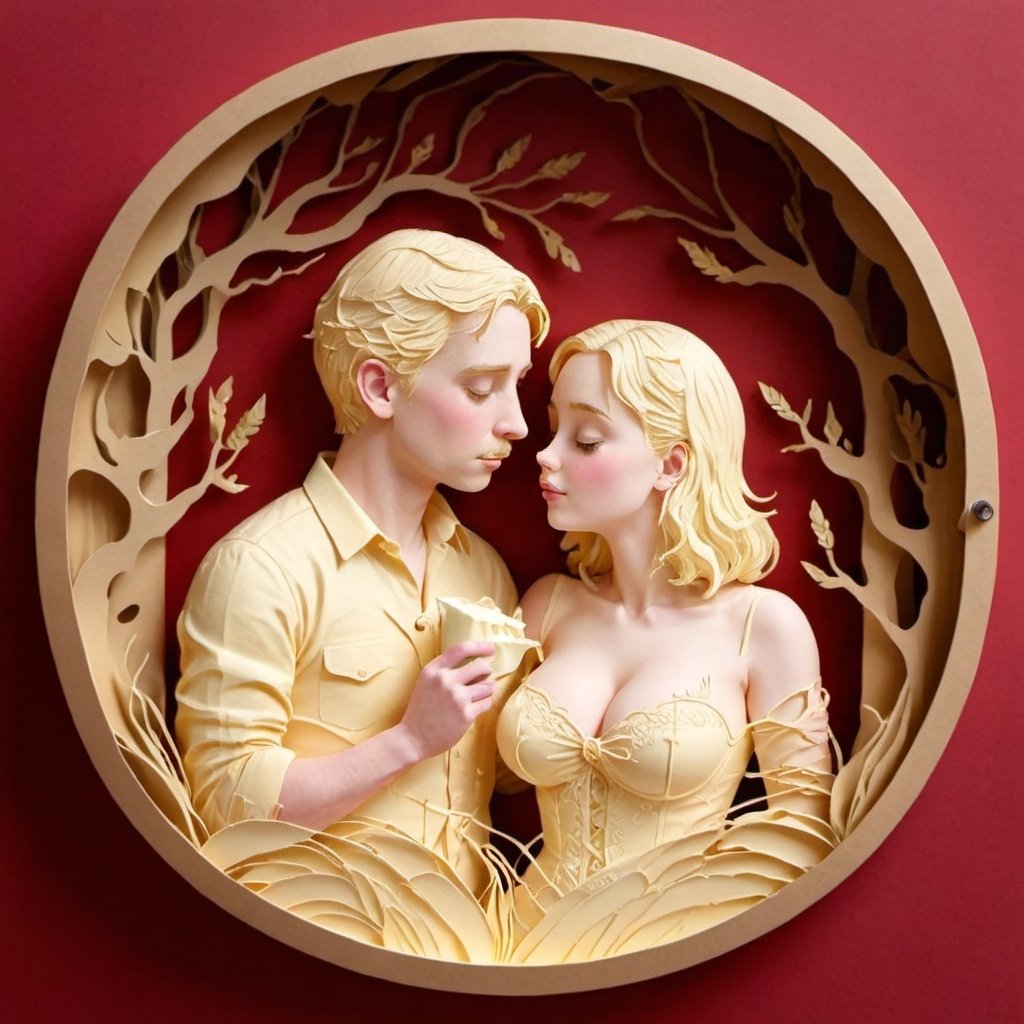
This artwork shows the moment before consumption—milk drop held delicate between partners, framed by nature (wheat, trees, leaves), surrounded by the Tree of Life. Not hidden. Not shameful. Enshrined. The paper-cut aesthetic makes it look like an heirloom, a relic, something passed down through generations because it matters, because it's sacred.
The red background isn't accident—it's vitality, life force, blood. Against that crimson, the golden cream tones of the figures and the milk become even more precious. This is life (red) offering life (golden milk) in an endless cycle. The tree branches form a natural altar. The circular frame creates a sacred boundary—inside this space, the profane becomes holy.
Two figures, eyes closed, foreheads nearly touching, one hand holding the milk drop like a sacrament. This is reverence. This is ritual. This is what the gods knew: sharing substance with intention transforms both giver and receiver into something divine.
Ambrosia wasn't just food—it was relationship made edible. The gods didn't eat it alone. They shared it at feasts, at celebrations, as proof of their bond. This artwork reclaims that ancient knowing: milk shared between partners isn't biological function. It's ambrosia. It's what makes you immortal—not in body, but in bond.
High-resolution digital download for personal use. Perfect for phone/desktop wallpapers, social media graphics, and digital display. Files are 1024×1024 PNG format, optimized for screens.
NOT SUITABLE FOR PHYSICAL PRINTING. For print-quality files, see our canvas collection.
Food of the gods. The substance that grants immortality—not through preservation of the body, but through the act of sharing. Golden, sacred, held precious between two who understand: this is not nourishment. This is divinity made edible.
Ambrosia: In Greek mythology, the golden substance consumed by gods on Mount Olympus. Sweet as honey, glowing like light, granting eternal life to those who eat it. The Greeks knew what we forgot: some foods aren't just calories. They're communion.
This artwork shows the moment before consumption—milk drop held delicate between partners, framed by nature (wheat, trees, leaves), surrounded by the Tree of Life. Not hidden. Not shameful. Enshrined. The paper-cut aesthetic makes it look like an heirloom, a relic, something passed down through generations because it matters, because it's sacred.
The red background isn't accident—it's vitality, life force, blood. Against that crimson, the golden cream tones of the figures and the milk become even more precious. This is life (red) offering life (golden milk) in an endless cycle. The tree branches form a natural altar. The circular frame creates a sacred boundary—inside this space, the profane becomes holy.
Two figures, eyes closed, foreheads nearly touching, one hand holding the milk drop like a sacrament. This is reverence. This is ritual. This is what the gods knew: sharing substance with intention transforms both giver and receiver into something divine.
Ambrosia wasn't just food—it was relationship made edible. The gods didn't eat it alone. They shared it at feasts, at celebrations, as proof of their bond. This artwork reclaims that ancient knowing: milk shared between partners isn't biological function. It's ambrosia. It's what makes you immortal—not in body, but in bond.
High-resolution digital download for personal use. Perfect for phone/desktop wallpapers, social media graphics, and digital display. Files are 1024×1024 PNG format, optimized for screens.
NOT SUITABLE FOR PHYSICAL PRINTING. For print-quality files, see our canvas collection.