Why IS this normal?
But we do this every day and call it breakfast.
How did we domesticate cows, commodify their milk, build entire industries around it, and forget that human milk exists?
How did foreign milk become "natural" while our own species' milk became taboo?
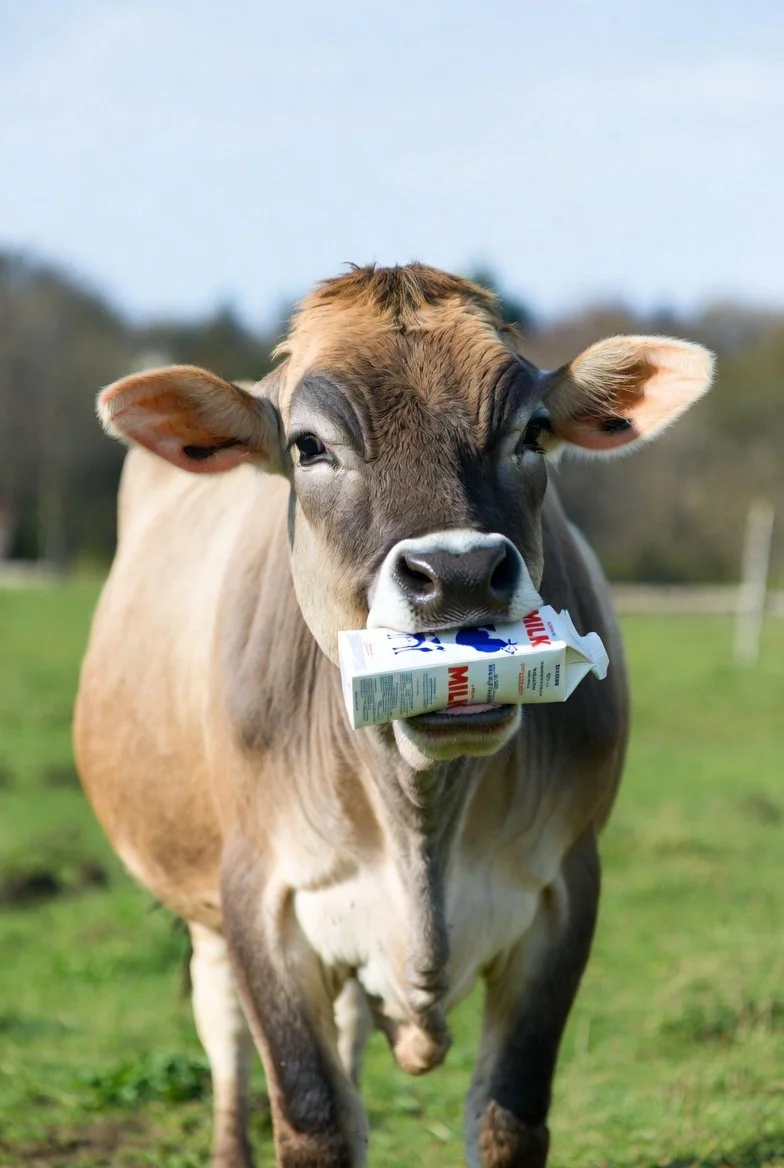
The cow knows. Look at her face. She's not confused. She's looking directly at you, carton in mouth, asking: You see the absurdity now, right? This is what we've done. We've made the foreign familiar and the familiar foreign. We've built refrigerators for cow's milk and pathologized adult nursing. We've normalized the strange and called the obvious deviant.
We've been drinking the strangest drink on Earth and calling it normal.
High-resolution digital download for personal use. Perfect for phone/desktop wallpapers, social media graphics, and digital display. Files are 1024×1024 PNG format, optimized for screens.
NOT SUITABLE FOR PHYSICAL PRINTING. For print-quality files, see our canvas collection.
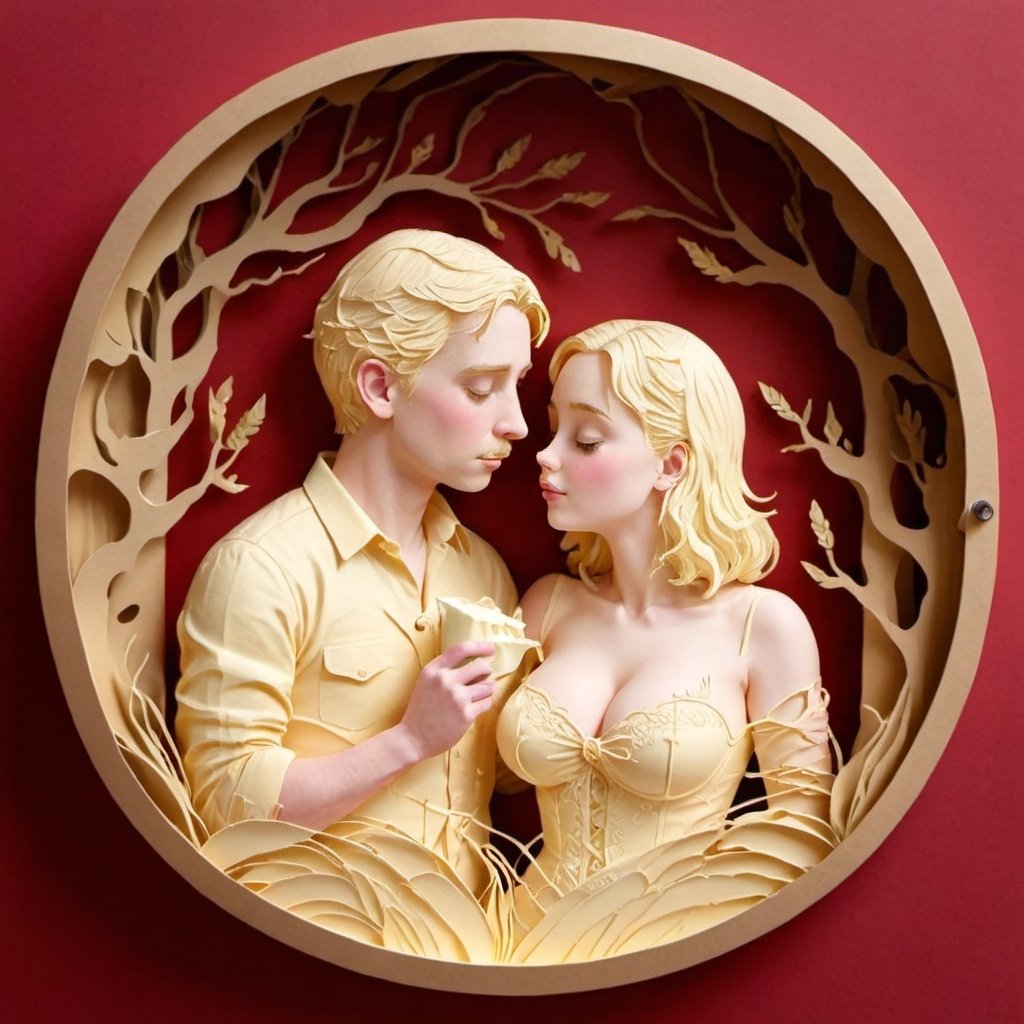
Food of the gods. The substance that grants immortality—not through preservation of the body, but through the act of sharing. Golden, sacred, held precious between two who understand: this is not nourishment. This is divinity made edible.
Ambrosia: In Greek mythology, the golden substance consumed by gods on Mount Olympus. Sweet as honey, glowing like light, granting eternal life to those who eat it. The Greeks knew what we forgot: some foods aren't just calories. They're communion.
This artwork shows the moment before consumption—milk drop held delicate between partners, framed by nature (wheat, trees, leaves), surrounded by the Tree of Life. Not hidden. Not shameful. Enshrined. The paper-cut aesthetic makes it look like an heirloom, a relic, something passed down through generations because it matters, because it's sacred.
The red background isn't accident—it's vitality, life force, blood. Against that crimson, the golden cream tones of the figures and the milk become even more precious. This is life (red) offering life (golden milk) in an endless cycle. The tree branches form a natural altar. The circular frame creates a sacred boundary—inside this space, the profane becomes holy.
Two figures, eyes closed, foreheads nearly touching, one hand holding the milk drop like a sacrament. This is reverence. This is ritual. This is what the gods knew: sharing substance with intention transforms both giver and receiver into something divine.
Ambrosia wasn't just food—it was relationship made edible. The gods didn't eat it alone. They shared it at feasts, at celebrations, as proof of their bond. This artwork reclaims that ancient knowing: milk shared between partners isn't biological function. It's ambrosia. It's what makes you immortal—not in body, but in bond.
High-resolution digital download for personal use. Perfect for phone/desktop wallpapers, social media graphics, and digital display. Files are 1024×1024 PNG format, optimized for screens.
NOT SUITABLE FOR PHYSICAL PRINTING. For print-quality files, see our canvas collection.
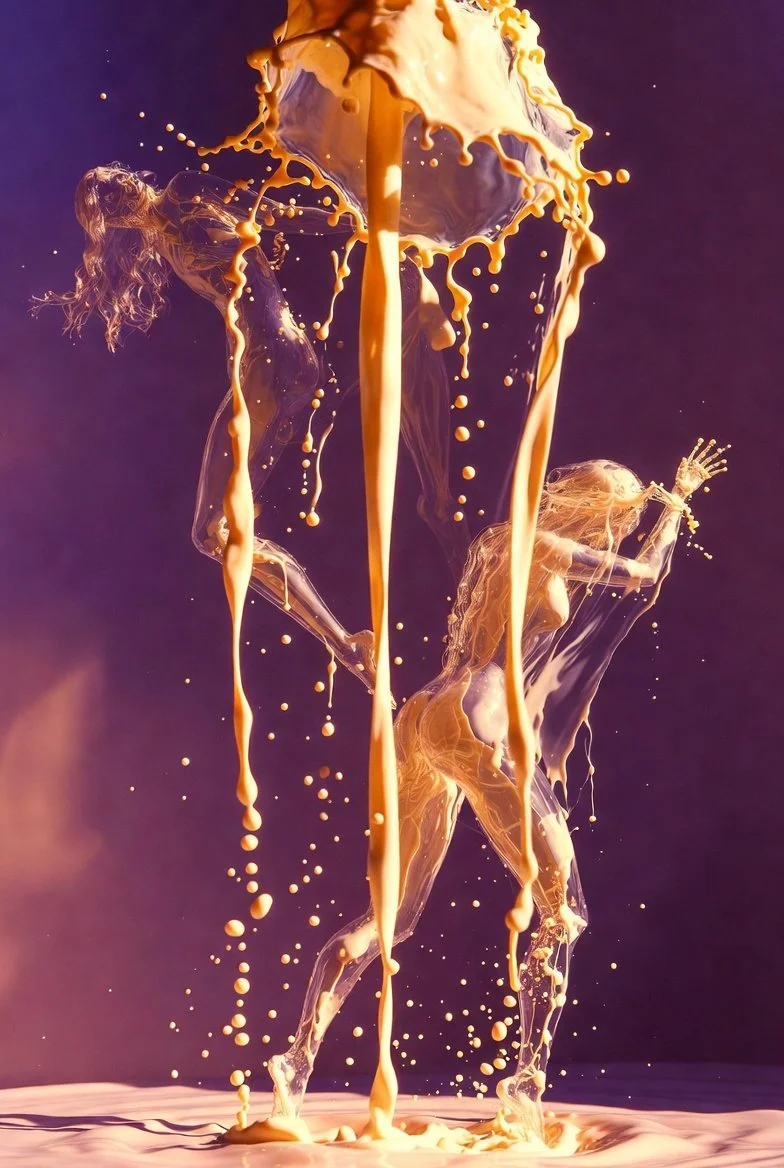
Milk cascading from above, forming a crown mid-fall. Two figures made of liquid light, caught in the sacred moment of anointing. This isn't consumption—this is coronation. You are being crowned sovereign over your own body, your own pleasure, your own choice to receive what flows down.
Crown: Symbol of sovereignty, divinity, rulership. But also: the physical shape milk makes when it hits surface—the "milk crown" captured in high-speed photography, the splash frozen into perfect symmetry. This image makes both meanings literal. You are crowned with milk. You are crowned by milk. The substance and the symbol are one.
The golden cascade pouring down isn't just nourishment—it's anointing. Kings and queens throughout history were crowned with oil, with water, with sacred substances poured over their heads. This is the same ritual, the same recognition: you are royalty. Not because of lineage or conquest, but because you chose to receive what flows freely, to be vulnerable enough to stand beneath the pour and let it crown you.
Two figures, two crowns: One above, mouth open to the sky, receiving the full cascade. One below, reaching up, celebrating the overflow. This is partnership in sovereignty—not one crowned and one serving, but both royal, both anointed, both transformed by the golden pour. The milk doesn't choose between you. It crowns whoever stands beneath it.
Purple background = royalty. Gold milk = precious metal, liquid treasure. The crown forming at the top = the moment transformation becomes visible. You are not begging. You are not asking permission. You are being crowned.
This artwork reclaims nursing as ritual of sovereignty. Not infantilization. Not regression. Coronation. The recognition that choosing to receive, choosing to be nourished, choosing to stand vulnerable beneath the pour—this is power, not weakness. This is royalty, not servitude.
High-resolution digital download for personal use. Perfect for phone/desktop wallpapers, social media graphics, and digital display. Files are 1024×1024 PNG format, optimized for screens.
NOT SUITABLE FOR PHYSICAL PRINTING. For print-quality files, see our canvas collection.
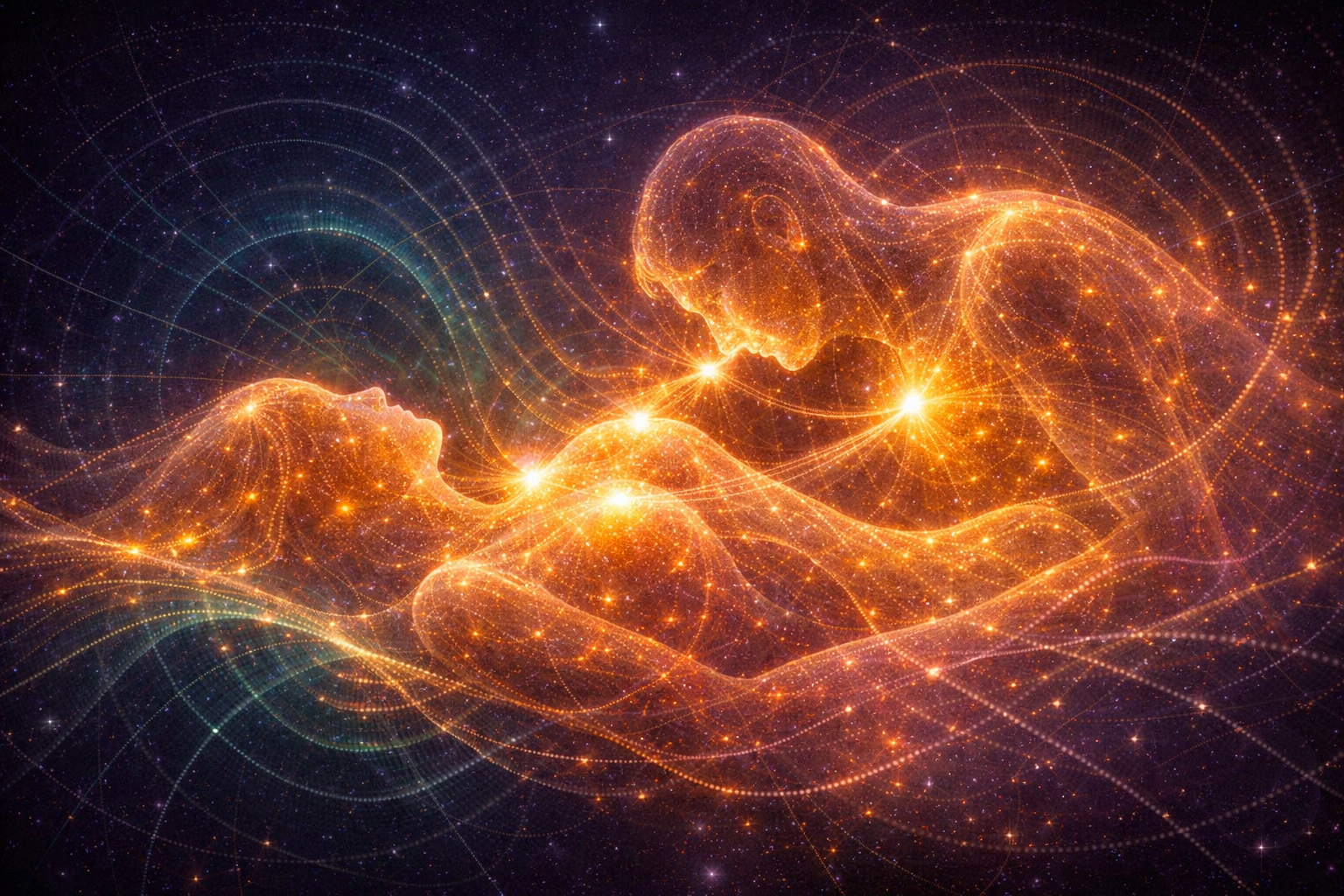
Light so intense it becomes heat. Heat so profound it becomes light. This is the moment connection crosses the threshold from warm to burning—when intimacy stops being comfortable and starts being transformative.
Incandescence is what happens when friction creates fire. Two bodies generating so much energy through touch that they begin to glow from within. Not the soft luminescence of candles, but the fierce radiance of stars being born. This is passion rendered as physics: matter compressed so tightly it ignites.
The golden-orange waves rippling through this image aren't metaphorical—they're what oxytocin looks like when it floods two nervous systems simultaneously. They're the heat signature of skin responding to skin. They're the visible proof that intimacy isn't passive reception but active combustion. You don't just feel each other—you burn together.
Incandescent: Emitting light as a result of being heated. This is nursing at the intensity where tenderness becomes ferocity, where soft touch generates such heat that bodies become their own light source. The darker the surrounding space, the more visible the fire. The colder the world, the more necessary the heat you generate together.
This artwork captures what happens when connection moves from gentle to necessary, from sweet to essential, from comfort to conflagration. Some sessions are meditative. Some are desperate. This is the desperate kind—the kind where you need each other so acutely that touching creates visible light.
High-resolution digital download for personal use. Perfect for phone/desktop wallpapers, social media graphics, and digital display. Files are 1024×1024 PNG format, optimized for screens.
NOT SUITABLE FOR PHYSICAL PRINTING. For print-quality files, see our canvas collection.
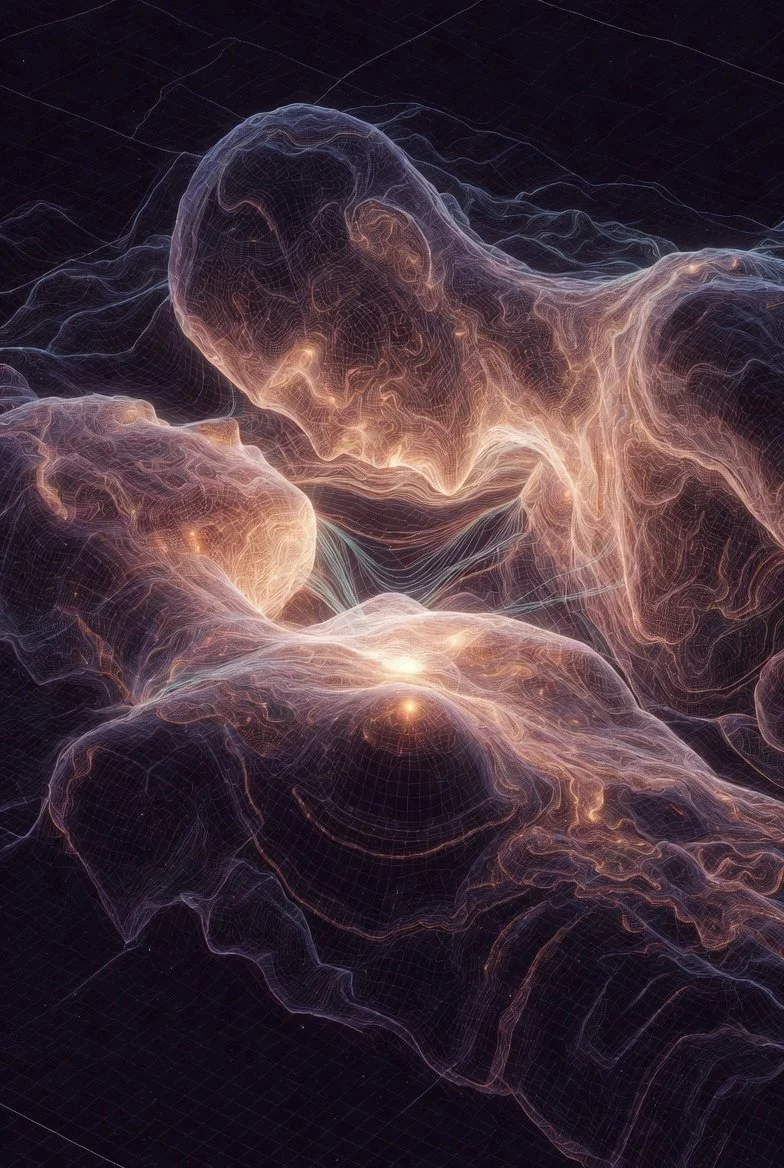
This is connection rendered as pure light—not bodies touching, but energy fields merging. Two forms dissolving into translucent waves, boundaries becoming permeable, the space between them glowing with what passes through.
Bond: Not attachment. Not dependency. The electromagnetic field that forms when two nervous systems synchronize. The measurable, observable phenomenon of oxytocin creating visible change in brain activity. The bioluminescence of intimacy—love made literal as light.
Luminous: Because this is what nursing looks like to the nervous system. Not milk flowing through ducts, but information flowing through touch. Light signals traveling between bodies at the speed of skin contact. Two organisms becoming one coordinated system, pulsing with shared rhythm.
This artwork captures the invisible architecture of connection—the glowing threads that weave between partners during intimate touch. Neuroscience calls it co-regulation. Ancient traditions called it energy exchange. This image calls it what it is: luminous.
The darker the background, the brighter the bond. Against the void of separation, connection becomes radiant. The less distinct you become as separate beings, the more visible you become as unified field. Your edges blur. Your boundaries dissolve. What remains is not two bodies, but one luminous bond.
Perfect for those who understand that intimacy isn't metaphorically magical—it's literally measurable as light, heat, electrical charge, synchronized heartbeats, matched breathing, nervous systems oscillating together like coupled pendulums. This is the science of love made visible. This is what happens when you let yourself be seen and held at the same time.
High-resolution digital download for personal use. Perfect for phone/desktop wallpapers, social media graphics, and digital display. Files are 1024×1024 PNG format, optimized for screens.
NOT SUITABLE FOR PHYSICAL PRINTING. For print-quality files, see our canvas collection.

Cosmic Milk
This is what the ancient world knew: milk isn't just biological—it's universal. The same substance that nourishes infants connects galaxies. Milk is stardust made liquid, cosmic matter flowing between bodies made of the same atoms that built the universe. Two figures suspended in space, throats exposed, drinking starlight. This isn't nursing—this is communion with the infinite. Hair dissolves into nebulae. Skin becomes constellation. The milk flowing between them isn't just theirs—it's the Milky Way itself, the great river of light our ancestors saw stretching across the night sky and named after the very substance that kept their children alive. The Greeks knew: The Milky Way formed when Hera's breast milk sprayed across the heavens. Egyptians knew: Isis nursed Horus with celestial milk that granted divinity. Every culture that looked up knew: milk and cosmos are one substance wearing different forms. This artwork reclaims that ancient knowing. When you nurse, you're not just feeding—you're channeling the same creative force that births stars, builds galaxies, and holds the universe together. You're participating in the oldest ritual there is: matter sharing itself with matter, bodies recognizing they're made of the same stuff, connection revealing that separation was always illusion. Cosmic Milk: Because the distance between breast and mouth is no different than the distance between star and star. It's all gravity, all grace, all the same substance flowing in circles that never end.
High-resolution digital download for personal use. Perfect for phone/desktop wallpapers, social media graphics, and digital display. Files are 1024×1024 PNG format, optimized for screens.
NOT SUITABLE FOR PHYSICAL PRINTING. For print-quality files, see our canvas collection.
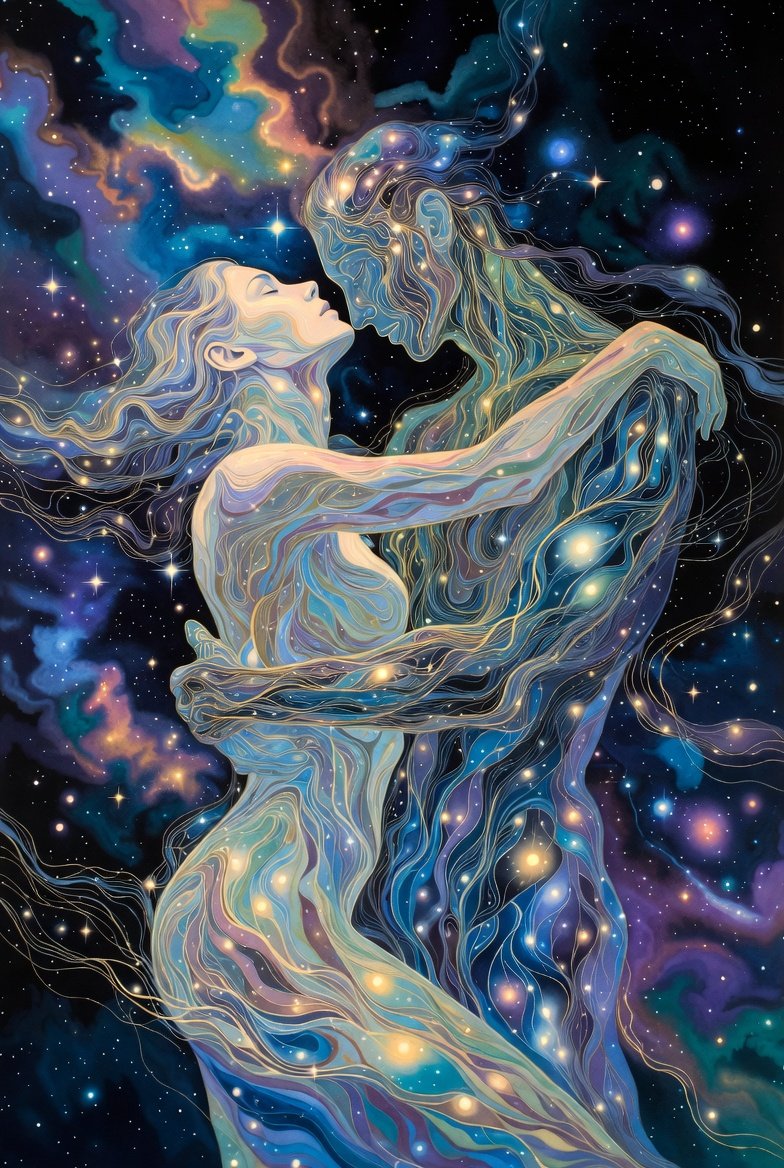
Two forces in eternal dance: one pulling downward, one lifting up. Gravity grounds us in body, in earth, in the weight of being human. Grace dissolves boundaries, makes us cosmic, turns flesh into flowing light.This is what nursing looks like when you stop seeing bodies and start seeing energy. Two figures suspended in space, neither falling nor flying—held in perfect tension between what pulls us down and what lifts us up. Hair becomes nebulae. Skin becomes stardust. The distinction between "you" and "me" dissolves into shared substance.Gravity: The biological imperative. Milk responding to need. Bodies seeking each other across space. The weight of intimacy, the pull of connection, the inescapable draw of nervous systems reaching for regulation.Grace: The transcendent experience. Time stopping. Boundaries dissolving. Two becoming one field. The moment you realize this isn't just physical—it's universal, cosmic, the same force that holds galaxies together.Nursing is both. The earthy and the ethereal. The body and the beyond. This artwork captures that paradox: we are creatures of gravity (milk, flesh, need) experiencing grace (connection, dissolution, oneness).
High-resolution digital download for personal use. Perfect for phone/desktop wallpapers, social media graphics, and digital display. Files are 1024×1024 PNG format, optimized for screens.
NOT SUITABLE FOR PHYSICAL PRINTING. For print-quality files, see our canvas collection.
No results match your search. Try removing a few filters.