Nurture Rewired: The Future of Touch in an Untouchable World
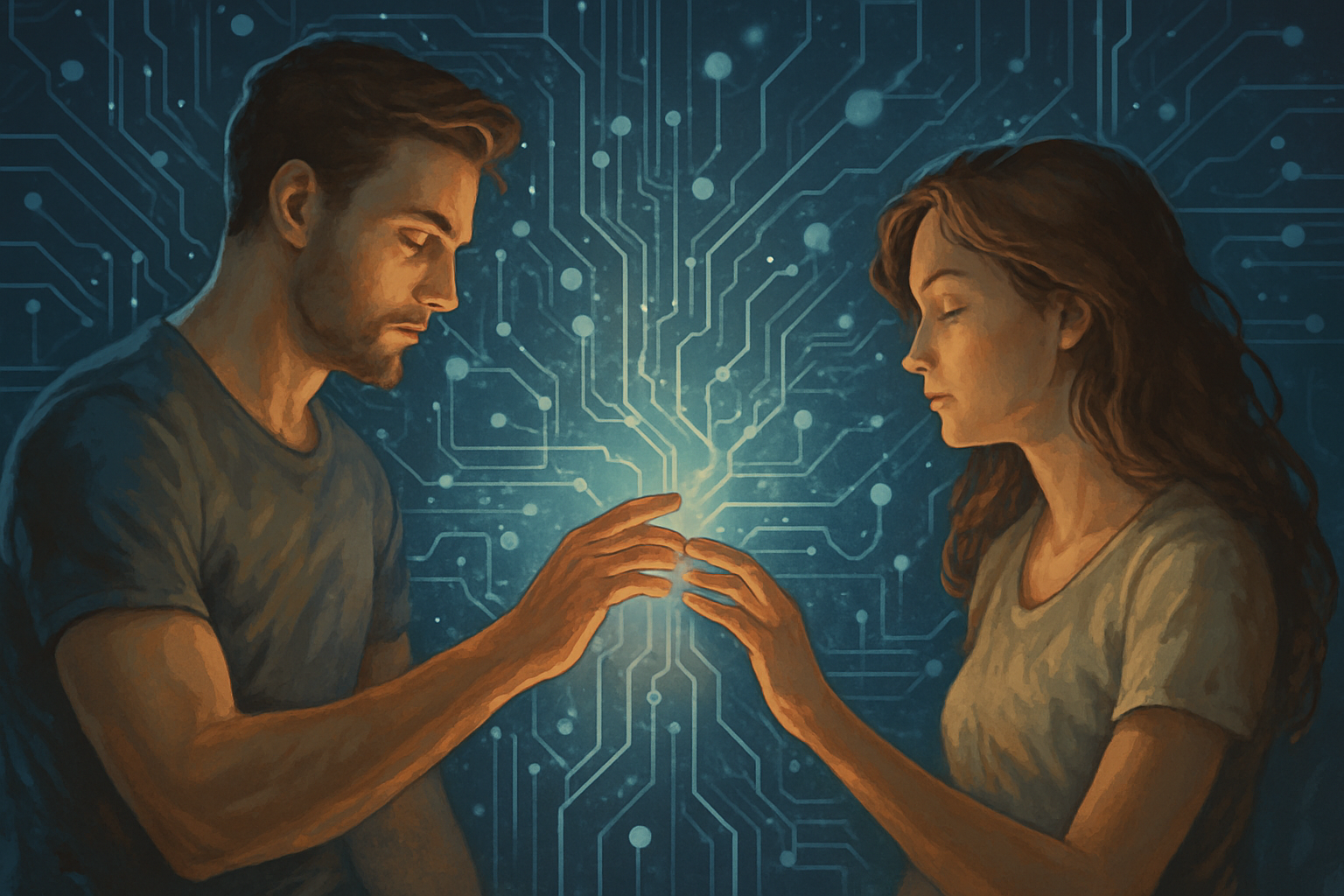
The world hums with connection — glowing screens, endless scrolls, digital hearts pulsing in pixels — and yet, so many of us are starving.
We sleep beside our phones, not our lovers.
We talk all day and rarely listen with our hands.
We share everything except our warmth.
This is the paradox of the modern nervous system: wired for contact, flooded with content.
We’re living through what researchers now call a “touch famine” — a measurable deprivation of physical affection that leaves the body chemically hungry. Loneliness, anxiety, and immune dysfunction follow in its wake. The more virtual our connections become, the more the body aches for proof that it still belongs.
🧬 The Science of Starvation
Touch is not sentimental. It’s structural.
When skin meets skin, the brain releases oxytocin, the bonding hormone that lowers stress and strengthens trust.
Gentle pressure activates C-tactile nerve fibers, the sensory pathways that tell your nervous system: you’re safe now.
Touch reduces cortisol, regulates blood pressure, and even helps wounds heal faster.
And yet, more than half of adults report going days — sometimes weeks — without meaningful physical contact.
We’re overfed on attention and undernourished on affection.
“We are the most connected species on Earth — and the most untouched.”
💔 Digital Closeness Isn’t the Same
Technology gives us dopamine: the chemical of novelty, reward, anticipation.
But dopamine is restless. It wants more, faster, louder.
Oxytocin, by contrast, asks for stillness. It thrives on rhythm, warmth, and proximity.
You can’t scroll your way to safety.
You can’t text your way to calm.
“You can say ‘I love you’ a thousand times and still never feel it in your bones.”
This isn’t anti-tech. It’s pro-human.
Our biology simply hasn’t evolved at Wi-Fi speed. The part of us that remembers being held, rocked, or nursed still speaks an ancient language — one that no emoji can translate.
🫀 Remembering the Body’s Language
The body is the first conversation you ever had.
Before you could speak, you knew tone, temperature, and rhythm. You learned that care had a cadence — a pulse, a sway, a silence that said I’m here.
That’s the wisdom of nurture: it’s not verbal, it’s vibrational.
Somewhere along the way, we lost fluency. We learned to perform connection instead of inhabiting it. We replaced touch with tapping — our fingers still moving, but not on skin.
In Nurturing Desire, I call this the forgetting — the way we drift from the intimacy of being felt. Relearning it isn’t regression; it’s reclamation.
“Somewhere along the way, we started mistaking stimulation for closeness. Nurture speaks slower.”
🤖 The Future of Touch
As we hurtle deeper into digital life, touch is becoming both rarer and more deliberate.
Therapists now talk about “intentional touch” — massage, cuddle therapy, somatic coaching — as interventions for stress and trauma. These aren’t indulgences. They’re neurological maintenance.
Meanwhile, AI companions and virtual partners promise connection without friction — intimacy without presence. But the body knows the difference. Even the most sophisticated algorithm can’t imitate the subsonic hum of safety that happens when two heartbeats synchronize.
The future of touch isn’t about replacing the body.
It’s about remembering how to be in one.
“The next revolution won’t be artificial intelligence — it will be authentic presence.”
🌿 A New Literacy of Nurture
To build a better world, we don’t need faster data — we need slower contact.
We need spaces, relationships, and rituals that remind us what calm feels like in the body.
That’s the real work of nurturing desire: not chasing intensity, but cultivating safety.
Not more sensation — more meaning.
Not more people — more presence.
The body already knows the language.
It’s waiting for us to remember.
Read More
Explore essays on the science and spirit of connection at
👉 nurturingdesire.com/milk-drops
