🥛 The Strangest Drink on Earth: How We Forgot the Only Fluid Made for Us
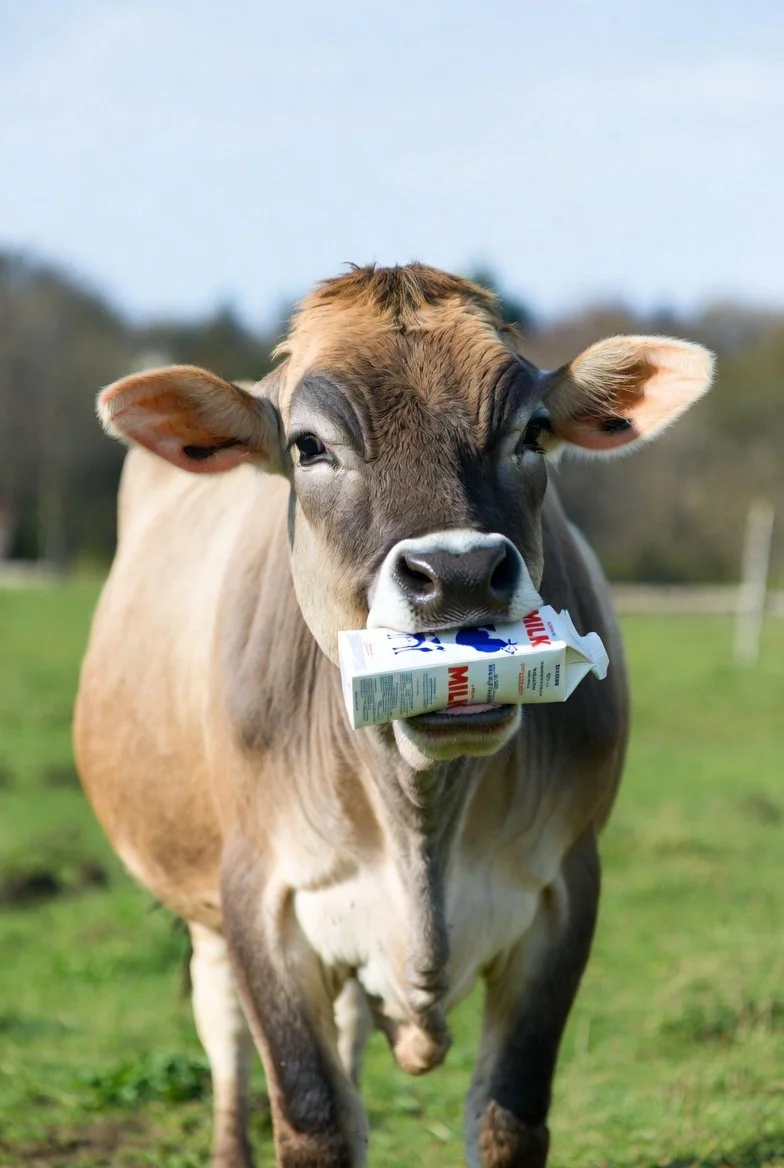
Here's a quiet truth with a seismic aftershock:
Humans only consume two kinds of fluids on this planet.
Water. And milk.
Everything else is just water in disguise — fruit water, bean water, leaf water, grain water, sugar water, fermented water.
But milk?
Milk is the only liquid we drink that isn't pretending to be water.
And here's the part that should rearrange something inside you:
The only milk designed for human biology is the only milk we treat as taboo.
The only milk tuned to our immune system, our microbiome, our nervous system, our brain — the only fluid with molecules custom-built for our species — is the one we've been taught to avoid.
Meanwhile, we casually drink the milk of a 1,500-pound grazing animal whose biology doesn't match ours at any meaningful level.
Cow's milk? Normal.
Human milk? "Weird."
How did we get it so backwards?
How did we normalize the foreign and pathologize the familiar?
How did we decide the milk engineered for our development was the one we shouldn't talk about — while the milk from another species became a household staple?
The answer sits in a long braid of history, power, convenience, modesty, and cultural amnesia.
Let's pull on the thread.
🐄 1. The Inversion Begins: Domestication Creates the First Detour
For 99% of our evolutionary timeline, humans drank water.
Milk was for infants.
Nursing was communal.
And no adult human would have considered walking up to another species for a hit of warm, enzymatically active secretion.
Then came domestication.
Suddenly:
animals were penned
surplus milk appeared
calories were available in a new form
But here's the twist no one talks about:
Early humans didn't drink it.
Not because of culture — because they couldn't.
They were lactose intolerant.
So what did they do?
They fermented and curdled it.
Cheese. Yogurt. Low-lactose, preserved forms of dairy.
Not milk.
So why did animal milk win?
Because it was easier to store than human milk.
Not healthier.
Not better.
Just logistically simpler.
And convenience is one hell of a storyteller.
📉 2. Religion, Morality, and Shame Get Involved
As civilizations grew, breastfeeding shifted from sacred to sexualized.
Renaissance paintings celebrated nursing Madonnas — but by the Victorian era, exposed breasts were scandal, even for feeding.
Wet nurses replaced mothers.
Then wet nurses were regulated.
Then shamed.
Then erased.
Three cultural pivots reshaped everything:
Breasts became sexual before nutritional.
Feeding became private before communal.
Human milk became invisible before it became "weird."
Once nursing was hidden behind modesty and moral policing, the communal memory of human milk as the human fluid dissolved.
And when something disappears from culture, it doesn't become irrelevant — it becomes taboo.
🧪 3. Formula Marketing Finishes the Job
To convince a species that cow's milk and powdered substitutes were "good enough," formula companies had to rewrite our instincts — and they did it brilliantly.
Messaging shifted to:
"Science is superior to nature."
"Breastfeeding is optional."
"All milk is interchangeable."
"Human milk is private. Cow's milk is wholesome."
This wasn't biology.
It wasn't public health.
It was marketing.
And the most effective marketing doesn't persuade —
it rearranges what seems obvious.
❌ 4. The Taboo Isn't Biological — It's Manufactured
Biologically speaking, there is nothing strange about humans consuming human milk.
Nothing.
Human milk is recognized by:
our immune system
our gut
our brain
our hormones
our microbes
our epithelial receptors
It is the one fluid our bodies don't have to "interpret."
It speaks a language we evolved to understand.
Cow's milk?
It's a mistranslation — a workaround the body tolerates, adjusts to, or fights.
Human milk is a match.
Cow's milk is an adaptation.
And adaptations only feel natural when you forget you made them.
🧬 5. Human Milk Isn't Just Milk — It's a Living Signal
This is where biology becomes poetry.
Human milk contains molecules that:
Build immunity:
2′-FL, lactoferrin, lysozyme, secretory IgA
Shape the gut:
LNT, LNnT, oligosaccharides that feed beneficial microbes
Wire the brain:
3′-SL, 6′-SL, bioactive lipids that prime neural pathways
Regulate genes:
Exosomal microRNAs that alter gene expression in real time
Repair tissue:
EGF, TGF-β that guide development and healing
Sync connection:
Oxytocin-linked molecules that bond and regulate
The oligosaccharides in human milk—molecules like 2′-FL—don't even exist in cow's milk.
This isn't hydration.
This isn't nutrition.
This is biological communication.
A molecular conversation between bodies.
And there is nothing else on Earth like it.
These molecules don't just feed—they teach. The body remembers these signals long after infancy ends. [Read more about how 2′-FL shapes memory and coherence in adults →]https://www.nurturingdesire.com/milk-drops/-the-origin-molecule-why-your-gut-remembers-what-your-culture-forgot
🔄 6. So Why Cow's Milk?
Because cow's milk is:
abundant
storable
scalable
profitable
culturally unsexual
emotionally distant
Cow's milk is convenient.
Human milk is intimate.
And our culture consistently chooses convenience over intimacy — then forgets we made that trade.
This biological precision is why adult nursing relationships tap into something deeper than culture wants to acknowledge. [Explore the intimacy and biology of ANR in Nurturing Desire →] Nurturing Desire: A Playful Guide to Adult Nursing Relationships
🧘 7. What Happens When a Culture Forgets Its First Fluid?
What happens when the only non-water substance designed for human biology becomes the only one we don't talk about?
What happens when the molecules that shaped our immune systems vanish behind modesty, shame, or silence?
What happens when the most biologically precise nourishment on the planet becomes culturally off-limits?
We end up here:
A species drinking milk from cows because it feels less intimate than drinking milk from humans.
We didn't evolve this way.
We adapted this way.
And then we forgot we adapted.
Want to see what this looks like from the inside — where milk spirits witness the chaos and tenderness of human intimacy? [Meet the Bibis in The Milky Way →]
🔥 Closing: The Inversion Isn't Natural — It's Amnesia
Milk isn't strange.
Human milk isn't strange.
Our culture is strange about human milk.
When you peel away the shame, the economics, the moral codes, the modesty scripts, the industrial drift…
You're left with a question that lands like a soft explosion:
Why are we drinking the milk of another species while pretending the milk designed for us is the strange one?
If that unsettles you — good.
It means something ancient inside you just woke up.
More from Frank Gray:
